

Table of Contents
Cat Pancreatitis Complete Guide to Symptoms, Treatment, and Recovery
Your cat stops eating. They vomit a few times, hunch over like their belly hurts, and hide under the bed. You assume it is a hairball or maybe something they ate outside. You wait a day, then another day, but your cat still will not eat. They seem lethargic, maybe a little warm to the touch. You wonder if you are overreacting. Pancreatitis in cats is one of the most commonly missed diagnoses in veterinary medicine because the symptoms are vague, easily mistaken for other conditions, and cats are masters at hiding abdominal pain. By the time most cat owners realize something is seriously wrong, the inflammation has been raging for days or even weeks.
Pancreatitis is often diagnosed in cats whose owners thought they had stomach bugs, hairball problems, or even dental pain. The truth is that pancreatitis in cats looks very different from pancreatitis in humans or dogs, and the classic signs that veterinarians look for in other species are often absent in cats.
This guide covers what the pancreas does and why inflammation is so dangerous, the subtle symptoms that indicate pancreatic inflammation, how veterinarians diagnose this tricky condition through blood work and imaging, the complete treatment approach including hospitalization when needed, dietary management during recovery, long term prognosis, and how to prevent future episodes. Pancreatitis is serious, but with early detection and proper treatment, most cats recover fully.
📚 Recommended Cat Guides
🐱 The Trainable Cat Book
Learn proven methods to train your cat and stop unwanted behaviors.
View Book →❤️ Complete Cat Care Manual
Your complete guide to cat nutrition, health, grooming, behavior, and daily care.
Get the Manual →Understanding the Pancreas and Pancreatitis
The pancreas is a small, delicate organ located near the stomach and small intestine. It has two critical functions. First, it produces digestive enzymes that break down fats, proteins, and carbohydrates in the small intestine. Second, it produces hormones, including insulin and glucagon, that regulate blood sugar levels throughout the body.
In pancreatitis, these digestive enzymes become activated prematurely, before they reach the intestine. Instead of digesting food, they begin digesting the pancreas itself. This autodigestion causes inflammation, pain, and damage to pancreatic tissue. In severe cases, the inflammation spreads to surrounding organs including the liver, bile ducts, and intestines, causing a condition called triaditis that is common in cats with pancreatitis. A peer-reviewed review found histologic evidence of triaditis in 30 to 50 percent of cats diagnosed with both pancreatitis and liver inflammation.
Acute vs Chronic Pancreatitis
Acute pancreatitis comes on suddenly and can range from mild inflammation with minimal symptoms to severe, life threatening disease with systemic complications. Cats with acute pancreatitis often show dramatic symptoms like vomiting, complete appetite loss, and severe lethargy. Chronic pancreatitis develops gradually over months or years. Symptoms are milder but persistent, including intermittent appetite loss, occasional vomiting, and gradual weight loss. Many cats with chronic pancreatitis have episodes of acute flare-ups superimposed on ongoing low grade inflammation. Distinguishing between acute and chronic forms matters for treatment approach and long term management.
Symptoms of Pancreatitis in Cats
Cat pancreatitis symptoms are notoriously vague and easy to miss. Unlike dogs, which show obvious abdominal pain, vomiting, and a prayer position with the front end down and rear end up, cats with pancreatitis often show only subtle signs that owners attribute to other causes. Recognizing these symptoms requires careful observation and a high index of suspicion. The Cornell Feline Health Center notes that signs are often vague, most commonly including lethargy, reduced appetite, vomiting, and weight loss.
Loss of Appetite
Anorexia is the most common symptom of pancreatitis in cats, affecting the large majority of affected cats. The cat may approach the food bowl, sniff, and walk away, or show no interest in food at all. This happens because the inflamed pancreas causes nausea and abdominal pain that makes eating unpleasant. Unlike a cat that skips one meal due to a hairball, a cat with pancreatitis may refuse food for multiple days. Any cat that stops eating for more than twenty-four hours without an obvious cause should be evaluated for pancreatitis.
Vomiting and Nausea
Vomiting occurs in a meaningful share of cats with pancreatitis, though it is less common and less consistent than in dogs. The vomiting may be intermittent rather than frequent. Some cats show nausea signs including drooling, lip smacking, excessive swallowing, or hiding without actually vomiting. The nausea is caused by the inflammatory response affecting the vomiting center in the brain. Anti-nausea medications are a critical part of treatment because the nausea prevents eating, and prolonged anorexia leads to serious complications.
Lethargy and Depression
Cats with pancreatitis become noticeably lethargic. They sleep more, hide, and show reduced interest in social interaction, play, or their environment. The lethargy stems from the systemic inflammatory response, which diverts energy to the immune system and causes general malaise. A cat that normally greets you at the door but now stays hidden under the bed for hours is showing a significant behavior change that warrants veterinary attention.
Abdominal Pain
Abdominal pain in cats is difficult to detect because cats are stoic and hide pain instinctively. Signs of abdominal pain include a hunched posture with the belly tucked up, reluctance to jump or move, guarding the abdomen when touched, and a tense or hard belly on palpation. Some cats with pancreatitis show no obvious pain signs at all, which contributes to the condition being missed. If your cat seems uncomfortable when you gently palpate their belly, or if they adopt a hunched position, pancreatitis should be considered.
Weight Loss
Chronic pancreatitis causes gradual weight loss over weeks to months due to reduced appetite and malabsorption. The inflamed pancreas produces fewer digestive enzymes, so the cat cannot properly absorb nutrients from food even when they do eat. Weight loss may be the only symptom in cats with chronic low grade pancreatitis. If your cat is losing weight despite eating reasonably well, pancreatitis should be on the list of possible causes along with hyperthyroidism, diabetes, and kidney disease.
Dehydration
Cats with pancreatitis become dehydrated because they are not eating or drinking enough, and because vomiting and diarrhea cause fluid loss. Dehydration worsens all other symptoms and puts stress on the kidneys. Signs of dehydration include dry or tacky gums, reduced skin elasticity where the skin tents when lifted, sunken eyes, and reduced urination. Dehydrated cats with pancreatitis often require fluid therapy to stabilize their condition.
Fever
Some cats with pancreatitis develop a fever as part of the inflammatory response. Other cats may have a low body temperature, particularly in severe cases where the inflammation causes systemic shock. Temperature changes are not specific to pancreatitis but provide supporting evidence when combined with other symptoms. Your veterinarian will measure your cat’s temperature during the examination.
How Veterinarians Diagnose Pancreatitis
Blood Work
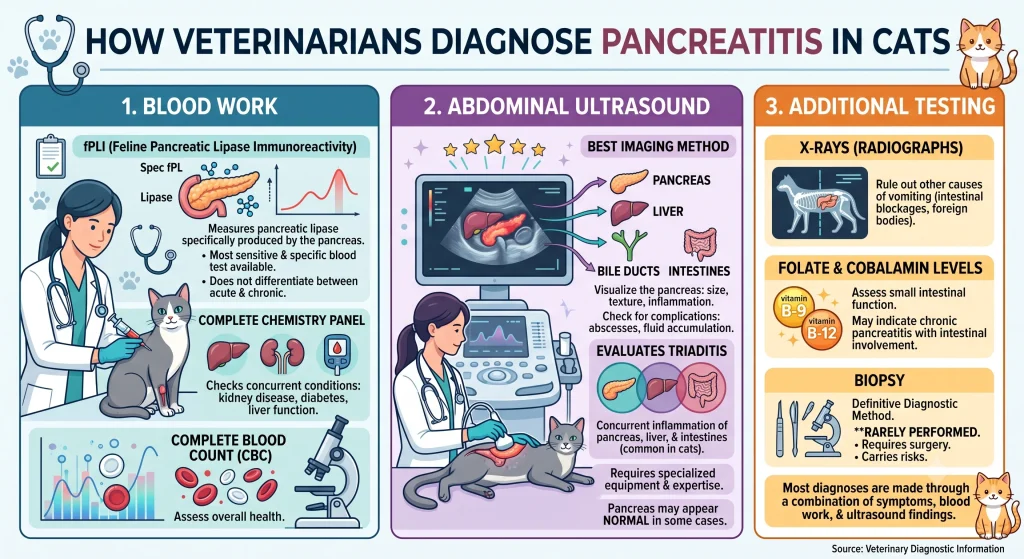
The primary blood test for pancreatitis in cats is feline pancreatic lipase immunoreactivity, often called fPLI or Spec fPL. This test measures pancreatic lipase specifically produced by the pancreas, and it is the most sensitive and specific blood test available. Elevated fPLI levels indicate active pancreatic inflammation. The test is highly accurate but does not differentiate between acute and chronic pancreatitis. Your vet will also run a complete chemistry panel and complete blood count to assess overall health, check for concurrent conditions including kidney disease and diabetes, and evaluate liver function. This aligns with the Merck Veterinary Manual and VCA Animal Hospitals, which identify pancreatic lipase testing as the most reliable blood test for feline pancreatitis.
Abdominal Ultrasound
Ultrasound is the best imaging method for diagnosing pancreatitis in cats. A skilled ultrasonographer can visualize the pancreas, assess its size and texture, identify inflammation, and check for complications like abscesses or fluid accumulation. Ultrasound also evaluates the liver, bile ducts, and intestines for triaditis, the concurrent inflammation of pancreas, liver, and intestines that is common in cats. However, ultrasound requires specialized equipment and expertise not available at all veterinary clinics. In some cases, the pancreas may appear normal on ultrasound even when pancreatitis is present.
Additional Testing
Your vet may recommend additional tests based on your cat’s specific symptoms. X-rays rule out other causes of vomiting including intestinal blockages or foreign bodies. Folate and cobalamin levels assess small intestinal function and may indicate chronic pancreatitis with intestinal involvement. Biopsy is the definitive diagnostic method but is rarely performed because it requires surgery and carries its own risks. Most diagnoses are made through a combination of symptoms, blood work, and ultrasound findings.
Treatment Options for Pancreatitis
Hospitalization for Severe Cases
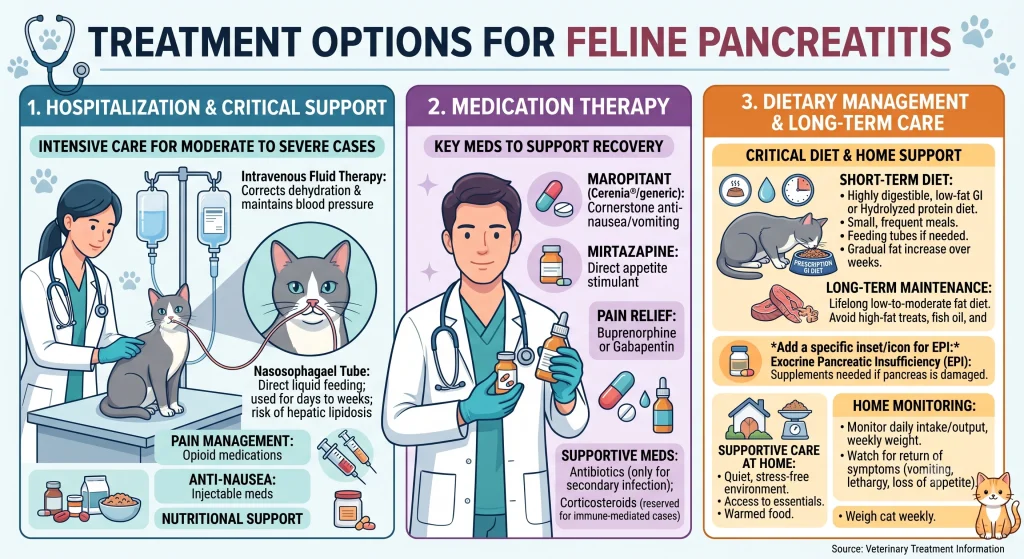
Cats with moderate to severe pancreatitis typically require hospitalization for intensive treatment. Hospitalization provides intravenous fluid therapy to correct dehydration and maintain blood pressure, injectable anti-nausea medications to control vomiting and stimulate appetite, pain management through opioid medications, and nutritional support.
Cats with pancreatitis that go more than three to five days without eating are at risk for hepatic lipidosis, a dangerous liver condition caused by fat mobilization during starvation. The Cornell Feline Health Center confirms that hepatic lipidosis is closely linked to prolonged anorexia in cats. Feeding tubes may be placed in cats that cannot or will not eat on their own. A nasoesophageal tube is a temporary tube passed through the nose into the esophagus that allows liquid food to be administered directly. This tube is well tolerated and can be used for days to weeks until the cat resumes eating normally.
Medications
Multiple medications support recovery from pancreatitis. Maropitant is the most effective anti-nausea and anti-vomiting medication for cats and is a cornerstone of pancreatitis treatment. Mirtazapine stimulates appetite directly. Pain medications including buprenorphine or gabapentin control the abdominal pain associated with pancreatic inflammation. Antibiotics are not routinely needed but may be prescribed if there is evidence of secondary bacterial infection. Corticosteroids are controversial in pancreatitis and are generally reserved for specific cases with immune mediated components.
Dietary Management
Dietary management plays an important role in recovery and in reducing the risk of future episodes, though the right approach is individualized. Unlike dogs, where a high fat diet is strongly linked to pancreatitis, cats do not clearly develop pancreatitis from dietary fat, so a low fat diet is not automatically necessary for every cat. Prescription gastrointestinal diets from major pet food manufacturers are formulated to be easily digestible with controlled fat content. The Merck Veterinary Manual notes that in mild cases, cats are often switched to a lower fat diet as part of management. What matters most for every cat is maintaining adequate food intake, since prolonged low intake carries a greater risk than dietary fat does; your veterinarian can help determine the best individual plan. Some cats do well on hydrolyzed protein diets that minimize allergic stimulation of the gastrointestinal tract. Small, frequent meals are better tolerated than large meals. Feeding tubes may be necessary for cats that refuse to eat during recovery. The fat content of the diet should be increased gradually over weeks as the pancreas heals.
Long term dietary management for cats with chronic pancreatitis is individualized; some cats do best on a moderate fat diet, but this should be guided by your veterinarian rather than assumed necessary for every cat. Many cats do well on prescription gastrointestinal diets indefinitely. Avoid high fat treats including fish oil supplements, fatty meat scraps, and dairy products. Your veterinarian may recommend pancreatic enzyme supplements if the pancreas is not producing enough digestive enzymes, a condition called exocrine pancreatic insufficiency that can develop after severe or chronic pancreatitis.
Supportive Care at Home
Cats recovering from mild pancreatitis or transitioning from hospital to home care need continued supportive care. Provide a quiet, stress-free environment with easy access to food, water, and litter box. Offer small amounts of the prescribed diet multiple times throughout the day rather than leaving food out. Warm the food slightly to enhance aroma. Monitor food intake, water consumption, and litter box output daily. Weigh your cat weekly to track recovery. Watch for return of symptoms including vomiting, lethargy, or appetite loss, and contact your vet if any symptoms reappear.
Prevention of Future Episodes
Preventing pancreatitis recurrence focuses on managing underlying risk factors and following your veterinarian’s individualized dietary recommendations, which may or may not include fat restriction depending on your cat. Identify and avoid dietary indiscretions, meaning any foods that trigger symptoms. Keep cats away from high fat human foods, garbage, and table scraps. Manage concurrent conditions like inflammatory bowel disease, diabetes, and hyperthyroidism that increase pancreatitis risk. Maintain a healthy weight because obesity is a risk factor for pancreatitis.
Provide regular veterinary checkups including blood work to catch early signs of inflammation before full flare-ups develop. Some cats with recurrent pancreatitis benefit from long term low dose medications to manage inflammation and prevent flare-ups. Discuss preventive strategies with your veterinarian based on your cat’s specific history and risk factors.
Complications of Pancreatitis
Pancreatitis can cause serious complications that require ongoing management. Hepatic lipidosis develops when a cat stops eating for prolonged periods, causing fat to accumulate in the liver and impair liver function. Diabetes mellitus can develop because pancreatic inflammation damages insulin-producing cells, and some cats become diabetic after a pancreatitis episode. Some cats recover pancreatic function over time, while others require lifelong insulin therapy.
Exocrine pancreatic insufficiency occurs when the pancreas stops producing enough digestive enzymes, causing chronic diarrhea, weight loss, and poor nutrient absorption. This condition is managed with pancreatic enzyme supplements added to food. Triaditis, the concurrent inflammation of pancreas, liver, and intestines, requires treatment of all three components simultaneously. Pseudocysts and abscesses are rare complications that may require surgical drainage.
Long Term Prognosis
The prognosis for cats with pancreatitis depends on the severity of the initial episode, the presence of complications, and the underlying cause. Cats with mild acute pancreatitis that receive prompt treatment typically recover fully within one to two weeks and return to normal function.
Cats with severe acute pancreatitis requiring hospitalization have a more guarded prognosis, with survival rates of approximately seventy to eighty percent with aggressive treatment. This is broadly consistent with the Merck Veterinary Manual, which describes severe pancreatitis as carrying a guarded prognosis in cats. Cats with chronic pancreatitis generally have a good prognosis with proper long term management including dietary control and regular monitoring. The prognosis worsens when pancreatitis is complicated by hepatic lipidosis, diabetes, or triaditis. Early detection and treatment significantly improve outcomes at every severity level.
Key Takeaways
The hardest part of diagnosing pancreatitis in cats is that they rarely show the obvious signs we expect. Pancreatitis has been diagnosed in cats whose only symptom was hiding under the bed for two days. The owners thought the cat was just in a mood.
It has also been diagnosed in cats whose only sign was refusing their favorite food, and in cats whose owners noticed they were just slightly less enthusiastic about playtime. If your cat is acting off in any way, and especially if they are not eating, pancreatitis should be on your radar. A simple blood test can confirm or rule it out, and early treatment makes all the difference. Do not wait for dramatic symptoms that may never come.
- Never wait more than twenty-four hours for a cat to start eating again. Prolonged anorexia leads to hepatic lipidosis, which complicates pancreatitis treatment and worsens prognosis.
- Diet should be individualized, not one size fits all. Some cats do better on a moderated fat diet, but keeping your cat eating matters more than hitting a specific fat target.
- Anti-nausea medication is not optional. Cats that feel nauseated will not eat, and cats that do not eat develop more complications. Aggressive nausea management is critical.
- Pain management improves outcomes. Cats in pain release stress hormones that worsen inflammation. Adequate pain control supports healing.
- Hydration supports pancreatic recovery. Intravenous or subcutaneous fluids maintain blood flow to the pancreas and help flush inflammatory mediators from the body.
- Feeding tubes save lives. Do not be afraid of feeding tubes if your cat is not eating. They are well tolerated and provide life saving nutrition during recovery.
- Monitor for complications. Cats recovering from pancreatitis should be monitored for diabetes, liver problems, and recurrent symptoms. Regular follow-up blood work catches complications early.
- Work with your veterinarian on long term management. Cats with chronic pancreatitis need ongoing dietary management and periodic monitoring. A good relationship with your vet ensures the best outcomes.
FAQ
What are the symptoms of pancreatitis in cats?
The most common symptoms are loss of appetite, lethargy, vomiting, abdominal pain, weight loss, and dehydration. Symptoms are often vague and easily mistaken for other conditions. Any cat that stops eating for more than twenty-four hours should be evaluated for pancreatitis.
Can cats recover from pancreatitis?
Yes, most cats recover fully from pancreatitis with prompt treatment. Mild cases resolve within one to two weeks. Severe cases require hospitalization but have good survival rates with aggressive treatment. Early detection significantly improves outcomes.
What causes pancreatitis in cats?
The exact cause is often unknown, which is called idiopathic pancreatitis. Known causes include dietary indiscretion, high fat meals, certain medications, trauma, inflammatory bowel disease, liver flukes, and toxins. Obesity and concurrent diseases like diabetes increase risk.
How is pancreatitis diagnosed in cats?
Diagnosis is made through a combination of blood work measuring feline pancreatic lipase, abdominal ultrasound, and clinical signs. The Spec fPL test is the most accurate blood test available. Ultrasound provides visual confirmation of pancreatic inflammation.
What should I feed a cat with pancreatitis?
Nutritional needs vary by cat. Many veterinarians recommend an easily digestible diet, and some cats benefit from moderated fat, but there is no single diet that works for every cat with pancreatitis. Small, frequent meals are often better tolerated than large meals. Keeping your cat eating enough is the priority, so work with your veterinarian on the right plan for your cat.
Is pancreatitis painful for cats?
Yes, pancreatitis causes significant abdominal pain in cats, though they are stoic and may not show obvious signs. Pain management is an important part of treatment. Signs of pain include hunched posture, reluctance to move, and guarding the abdomen.
How long does it take for a cat to recover from pancreatitis?
Mild cases recover within one to two weeks with supportive care. Moderate cases requiring hospitalization typically recover within two to four weeks. Severe cases with complications may take months and require ongoing management.
Can pancreatitis cause diabetes in cats?
Yes. Pancreatitis damages the insulin producing cells in the pancreas, which can lead to diabetes mellitus. Some cats regain normal insulin production over time, while others require lifelong insulin therapy. Diabetes risk is higher in cats with severe or recurrent pancreatitis.
What is triaditis in cats?
Triaditis is the concurrent inflammation of the pancreas, liver, and intestines. It is common in cats because these organs are connected through the bile duct system and share inflammatory pathways. Treatment must address all three components simultaneously.
Can stress cause pancreatitis in cats?
Stress alone does not cause pancreatitis, but it can trigger flare-ups in cats with chronic pancreatitis. Stress suppresses immune function and alters hormone levels, which can contribute to inflammation. Minimizing stress supports pancreatic health in susceptible cats.
Sources & References
- Cornell Feline Health Center — Feline Pancreatitis
- Merck Veterinary Manual — Pancreatitis in Dogs and Cats
- Merck Veterinary Manual — Disorders of the Pancreas in Cats
- VCA Animal Hospitals — Pancreatitis in Cats: Pancreas-Specific Lipase
- Cornell Feline Health Center — Hepatic Lipidosis
- Lidbury JA, Mooyottu S, Jergens AE — Triaditis: Truth and Consequences (Veterinary Clinics of North America: Small Animal Practice, 2020)