
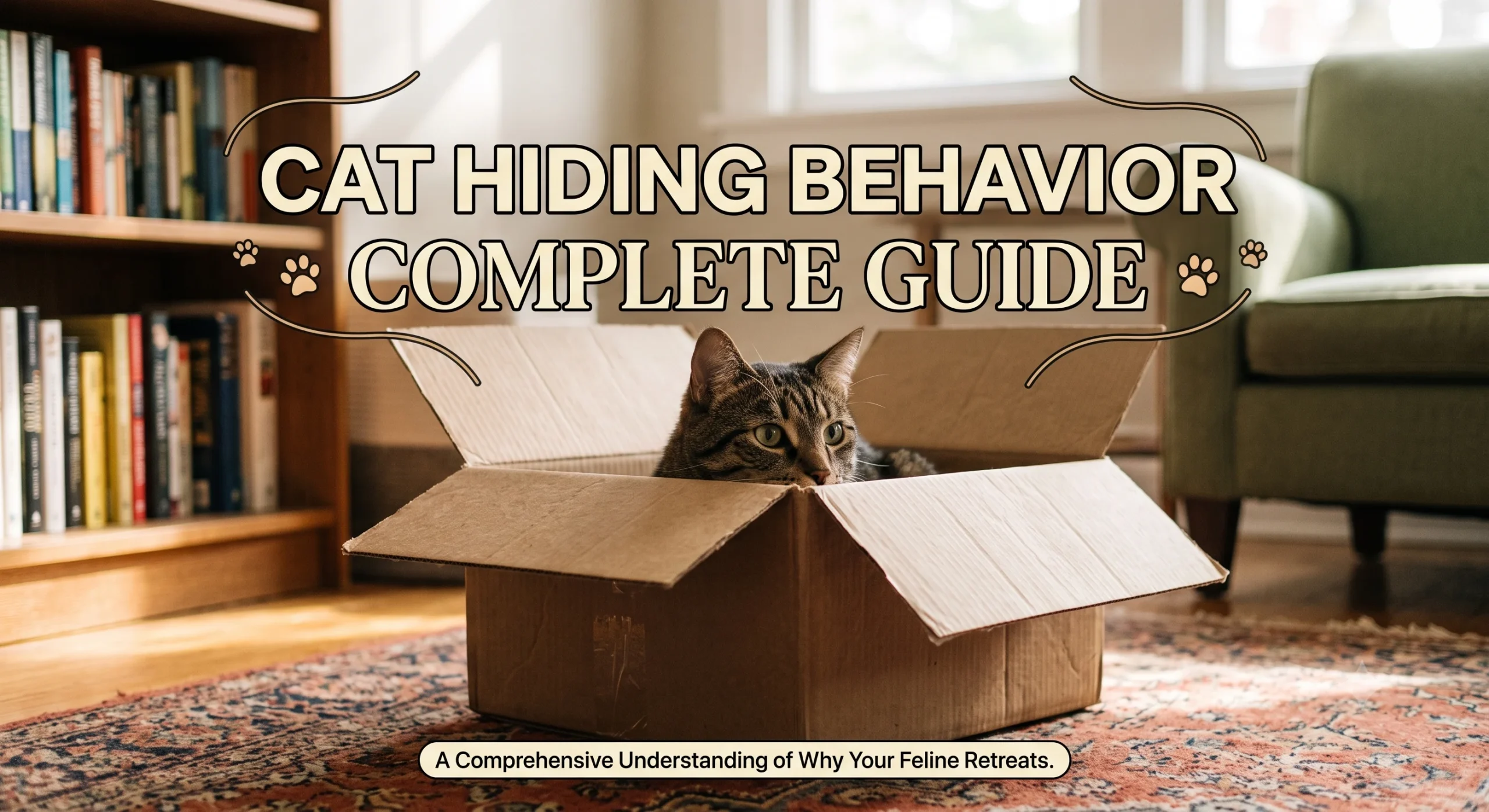

Cat hiding behavior is normal. Cats hide to rest, to feel safe and to get away from things that worry them. But hiding can also be one of the first signs that a cat is frightened, stressed, in pain or unwell. The trick is knowing which is which.
This guide explains why cats hide, how to tell normal hiding from hiding that needs attention, the most common causes, how to help a hiding cat feel safe, and when to see a vet.
Table of Contents
Why Cats Hide: The Evolutionary Reason
Cats are small predators that are also preyed on by larger animals. Hiding helps them in both roles: a tucked-away spot keeps them out of sight of anything that might threaten them, and staying concealed helps them ambush prey. Domestic cats have kept these instincts. A box, the space under a bed or a high shelf gives a cat a place where they can rest and watch without feeling exposed.
That is why hiding increases in situations a cat finds unpredictable or threatening, such as a new home, loud noises, unfamiliar people or other animals. Even confident, sociable cats may hide when something changes. In most cases this is a normal coping strategy, not a sign that something is wrong with the cat. Feline welfare guidelines from the American Association of Feline Practitioners and the International Society of Feline Medicine list a safe place to retreat to as one of the five pillars of a healthy environment for cats (AAFP/ISFM Environmental Needs Guidelines).
Normal Hiding vs Concerning Hiding
The difference between normal and concerning hiding depends on the context, how long it lasts and what else is going on, rather than a set number of hours.
Normal hiding usually follows a pattern you can explain. Your cat hides when visitors arrive and comes out once things calm down, naps in a favorite hidden spot, or hides during a thunderstorm and returns to normal afterwards. They still come out to eat, use the litter box and interact with you.
Hiding is more concerning when:
- It is a sudden change for your cat, especially a cat that does not normally hide
- There is no obvious trigger, such as visitors or loud noise
- Your cat will not come out for food, treats or things they usually enjoy
- Your cat chooses unusual, hard-to-reach spots
- Your cat hisses, growls or flinches when approached in the hiding spot, which can be a sign of pain or fear
- Hiding comes with other signs, such as not eating or drinking, vomiting, straining in the litter box, breathing problems, weakness or lethargy
Common Reasons Cats Hide
Fear and Anxiety
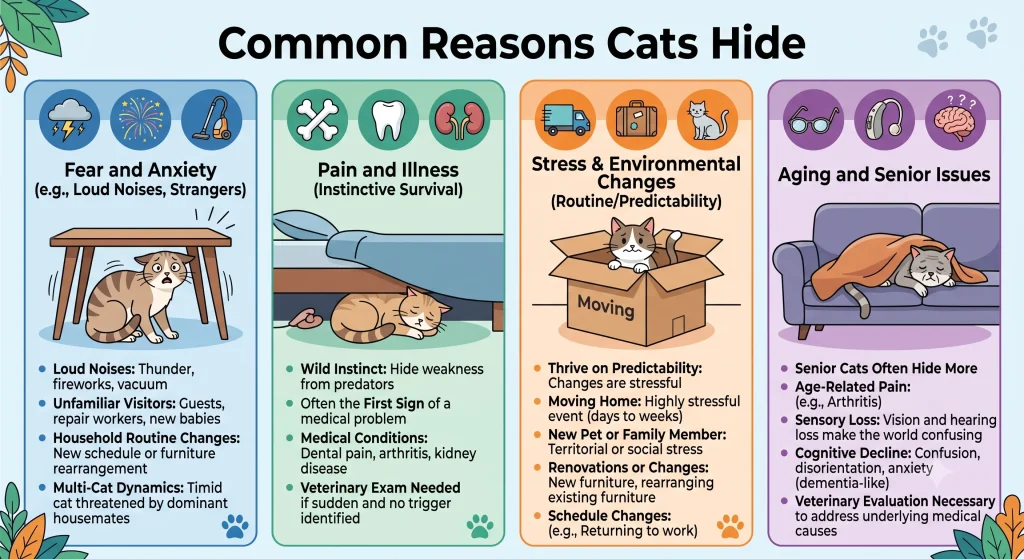
Fear is one of the most common reasons cats hide, and cats with ongoing anxiety may hide even without an obvious trigger. Common triggers include loud noises such as fireworks, thunderstorms, building work or the vacuum cleaner, and unfamiliar visitors, tradespeople or a new baby. In multi-cat homes, a cat that hides much more than the others may be avoiding tension or conflict with another cat, for example around food bowls, litter boxes or resting spots.
Pain and Illness
Cats tend to hide signs of pain and illness, and withdrawing or hiding can be one of the first changes an owner notices. According to VCA Animal Hospitals, sick or painful cats often become withdrawn and may hide, although this varies between individuals. Conditions such as dental disease, arthritis, urinary problems, pancreatitis and kidney disease can all lead to more hiding. If your cat suddenly hides more than usual and you cannot find a clear environmental reason, book a vet check. Our guide on how to tell if your cat is sick covers other early warning signs.
📚 Recommended Cat Guides
🐱 The Trainable Cat Book
Learn proven methods to train your cat and stop unwanted behaviors.
View Book →❤️ Complete Cat Care Manual
Your complete guide to cat nutrition, health, grooming, behavior, and daily care.
Get the Manual →Stress and Environmental Changes
Cats are creatures of habit, and changes that seem small to people can be stressful for them. Moving house, a new pet or person in the home, renovations, rearranged furniture or a change in your work schedule can all lead to more hiding for a while. How much a cat hides and for how long varies a lot from cat to cat. Introducing a new cat gradually helps; see our guide on how to introduce cats.
Natural Personality and Temperament
Some cats are simply more cautious than others. Cats that had little gentle handling by people during the sensitive socialization period, roughly three to nine weeks of age, are more likely to be wary of people as adults (AAFP Feline Behavior Guidelines). Genetics and early experiences also play a part. If your cat has always liked quiet hiding places but still eats well, uses the litter box and seeks you out at times, that is probably just their personality. What matters most is knowing your own cat’s normal behavior so you notice when it changes.
Nesting and Maternal Instincts
A pregnant cat close to giving birth will look for a quiet, dark, secluded place to have her kittens. This nesting behavior is normal (VCA). Unspayed female cats can occasionally show nesting behavior during a false pregnancy. Being in heat is different and usually causes more affection, rubbing and vocalizing rather than hiding. If a spayed cat starts nesting or hiding, do not assume it is hormonal; ask your vet.
Aging and Cognitive Decline
Older cats often hide more. Arthritis and other painful conditions can make a cat seek out spots where they will not be disturbed, and vision or hearing loss can make the world feel less predictable. Cognitive dysfunction syndrome, which is sometimes compared to dementia in people, can cause confusion and anxiety. However, the Cornell Feline Health Center notes that many other conditions common in older cats, including kidney disease, arthritis, hyperthyroidism, high blood pressure and dental disease, can cause similar changes. A senior cat that starts hiding more should see a vet so these can be checked first.
How to Help a Hiding Cat Feel Safe
Do Not Force Them Out
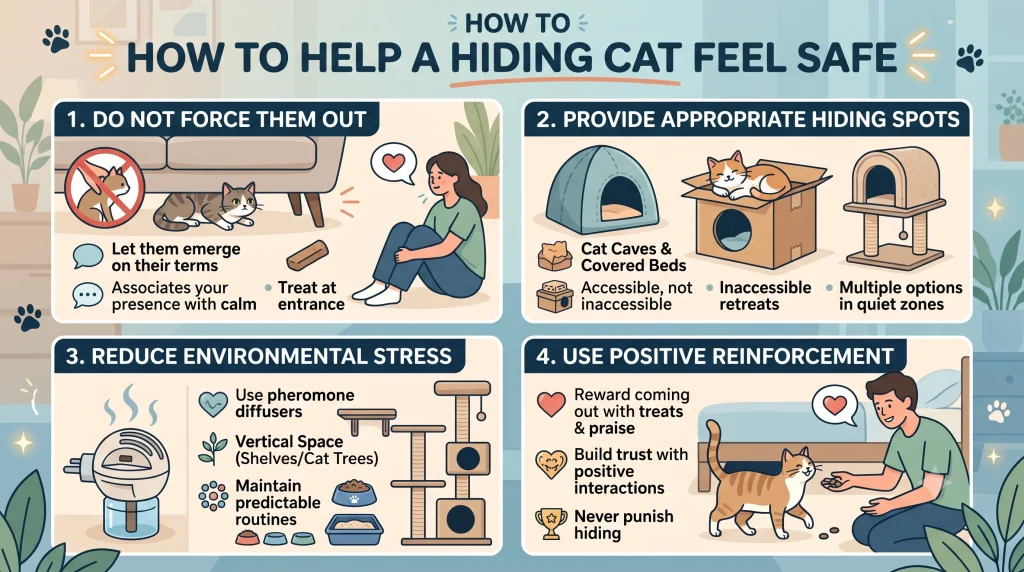
Pulling a cat out of a hiding place teaches them that the spot is not safe and that being approached is frightening, which can make hiding worse. Let your cat come out in their own time. Keep the area calm, sit nearby and talk quietly, and offer a treat near the entrance without reaching in. The exception is an emergency, such as a cat that is injured or needs urgent medical care, when you may need to carefully remove them to get help.
Provide Appropriate Hiding Spots
Rather than trying to stop hiding, give your cat good places to hide that you can still check on. Covered beds, cat caves, cardboard boxes with an entrance cut out and cat trees with enclosed platforms all work well. Put them in quiet areas, and offer more than one so your cat always has a nearby retreat. Having a safe place to retreat to helps cats cope with stress, which is why welfare guidelines recommend it.
Reduce Environmental Stress
Try to identify what is triggering the hiding and reduce it. Keep feeding, play and quiet time on a predictable routine. Add vertical space, such as shelves and cat trees, so your cat can watch from a height. In multi-cat homes, provide separate food and water bowls, litter boxes and resting places in different locations so cats do not have to compete. Some owners find synthetic pheromone diffusers helpful during stressful periods, although research results are mixed.
Use Positive Reinforcement
When your cat comes out on their own, reward them with a treat, gentle play or calm attention, depending on what they enjoy. This builds a positive association with being around you. Never punish a cat for hiding, as it will increase their fear. Short, pleasant interactions on your cat’s terms build trust over time.
When to See a Veterinarian
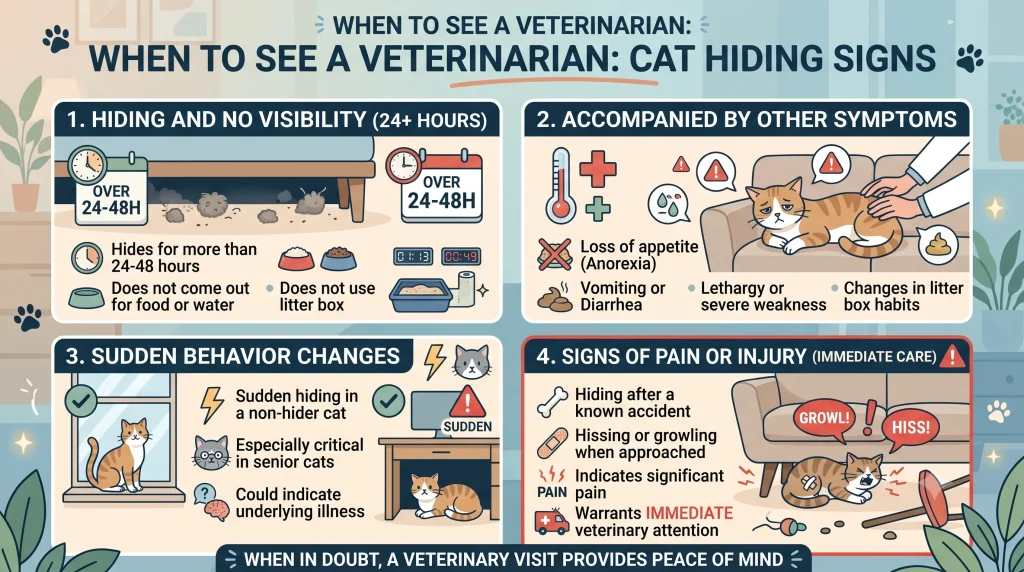
Contact your vet if hiding is new or unexplained, if your cat hides much more than usual for more than a day or so, or if hiding comes with other signs such as not eating or drinking, vomiting, diarrhea, weakness or lethargy. A senior cat that suddenly starts hiding should also be checked.
Seek urgent veterinary care straight away if your cat is hiding and:
- Is straining to pee or producing little or no urine, which can mean a life-threatening urinary blockage, especially in male cats (Cornell Feline Health Center)
- Is breathing with effort or with their mouth open
- Has collapsed, is very weak or seems in severe distress
- Has had an accident or injury
Cats that hiss, growl or lash out when approached in their hiding place may be in pain, so handle them carefully and have them checked.
Key Takeaways
- Most hiding is normal. Cats hide to rest and feel safe. What matters is whether the hiding is a change for your cat and whether there are other signs.
- Sudden or unexplained hiding needs a vet check. Hiding can be an early sign of pain or illness, especially in older cats.
- Do not force a hiding cat out. Let them come out in their own time, except in an emergency.
- Give them good places to hide. Covered beds, boxes and high perches in several rooms help cats feel secure.
- Reduce stress where you can. Predictable routines and enough resources for every cat help.
- Be patient with shy cats. Trust is built through calm, positive interactions over time.
FAQ
Why does my cat hide under the bed all the time?
The space under a bed is dark, enclosed and quiet, which makes it an appealing retreat. For some cats this is simply a favorite resting place. If your cat has started hiding there much more than usual, or seems frightened or unwell, look for possible triggers and consider a vet check.
Is it normal for cats to hide when visitors come over?
Yes. Many cats hide from unfamiliar people. Give your cat a quiet room or hiding spot with food, water and a litter box before visitors arrive, ask guests not to follow or pick up the cat, and let your cat come out if and when they feel ready.
How long do cats hide after moving to a new home?
It varies widely. Some cats settle within a few days, while others take several weeks. Start your cat in one quiet room with familiar bedding, food, water, a litter box and hiding places, and let them explore the rest of the home gradually. Contact your vet if your cat is not eating.
When should I worry about my cat hiding?
Worry when hiding is sudden or unexplained, when your cat will not come out to eat, or when it comes with other signs such as vomiting, litter box problems, breathing problems, weakness or aggression when approached. Straining to urinate, breathing difficulty or collapse needs emergency care.
How do I get my cat to stop hiding from me?
Do not chase or force interaction. Sit quietly nearby, offer treats or play from a distance, and let your cat approach you. Keep interactions short and pleasant, and provide hiding places where they feel safe but can still see what is going on.
Why does my new cat hide and not come out?
A new home is full of unfamiliar sights, sounds and smells, so hiding at first is normal. Set up a quiet room with food, water, a litter box and hiding places, spend calm time nearby, and give your cat days or weeks to settle. Make sure they are eating, drinking and using the litter box, and call your vet if not.
Is my cat depressed if they hide all the time?
Hiding on its own does not mean a cat is depressed. If your cat is also eating less, grooming less or losing interest in things they used to enjoy, the cause could be pain, illness or ongoing stress, so a vet visit is the best first step.
Why does my senior cat hide more than usual?
Older cats may hide more because of arthritis or other pain, vision or hearing loss, cognitive dysfunction, or illnesses such as kidney disease or hyperthyroidism. Any behavior change in a senior cat is a reason for a vet check.
Sources & References
- American Association of Feline Practitioners — AAFP Feline Behavior Guidelines
- AAFP/ISFM — Feline Environmental Needs Guidelines
- Cornell Feline Health Center — Cognitive Dysfunction
- Cornell Feline Health Center — Feline Lower Urinary Tract Disease
- VCA Animal Hospitals — Breeding and Queening Cats
- VCA Animal Hospitals — Recognizing the Signs of Illness in Cats