


Table of Contents
Cat Urinary Blockage Complete Guide to Symptoms Emergency Treatment and Prevention
You notice your cat visiting the litter box repeatedly, straining to urinate, and producing only tiny drops or nothing at all. They are crying in the litter box, licking their genitals excessively, and seem restless and uncomfortable. You might think it is a simple urinary tract infection, and you plan to call the vet in the morning. That decision could cost your cat their life. A urinary blockage, also called urethral obstruction, is one of the most dangerous emergencies in feline medicine.
When a cat becomes blocked, urine cannot leave the bladder. The bladder fills with urine, becomes painfully distended, and begins leaking toxins into the bloodstream. There is no way to predict how quickly any individual cat will deteriorate, so no waiting period is ever safe. Left untreated, the toxin buildup can cause life threatening kidney injury within about one to two days, and the overdistended bladder is also at risk of rupturing. A complete blockage that goes untreated is fatal, often within a matter of days. This is not an exaggeration or scare tactic. It is a medical fact that every cat owner needs to understand: a cat who cannot urinate needs emergency veterinary care immediately, not a wait-and-see approach. According to the Merck Veterinary Manual, complete obstruction typically causes uremia within 36 to 48 hours and can be fatal within approximately 72 hours without treatment.
Male cats are at significantly higher risk for urinary blockage than female cats because their urethra is narrower and longer, making it easier for crystals, mucus plugs, or inflammation to create a complete obstruction. However, female cats can also become blocked, and the condition is equally dangerous in both sexes.
This guide covers the exact symptoms of a urinary blockage that every owner should memorize, why male cats are most at risk, what causes blockages including crystals, stones, and mucus plugs, emergency treatment options including catheterization and surgery, long term prevention strategies that dramatically reduce recurrence, and the dietary and environmental changes that protect your cat from ever facing this life threatening condition again. Time is everything with urinary blockages. Knowing the signs and acting immediately saves lives.
📚 Recommended Cat Guides
🐱 The Trainable Cat Book
Learn proven methods to train your cat and stop unwanted behaviors.
View Book →❤️ Complete Cat Care Manual
Your complete guide to cat nutrition, health, grooming, behavior, and daily care.
Get the Manual →Symptoms of Urinary Blockage in Cats
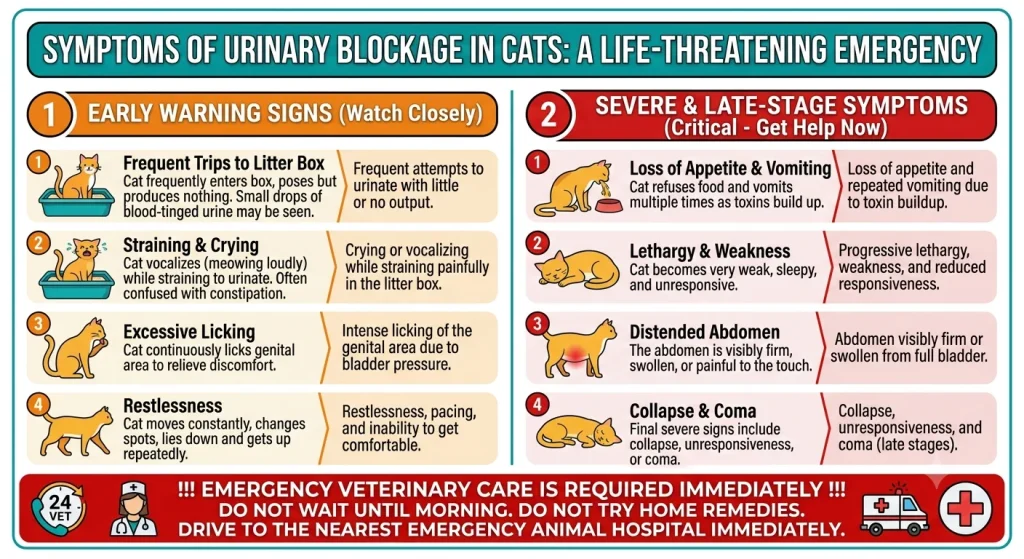
Recognizing urinary blockage symptoms early is literally the difference between life and death. The earliest signs include frequent trips to the litter box where the cat positions to urinate but produces little or no urine. You may see small drops, blood tinged urine, or nothing at all. The cat cries or vocalizes while straining in the litter box, which owners often mistake for constipation. Excessive licking of the genital area is a consistent sign, as the cat tries to relieve the discomfort of a full bladder. Restlessness and inability to get comfortable develop as the bladder fills and pressure increases. The cat may move from spot to spot, lie down, get up, and lie down again repeatedly.
As the blockage persists, more severe symptoms emerge. Loss of appetite and refusal to eat is an early systemic sign. Vomiting develops as toxins build up in the bloodstream, and the cat may vomit multiple times. Lethargy and weakness progress as the kidneys begin to fail. The cat becomes progressively less responsive and may stop moving altogether.
The abdomen becomes visibly distended and firm to the touch because the bladder is full of urine that cannot exit. In the final stages, the cat may become unresponsive, collapse, or enter a coma. These late stage signs indicate severe kidney failure and metabolic crisis. A cat showing any combination of these symptoms needs immediate emergency veterinary care. Do not wait until morning. Do not try home remedies. Drive to the nearest emergency animal hospital immediately.
Why Male Cats Are Most at Risk
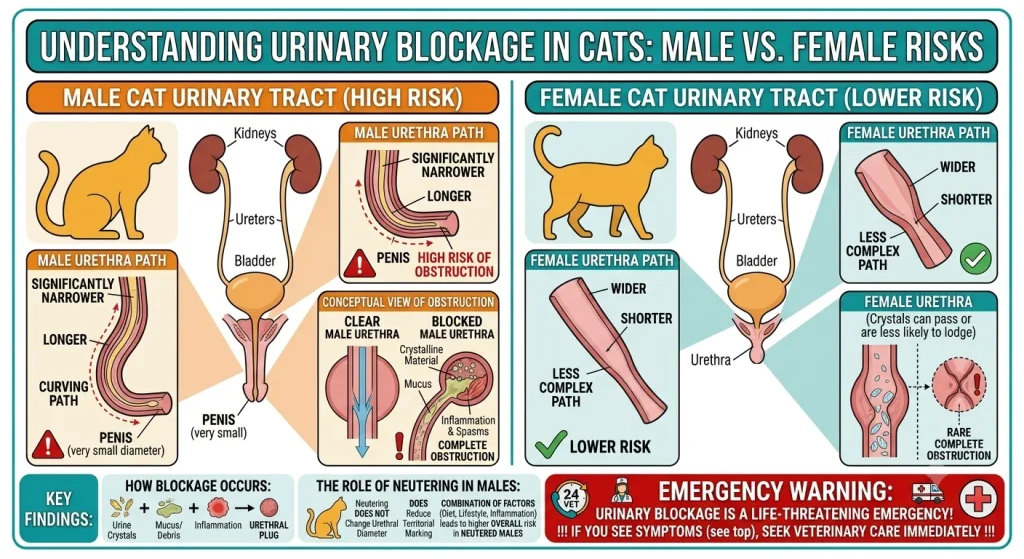
Male cats are approximately three times more likely to experience urinary blockage than female cats due to basic anatomy. The male urethra is significantly narrower and longer than the female urethra, running through the penis which is much smaller in diameter. This narrow passage means that even a small amount of crystalline material, mucus, or inflammation can create a complete obstruction.
Female cats have a shorter, wider urethra that is less likely to become fully blocked, though partial obstructions and inflammation still occur. The narrower anatomy in males also means that even small crystals that would pass easily through a female urethra can become lodged in a male urethra, creating a life threatening blockage. The International Cat Care organization notes that urethral obstruction occurs almost exclusively in male cats.
What Causes Urinary Blockages
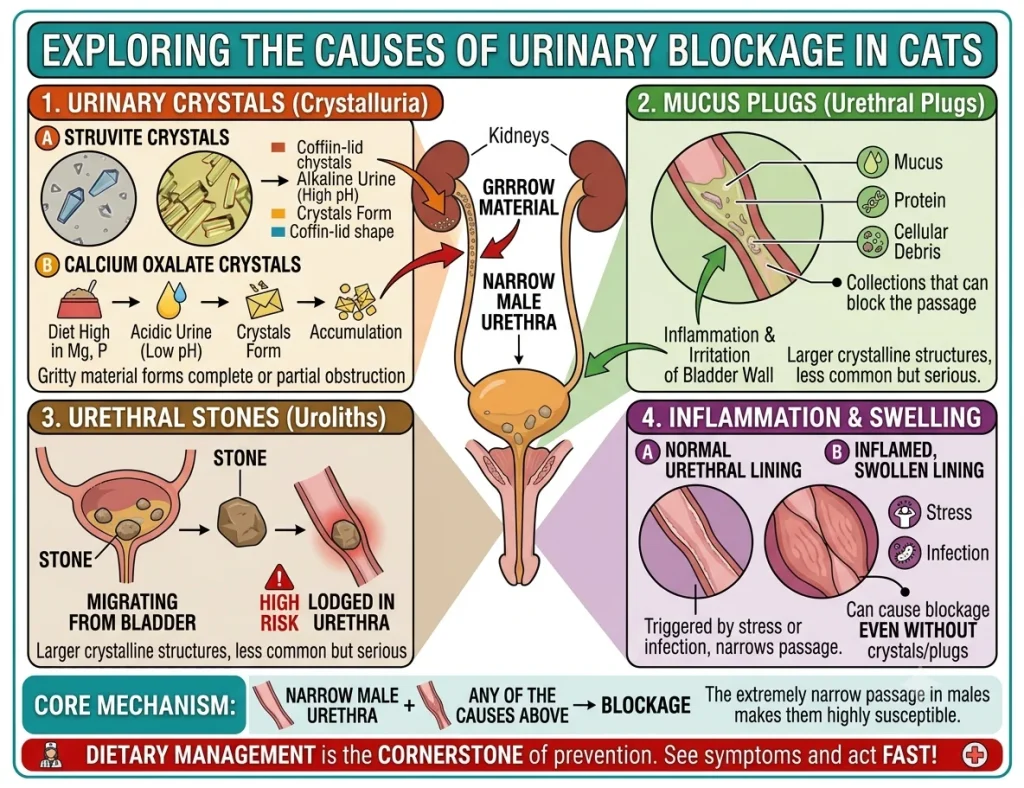
The most common cause of urinary blockage in cats is the formation of struvite or calcium oxalate crystals in the urine. These microscopic crystals accumulate in the bladder and urethra, forming a gritty material that lodges in the narrow urethral passage. Struvite crystals form in alkaline urine and are associated with diets high in magnesium and phosphorus. Calcium oxalate crystals form in acidic urine and are associated with high calcium and oxalate intake.
Diet plays a significant role in crystal formation, which is why dietary management is the cornerstone of prevention. Mucus plugs, which are collections of mucus, protein, and cellular debris, can also block the urethra. These plugs are often associated with inflammation and irritation of the bladder wall. Urethral stones, which are larger crystalline structures that form in the bladder and migrate into the urethra, are a less common but serious cause of blockage. Inflammation and swelling of the urethral lining, often triggered by stress or infection, can narrow the passage enough to cause a partial or complete obstruction even without crystals or plugs present. The Cornell Feline Health Center and the Merck Veterinary Manual both identify struvite and calcium oxalate as the two most common crystal and stone types involved.
Emergency Veterinary Treatment
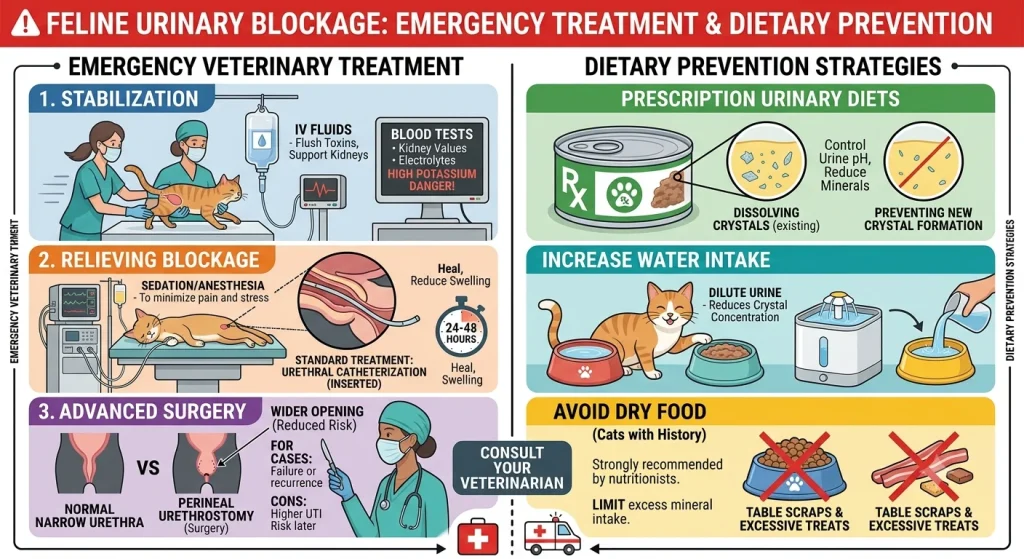
Treatment for urinary blockage requires immediate veterinary intervention. The first priority is stabilizing the cat, which may be in shock or metabolic crisis. Intravenous fluids are started immediately to flush toxins from the bloodstream and support kidney function. Blood tests are performed to assess kidney values and electrolyte levels, particularly potassium, which can reach dangerous levels in blocked cats. Once the cat is stabilized, the blockage must be relieved. This stabilize-first approach mirrors guidance in the Merck Veterinary Manual.
The standard treatment is urethral catheterization, where a small flexible tube is inserted through the urethra into the bladder to drain the urine. This is performed under sedation or general anesthesia to minimize pain and stress. The catheter is left in place for twenty-four to forty-eight hours while the urethra heals and swelling reduces. Urine output is carefully monitored during this period.
In cases where catheterization fails or the blockage recurs repeatedly, a surgical procedure called a perineal urethrostomy may be recommended. This surgery creates a wider urethral opening by removing the narrowest portion of the urethra, significantly reducing the risk of future blockage. The surgery has a high success rate but does increase the risk of urinary tract infections later in life because the shorter urethra provides less protection against bacteria. Your veterinarian will discuss whether this surgery is appropriate based on your cat’s individual situation and history of recurrence. For more on this procedure, see VCA Animal Hospitals’ overview of perineal urethrostomy surgery.
Dietary Prevention Strategies
Diet plays a major role in preventing urinary blockage, though prevention ultimately depends on the underlying cause and the individual management plan your veterinarian recommends for your cat. Prescription urinary diets are specifically formulated to dissolve existing crystals and prevent new crystal formation. These diets control urine pH, reduce mineral content, and increase water intake through higher moisture content. Wet food is often recommended for cats with a history of urinary blockage because the higher moisture content dilutes the urine and reduces crystal concentration, though your veterinarian can advise on the best hydration and diet strategy for your cat’s specific situation.
Increasing water intake through wet food, water fountains, and adding water to meals is one of the simplest and most effective prevention strategies, though it does not replace veterinary treatment during an active blockage. Avoiding dry food entirely for cats with a history of blockage is recommended by most veterinary nutritionists. Treats and table scraps should be limited to prevent excess mineral intake. This is consistent with the 2025 iCatCare consensus guidelines, which note that increasing water intake and feeding a wet diet can help reduce the risk of recurrence as part of an overall management plan.
Environmental Stress Reduction
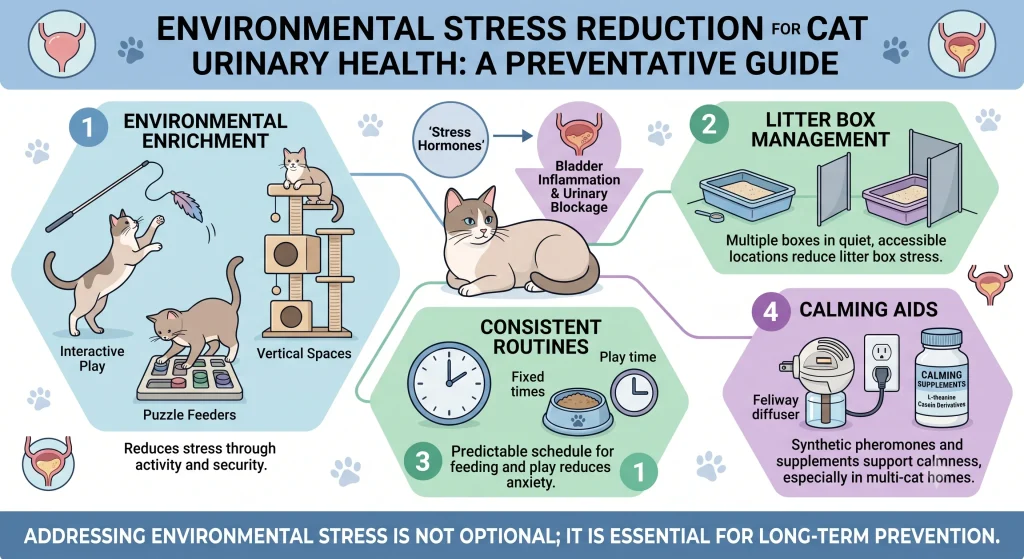
Stress is a significant contributing factor to urinary blockage in cats. Stress hormones affect bladder wall inflammation and urine pH, creating conditions favorable for crystal formation. Environmental enrichment, including interactive play sessions, puzzle feeders, and vertical spaces, reduces stress levels significantly. Multiple litter boxes placed in quiet accessible locations reduce litter box stress. Maintaining consistent routines for feeding and play reduces anxiety.
Feliway diffusers, which release synthetic feline facial pheromones, can reduce stress in multi cat households. Calming supplements containing L theanine or casein derivatives may help anxious cats. Addressing environmental stress is not optional for cats with a history of urinary blockage. It is an essential component of long term prevention.
Key Takeaways
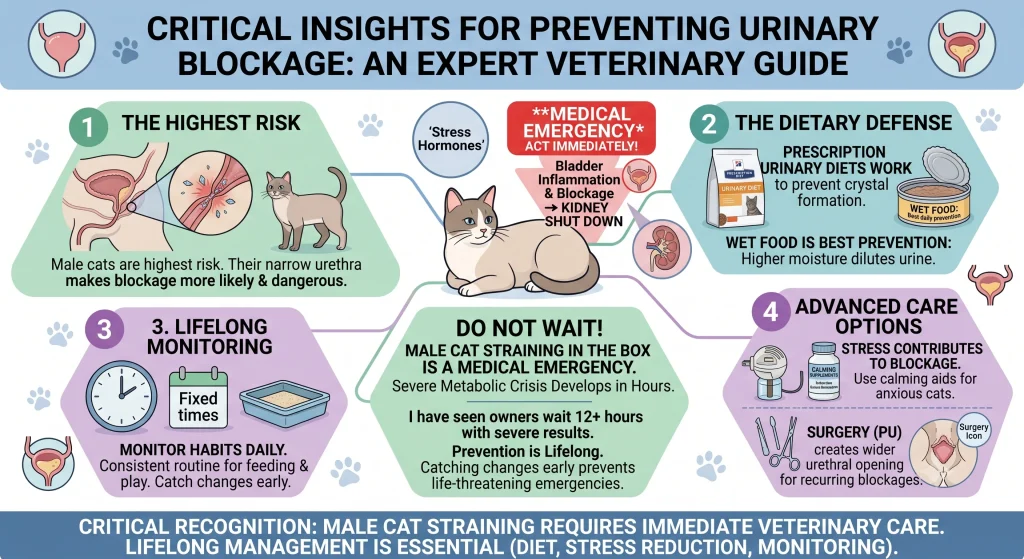
The most critical thing I can tell you about urinary blockage is this: if your male cat is straining in the litter box and not producing urine, This is a medical emergency that requires immediate veterinary care. Owners sometimes wait twelve hours or more because they thought their cat was constipated or just had a mild infection.
By the time they arrived at the hospital, the cat was in severe metabolic crisis with kidneys shutting down. Some of these cats did not survive despite aggressive treatment. Do not take chances with urinary blockage. If your cat is straining, vocalizing in the litter box, or producing no urine, get to an emergency vet immediately. It is always better to be safe than sorry with this condition.
- Urinary blockage is a medical emergency. Do not wait. Get to a vet immediately if your cat cannot urinate.
- Male cats are highest risk. Their narrow urethra makes blockage more likely and more dangerous.
- Wet food is the best prevention. Higher moisture content dilutes urine and reduces crystal formation.
- Prescription urinary diets work. They are specifically formulated to prevent crystal formation.
- Stress contributes to blockage. Environmental enrichment and routine are essential for prevention.
- Monitor litter box habits daily. Catching changes early prevents life threatening emergencies.
- Surgery is an option for recurring blockages. Perineal urethrostomy creates a wider urethral opening.
- Prevention is lifelong. Dietary management and stress reduction must continue permanently.
FAQ
What is a urinary blockage in cats?
A urinary blockage occurs when the urethra becomes obstructed by crystals, mucus plugs, or stones, preventing urine from leaving the bladder. It is a life threatening emergency requiring immediate veterinary treatment.
How long can a cat survive with a urinary blockage?
Without treatment, a blocked cat can develop life threatening kidney injury within about one to two days, and the blockage can be fatal within a matter of days. There is no safe amount of time to wait, so immediate veterinary care is essential for survival.
Are male cats more likely to become blocked?
Yes. Male cats have a narrower urethra that is more easily obstructed by crystals or plugs. They are approximately three times more likely to experience urinary blockage than females.
What causes urinary blockage in cats?
Struvite or calcium oxalate crystals, mucus plugs, urethral stones, and inflammation are the primary causes. Diet, hydration, and stress levels all contribute to blockage risk.
How is urinary blockage treated?
Treatment involves intravenous fluids for stabilization, urethral catheterization to relieve the blockage, and hospitalization for monitoring. Severe recurring cases may require surgery.
Can urinary blockage be prevented?
Yes. Prescription urinary diets, wet food feeding, increased water intake, and stress reduction significantly reduce the risk of recurrence.
Is surgery always needed for blockage?
No. Most cats are treated successfully with catheterization alone. Surgery called perineal urethrostomy is reserved for cats with recurring blockages that cannot be managed conservatively.
What diet is best for preventing blockage?
Prescription urinary diets with controlled mineral content and high moisture are recommended. Wet food is strongly preferred over dry food for cats with a history of blockage.
Does stress cause urinary blockage?
Stress contributes to blockage by increasing bladder inflammation and affecting urine pH. Environmental enrichment and stress reduction are essential prevention strategies.
How do I know if my cat is blocked?
Straining in the litter box with little or no urine output, crying while urinating, excessive genital licking, and lethargy are the primary signs. Any cat showing these symptoms needs immediate emergency care.
Sources & References
- Merck Veterinary Manual — Urethral Obstruction in Small Animals
- International Cat Care — Urethral Obstruction in Cats
- Cornell Feline Health Center — Feline Lower Urinary Tract Disease
- VCA Animal Hospitals — Perineal Urethrostomy Surgery in Cats
- Merck Veterinary Manual — Urinary Stones (Uroliths, Calculi) in Cats
- Taylor S, et al. — 2025 iCatCare Consensus Guidelines on the Diagnosis and Management of Lower Urinary Tract Diseases in Cats (Journal of Feline Medicine and Surgery)
[…] if it passes,” and do not try to treat a possible blockage at home. MyyCat’s guide to the signs of a urinary blockage in cats explains what to expect at the emergency […]
[…] Your cat is straining to urinate and producing little or no urine; see MyyCat’s guide to urinary blockage in cats […]
[…] to pee or to poop, treat it as an emergency and contact a vet now. MyyCat’s guide to urinary blockage in cats explains the signs in more […]
[…] while straining in the litter box or produces little or no urine — this can be a urinary blockage, which is an emergency, especially in male […]