
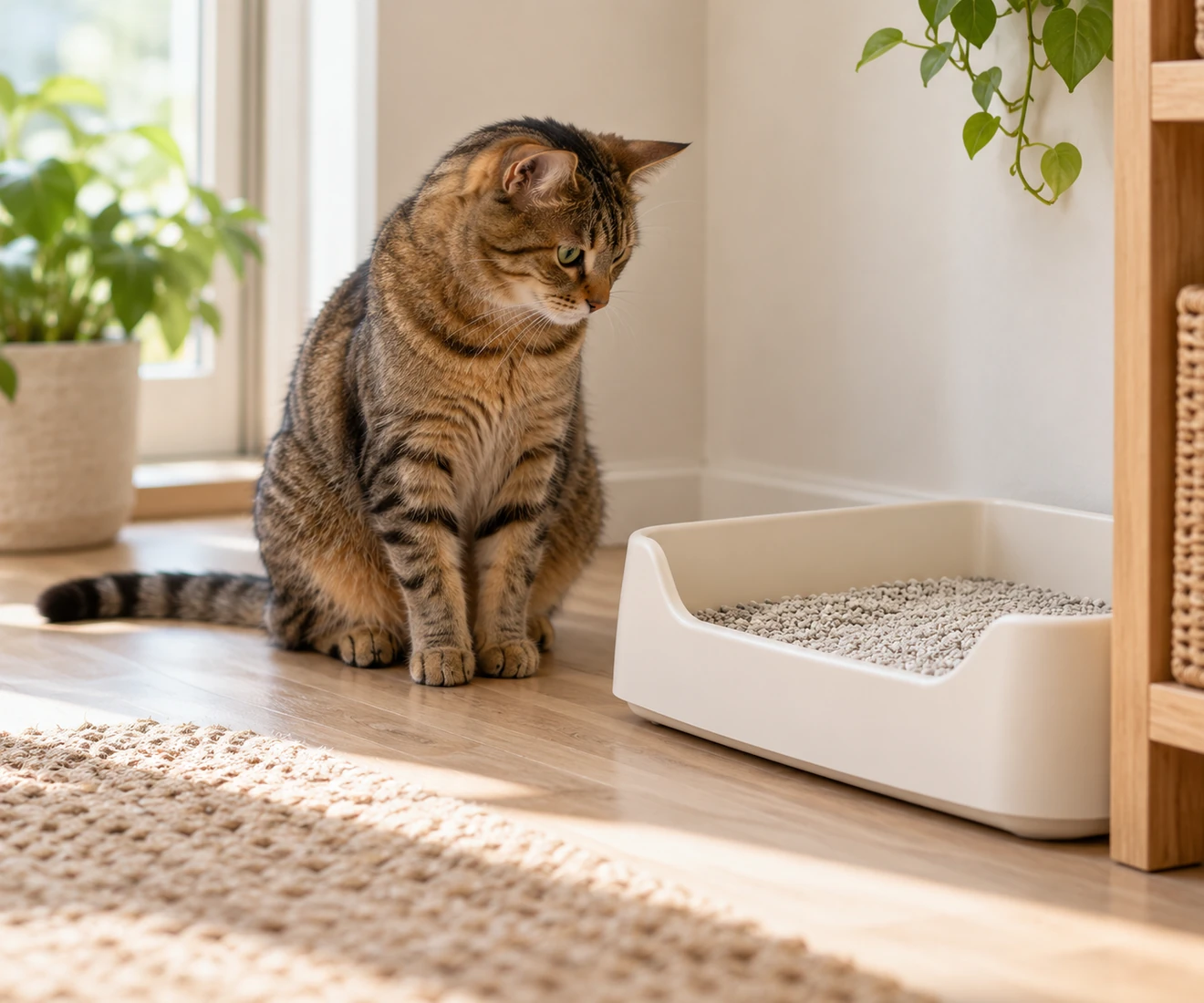

Your cat keeps visiting the litter box, crouches for a long time, and leaves little or nothing behind. Or you notice the stools that do appear are small, hard and dry. Cat constipation is a common problem, and mild cases often improve with simple changes. But a cat that strains without producing anything may not be constipated at all, and that difference can matter a great deal.
Quick answer: If your cat is straining in the litter box and you are not sure whether anything is coming out, especially if your cat is male, contact a vet right away, because a urinary blockage can look very similar and is an emergency. If your cat is constipated and also vomiting, not eating, lethargic or in pain, call your vet promptly. If your cat seems otherwise well but hasn’t passed stool in about two days, or is passing small, hard stools, call your vet for advice. Don’t give human laxatives or enemas at home.
This guide is general information to help you decide what to do next and talk with your veterinarian. It cannot tell you why your cat is constipated. Only a vet can examine your cat and find the cause.
Table of Contents
Is It Constipation or a Urinary Blockage?
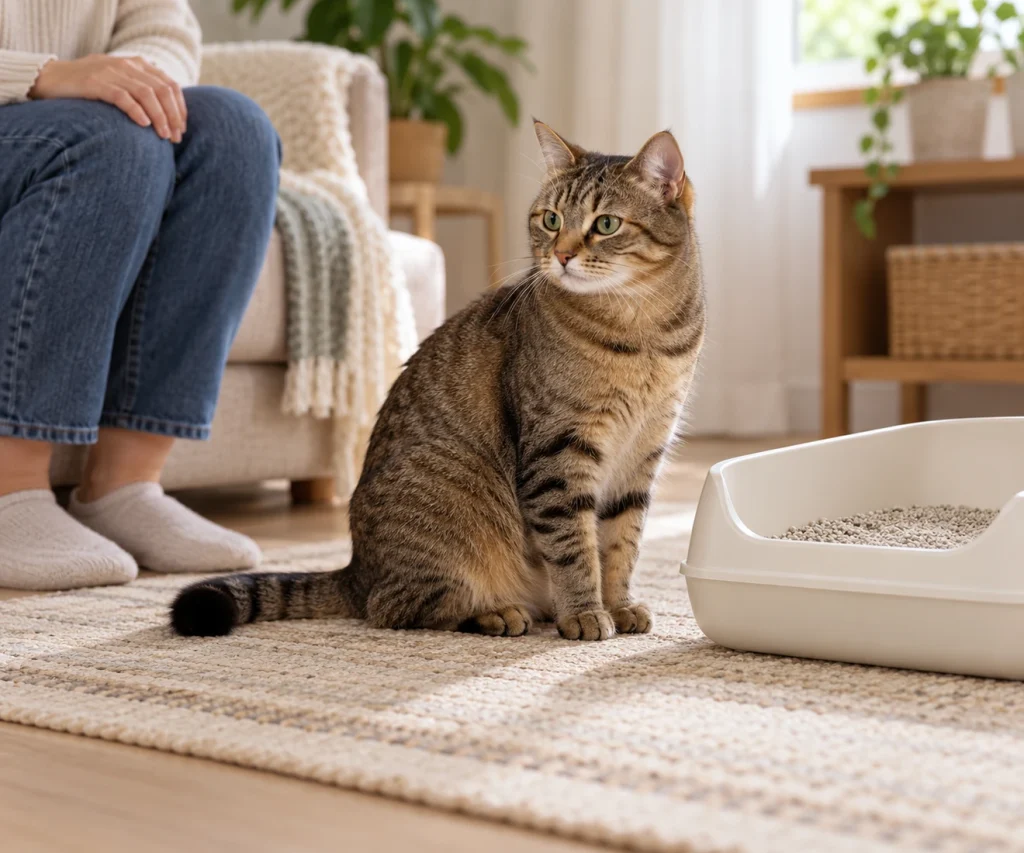
This is the most important question to answer first. VCA Animal Hospitals notes that constipated cats may go in and out of the litter box frequently, much like cats with urinary problems. International Cat Care also stresses the need to tell constipation apart from a urinary obstruction, which needs emergency care.
A cat that cannot pass urine can become critically ill within a short time. Male cats are at particular risk because of their narrower urethra. If you can’t tell whether your cat is straining to pee or to poop, treat it as an emergency and contact a vet now. MyyCat’s guide to urinary blockage in cats explains the signs in more detail.
A few clues can help you describe what you are seeing, but none replaces an examination:
| What you notice | May suggest |
|---|---|
| Clumps of urine in the litter are small, few or missing entirely | A urinary problem, possibly a blockage (emergency) |
| Crying, licking the genital area, or repeated squatting with no urine | A urinary problem (emergency if nothing is passing) |
| Normal urine clumps, but straining with few or no stools, or only small, hard stools | Constipation |
Signs of Cat Constipation
The Merck Veterinary Manual defines constipation as infrequent or difficult passage of stool, which is often dry and hard. According to VCA, International Cat Care and the PDSA, signs of cat constipation can include:
- Straining in the litter box, often for longer than usual
- Passing stool less often than normal, or not at all
- Small, hard, dry stools
- Crying out or appearing uncomfortable while passing stool
- Spending extra time digging in the litter box
- A hunched posture, reduced appetite or lethargy
- Vomiting, especially in more severe cases
VCA notes that most cats pass stool about once a day, and the Ontario Veterinary College’s pet nutrition team describes one to two bowel movements a day as typical for healthy adult cats. What matters most is a change from your own cat’s normal pattern.
How Long Can a Cat Go Without Pooping?
There is no exact safe limit, but veterinary sources give similar guidance. VCA advises calling your veterinarian if your cat hasn’t had a bowel movement within 48 to 72 hours of the last one. The Ontario Veterinary College team advises calling your vet if your cat hasn’t pooped in more than 48 hours, or if you notice hard, dry stool or straining.
The practical takeaway: if your cat hasn’t passed stool in about two days, call your vet. Call sooner if your cat is straining, seems uncomfortable, is vomiting or not eating, or if you can’t rule out a urinary problem. The PDSA advises contacting your vet whenever a cat shows signs of constipation, because it can get much worse if it is left.
If your cat has also stopped eating, read MyyCat’s guide on what to do when a cat is not eating, since cats should not go long without food.
When Constipation Becomes Serious: Obstipation and Megacolon
Most constipation is temporary, but repeated or prolonged episodes can lead to more serious problems. Merck defines three terms that vets may use:
- Constipation: infrequent or difficult passage of dry, hard stool.
- Obstipation: severe constipation where a mass of dry, hard stool cannot be passed.
- Megacolon: an enlarged colon that no longer contracts effectively, leading to ongoing constipation and obstipation. Merck notes that most cases of megacolon in cats have no identified cause.
This is why the Cornell Feline Health Center recommends treating constipation fairly aggressively to prevent it from progressing. A cat with recurrent constipation should have a plan agreed with a veterinarian rather than repeated home fixes.
What Causes Constipation in Cats?
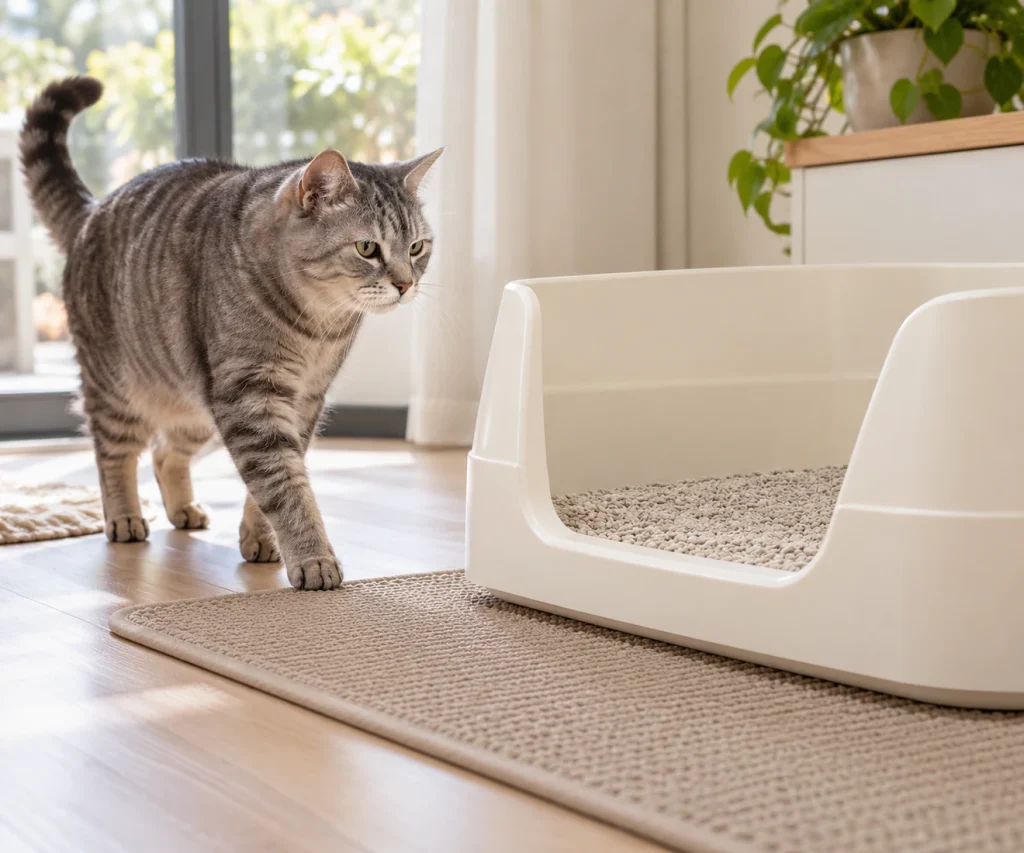
Veterinary sources list many possible causes of cat constipation, and several can act together. A vet’s exam is needed to work out which apply to your cat.
Dehydration and Diet
Stools become harder and drier when a cat doesn’t take in enough water. International Cat Care explains that chronic kidney disease, which is common in older cats, makes cats produce more urine, so they tend to become mildly dehydrated. Merck lists chronic kidney disease and not drinking enough among the factors in cats. MyyCat’s cat hydration guide covers practical ways to increase water intake.
Hair, Bones and Other Swallowed Material
Cornell, VCA and Merck all mention poorly digestible material, such as hair from grooming, bones, or litter, as a cause. Long-haired cats may swallow more fur, which is one reason VCA and the PDSA recommend regular grooming. MyyCat’s guide to cat vomiting and hairballs covers how hairballs fit into the picture.
Pain, Arthritis and Mobility
International Cat Care notes that pain, such as arthritis in older cats, can make it hard for a cat to get into position in the litter box, and VCA lists painful conditions such as osteoarthritis and pelvic injuries among the causes. MyyCat’s guide to arthritis in cats explains signs of joint pain that are easy to miss.
Litter Box Problems and Stress
Merck, International Cat Care and the PDSA all point to the litter box itself. A dirty box, competition between cats, an unsuitable litter, a poor location, or a bad past experience can make a cat reluctant to go. The PDSA also lists stress among the causes. MyyCat’s Cat Litter Box Calculator can help you check whether you have enough boxes for your household.
Weight and Activity
VCA lists obesity and lack of exercise among the causes, and Merck notes that older, overweight cats are among those at risk. If your cat needs to lose weight, MyyCat’s guide to helping your cat lose weight safely explains how to do it gradually with your vet.
Other Medical Causes
Less commonly, constipation is linked to a narrowing or blockage in the bowel, such as from a tumor, a foreign object or scarring; nerve or muscle problems affecting the colon; electrolyte imbalances; or side effects of some medications. Cornell, International Cat Care and Merck all list these possibilities, which is why persistent or recurring constipation needs a proper workup.
How to Help a Constipated Cat: Safe Steps
Mild cat constipation in an otherwise well cat often responds to changes in water intake, diet and litter box setup. Merck notes that mild cases may respond to a higher-fiber diet, ready access to water, more litter boxes and cleaning them more often. Because the right approach depends on the cause, talk to your vet before making changes, especially if your cat is older or has other health conditions.
- Increase water intake. International Cat Care recommends feeding wet food rather than dry to increase moisture intake. The Ontario Veterinary College team also suggests adding water to food. MyyCat’s guide to wet food for cats covers options if you are considering a switch.
- Ask your vet about fiber. Higher-fiber diets or fiber supplements can help some cats. The Ontario Veterinary College team advises talking to your vet first, since too much fiber can cause gas, bloating or loose stools.
- Make the litter box easy to use. International Cat Care suggests low-sided trays and soft, sandy litter for cats with mobility problems, and the PDSA recommends one tray per cat plus one extra. Scoop daily and place boxes in quiet, easy-to-reach spots.
- Encourage activity. VCA lists lack of exercise among the causes, and the PDSA recommends encouraging exercise.
- Groom long-haired cats regularly to reduce the amount of fur swallowed.
- Change food gradually. If your vet recommends a new diet, switch over several days as described in MyyCat’s guide on how to change cat food safely.
If your cat still hasn’t passed stool, is straining, or seems unwell, these steps are not enough. Contact your veterinarian.
What Not to Do
- Don’t give human laxatives. Merck warns that laxatives made for people can be very dangerous for pets.
- Never use a human enema at home. Merck warns that phosphate-containing enemas must be avoided in cats because they can cause severe, life-threatening electrolyte imbalances. Cornell notes that some cats need sedation and veterinary assistance to be given an enema.
- Don’t use stool softeners, oils or supplements without vet advice. The PDSA says laxatives should only be used under advice from your vet.
- Don’t wait days to see whether things resolve on their own, especially if your cat is straining or unwell.
- Don’t assume straining means constipation. If urine isn’t passing, it is an emergency.
What to Expect at the Vet
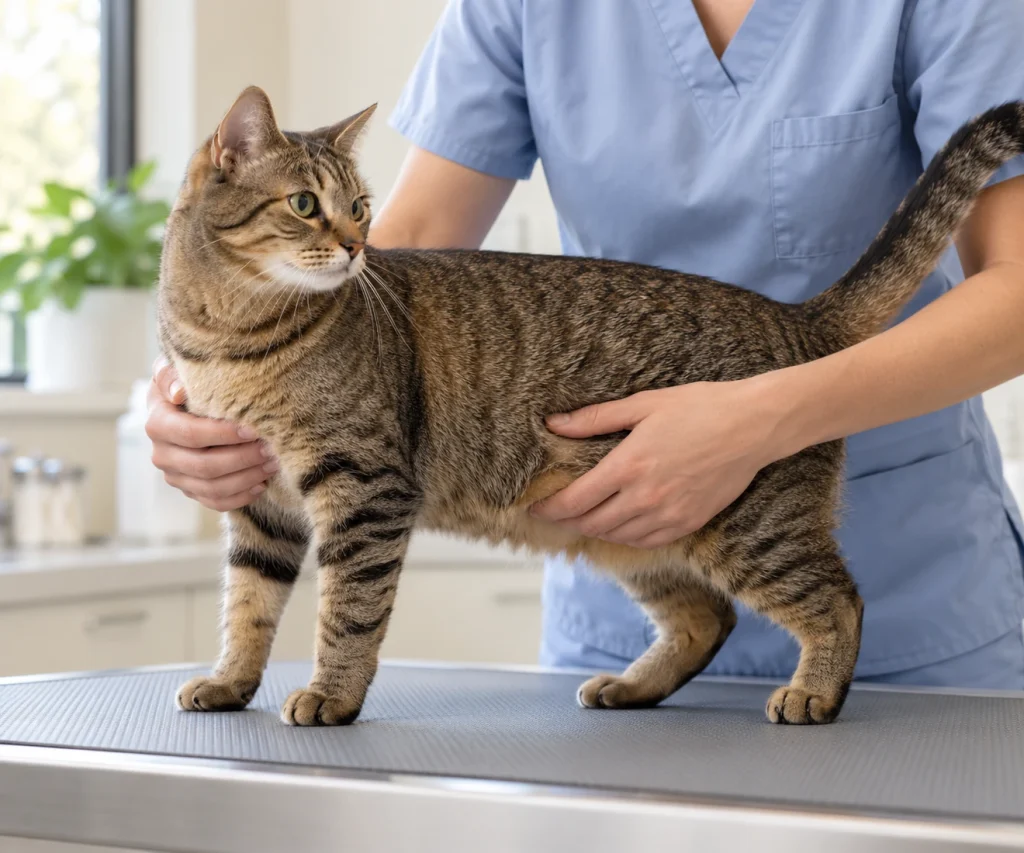
Your vet will usually start with a history and a physical exam, which may include feeling the abdomen and a rectal examination. Merck describes further tests that may be used depending on the findings, such as X-rays, blood tests, a urinalysis, and sometimes ultrasound or other imaging. Not every cat needs every test.
Be ready to tell your vet:
- When your cat last passed a normal stool, and what recent stools looked like
- Whether urine clumps in the litter look normal
- Any vomiting, appetite change, weight loss or lethargy
- Recent changes to food, litter, litter box location or household routine
- Any signs of pain or stiffness, and any medications your cat takes
Treatment for cat constipation depends on the cause and severity. According to VCA, International Cat Care and Merck, veterinarian-directed options may include fluid therapy, enemas or manual removal of stool (sometimes under sedation or anesthesia), prescription laxatives, medications that help the colon move, dietary changes, and pain relief for cats with arthritis. For cats with megacolon that does not respond to medical treatment, surgery to remove part of the colon may be recommended. VCA notes that most constipated cats can be managed without surgery.
Older Cats and Constipation
Several risk factors for constipation are more common in senior cats. International Cat Care points to arthritis and chronic kidney disease, and Merck notes that older, overweight cats are among those at risk. If your older cat is constipated, mention any changes in thirst, urination, weight or mobility to your vet, since these can help reveal an underlying cause. MyyCat’s checklist of signs your cat may be unwell can help you spot other changes.
Frequently Asked Questions
Can I give my cat a laxative?
Only one your veterinarian prescribes or recommends. Merck warns that laxatives formulated for people can be very dangerous for pets, and the PDSA advises using laxatives only on veterinary advice.
Is pumpkin good for cat constipation?
Pumpkin is often suggested online as a source of fiber. Fiber can help some cats, but the Ontario Veterinary College team recommends discussing fiber with your vet first, since too much can cause gas, bloating or loose stools. Because constipation has many possible causes, a vet check is the safest first step.
Can dry food cause constipation in cats?
Dry food provides less moisture, and not taking in enough water is a recognized factor in constipation. International Cat Care suggests feeding wet food rather than dry to increase water intake. Talk to your vet before changing your cat’s diet, and make any switch gradually.
Can stress cause constipation in cats?
Yes. The PDSA lists stress among the causes, and problems such as competition for litter boxes in multi-cat homes can make cats reluctant to use them. MyyCat’s guide to cat anxiety covers ways to reduce stress at home.
Is cat constipation an emergency?
It can be. Straining with nothing passing, vomiting, a painful belly, lethargy or refusing food need prompt veterinary attention. If there is any chance the straining is urinary rather than bowel-related, treat it as an emergency.
Key Takeaways
- Straining in the litter box can mean constipation or a urinary blockage. If you can’t tell, especially in a male cat, contact a vet immediately.
- Call your vet if your cat hasn’t passed stool in about two days, or sooner if your cat is straining, vomiting, not eating or in pain.
- Never give human laxatives or enemas. Phosphate enemas can be life-threatening for cats.
- Water intake, diet, litter box setup, weight, activity and pain all play a role in prevention.
- Repeated constipation can progress to obstipation or megacolon, so recurring cases need a veterinary plan.
More From MyyCat
The litter box calculator mentioned in this guide is collected with MyyCat’s other free resources on the MyyCat cat care tools page. If your cat has the opposite problem, see MyyCat’s guide to cat diarrhea. For more reading on everyday cat health and care, you can also browse MyyCat’s books.
This article is for informational and educational purposes only and is not a substitute for professional veterinary diagnosis, treatment, or advice. Please read our veterinary disclaimer.
Sources & References
- Cornell Feline Health Center — Constipation
- VCA Animal Hospitals — Constipation in Cats
- International Cat Care — Constipation in Cats
- PDSA — Constipation in Cats
- Merck Veterinary Manual (Cat Owners) — Disorders of the Stomach and Intestines in Cats
- Merck Veterinary Manual — Constipation, Obstipation, and Megacolon in Small Animals
- Merck Veterinary Manual — Megacolon in Cats
- Ontario Veterinary College Pet Nutrition — Is Your Cat Having Trouble Pooping? Let’s Talk Constipation