
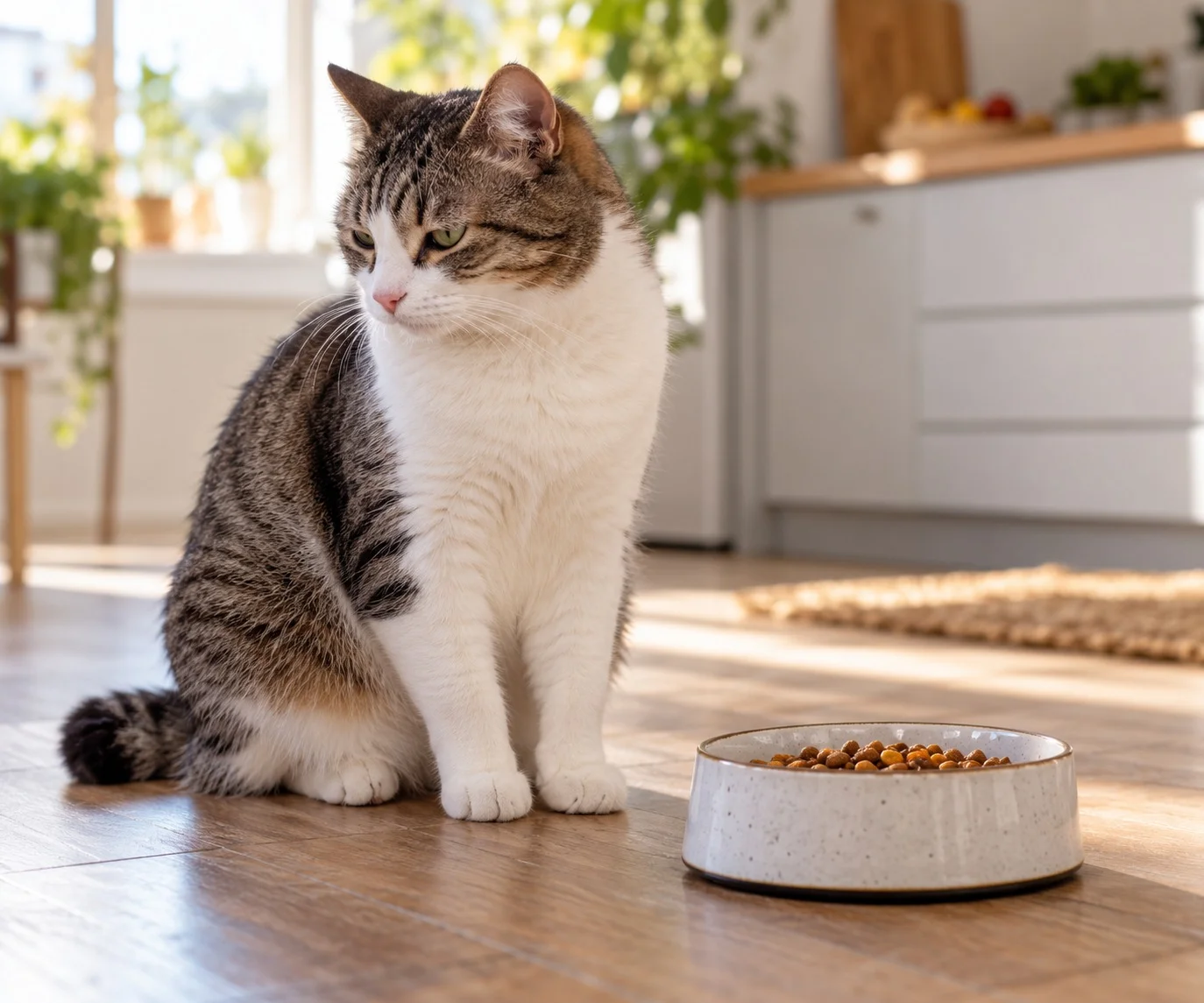

Your cat walks up to the bowl, sniffs, and walks away. Or you notice the food you put down this morning is still there tonight. A cat not eating can be something minor, like dislike of a new food, or an early sign of illness. What makes it different from a skipped meal in a person is that cats do not cope well with going without food, so appetite loss deserves attention sooner than many owners expect.
Quick answer: If your cat is not eating at all and also seems unwell (lethargic, vomiting, hiding, in pain, breathing abnormally, or straining in the litter box), contact a veterinarian right away. If your adult cat seems otherwise normal but has eaten nothing for about a day, call your vet for advice rather than waiting to see what happens. The Cornell Feline Health Center notes that lack of appetite can have a severe impact on an adult cat’s health if it lasts for as little as 24 hours. Kittens, senior cats, overweight cats, and cats with existing health conditions may need attention even sooner.
This guide is general information to help you decide what to do next and talk with your veterinarian. It cannot tell you why your cat has stopped eating. Only a vet can examine your cat and find the cause.
Table of Contents
When Is a Cat Not Eating an Emergency?
How urgently a cat not eating needs to see a vet depends on whether they are eating nothing or just less, how long it has been going on, and what else you are seeing. Use this as a general guide, and when in doubt, call your vet.
| What you see | What to do |
|---|---|
| Not eating plus lethargy, weakness, repeated vomiting, pain, labored or open-mouth breathing, yellow gums or eyes, or collapse | Contact a vet or emergency clinic now |
| Not eating and straining in the litter box with little or no urine | Emergency: go now (possible urinary blockage) |
| Not eating and you suspect a toxin or a swallowed object such as string | Contact a vet or animal poison control now |
| A young kitten not eating | Contact a vet promptly; very young kittens can decline quickly |
| An adult cat that has eaten nothing for about a day, even if acting normal | Call your vet the same day for advice |
| Eating noticeably less than usual for more than a day or two | Book a vet visit |
| Skipped one meal, otherwise bright, drinking, playing, and using the litter box normally | Monitor closely, try the safe steps below, and call your vet if it continues or other signs appear |
If your cat is straining to urinate without producing much, read about the signs of a urinary blockage in cats after you have called the vet, since this is a life-threatening emergency. For a broader checklist of changes to report, see MyyCat’s guide to other signs your cat is unwell.
Eating Less vs. Eating Nothing
Veterinarians use a few terms for appetite problems. International Cat Care describes anorexia as a complete loss of appetite and hyporexia as eating less than normal. Both matter. A cat eating only a fraction of their usual amount for several days can be taking in far too little, even though the bowl is never completely untouched.
VCA Animal Hospitals adds another useful distinction:
- The cat does not want to eat. This can be caused by illness, nausea, stress, or changes in smell.
- The cat wants to eat but can’t. VCA calls this pseudo-anorexia. The cat may approach the bowl with interest, then back off, drop food, chew on one side, or paw at the mouth. Mouth pain, dental disease, or trouble chewing or swallowing can cause it.
When you call about a cat not eating, noting which pattern you see gives your vet a valuable head start.
How Long Can a Cat Go Without Eating?
“How long can a cat go without eating?” is one of the most searched questions about appetite loss in cats, and it is easy to misread the answer. How long a cat might survive without food is not the same as how long it is safe to wait. The useful question is how soon to call the vet, and for cats the answer is sooner than for many other animals.
Veterinary sources word their guidance differently:
- Cornell Feline Health Center says loss of appetite can have a severe impact on a mature cat’s health if it persists for as little as 24 hours. For kittens younger than six weeks, it warns that avoiding food for just 12 hours can be life-threatening.
- VCA advises consulting your veterinarian immediately if your cat has refused food for more than two days.
- International Cat Care advises contacting your vet urgently if your cat has had a reduced appetite for three days or more, and notes that cats can develop liver problems if they go without food even for a short time.
These are not rules that tell you how long you can safely wait. They reflect different situations and levels of caution. The practical takeaway is to contact your vet about an adult cat that has eaten nothing for around a day, or that has been eating much less than usual for more than a day or two. Call sooner if your cat is a kitten, a senior, overweight, has a chronic condition, or has any other symptoms.
Why Not Eating Is Riskier for Cats: Hepatic Lipidosis
One reason vets take appetite loss seriously in cats is a condition called feline hepatic lipidosis, or fatty liver disease. When a cat stops eating, the body breaks down stored fat for energy. According to VCA, when that fat is broken down rapidly it can overwhelm the liver’s ability to process it, and fat builds up in the liver.
The Merck Veterinary Manual describes it as the most common acquired liver disease in cats and a potentially fatal one. It typically develops in overweight cats when an illness or a stressful event, such as a move, boarding, or the loss of a companion, leads them to eat too little. VCA notes that in more than 90% of cats with the condition, an underlying disease caused the loss of appetite in the first place. VCA also describes it as developing in cats that stop eating for as little as three to four days, and the University of Illinois College of Veterinary Medicine similarly describes the risk after a few days without food.
Not every cat that stops eating will develop hepatic lipidosis, and a single missed meal does not cause it. But because it can follow a few days of poor eating, especially in overweight cats, it is a strong reason not to wait things out. Signs can include yellowing of the gums, skin, or whites of the eyes, which needs prompt veterinary care. With treatment, which usually centers on intensive nutritional support, many cats recover.
Why Is My Cat Not Eating? Common Causes
Appetite loss is a symptom, not a diagnosis, so there is no single answer to “why is my cat not eating?” Cornell, VCA, and International Cat Care all list a wide range of possible causes. Some are simple to fix, and others need treatment. Several can look the same at home, which is why a vet’s examination matters.
Nausea and Vomiting
International Cat Care notes that any disease causing nausea can affect appetite. If your cat is also throwing up, MyyCat’s guide to when cat vomiting needs urgent care explains which combinations need a vet right away.
Digestive and Internal Illness
Intestinal problems, kidney disease, liver disease, diabetes, hyperthyroidism, infections, and cancer can all reduce appetite. International Cat Care and Cornell both include these among the possible causes. Cornell also lists pancreatitis among the causes, and MyyCat’s guide to pancreatitis in cats explains its signs and treatment. The pattern of other signs, such as weight loss, thirst, vomiting, or diarrhea, helps your vet decide which tests are needed.
Dental and Mouth Pain
Dental disease, mouth inflammation, and other problems in the mouth can make eating painful. VCA includes these under pseudo-anorexia, where the cat seems hungry but struggles to eat. Clues can include dropping food, chewing on one side, drooling, bad breath, or preferring soft food. These signs don’t prove a dental problem, but they are worth mentioning to your vet.
Respiratory Illness and Loss of Smell
Smell plays a big part in a cat’s interest in food. VCA lists loss of smell among the causes of appetite loss, and a cat with a congested nose from an upper respiratory infection may ignore food they would normally love. Sneezing, nasal or eye discharge, or noisy breathing alongside poor appetite are reasons to call your vet.
Stress and Changes at Home
International Cat Care notes that inappetence can be caused by stress, and Cornell also points to psychological factors such as environmental changes. A cat not eating after a move, a new pet or baby, visitors, boarding, or a change in routine is common. Even so, stress should not be assumed to be the cause without ruling out illness, especially if the appetite loss lasts. Merck notes that stressful events are among the common triggers for hepatic lipidosis, so a stressed cat still needs to eat. MyyCat’s guide to signs of stress and anxiety in cats can help you reduce the triggers.
Food Changes and Food Aversion
Cornell notes that some cats simply reject new foods. A sudden switch in brand, flavor, or texture can put a cat off eating. That is one reason to change diets gradually, as explained in MyyCat’s guide to switching cat food gradually. Cats can also develop an aversion to a food they associate with feeling unwell or being forced to eat. That is why vets advise against force-feeding and against introducing a brand-new diet while a cat is sick, unless your vet recommends it.
If your cat is not eating dry food but eats treats, it may be pickiness or a food preference, but it can also be a sign of mouth pain, since treats and soft foods can be easier to eat. Treats alone do not provide complete nutrition, so this pattern still deserves a conversation with your vet if it continues.
Recent Medications or Procedures
If your cat’s appetite changed after starting a new medication, a vet visit, or a procedure, tell your veterinarian. Do not stop a prescribed medication on your own. Your vet can advise whether the change is expected and what to do next.
Cat Not Eating but Drinking Water
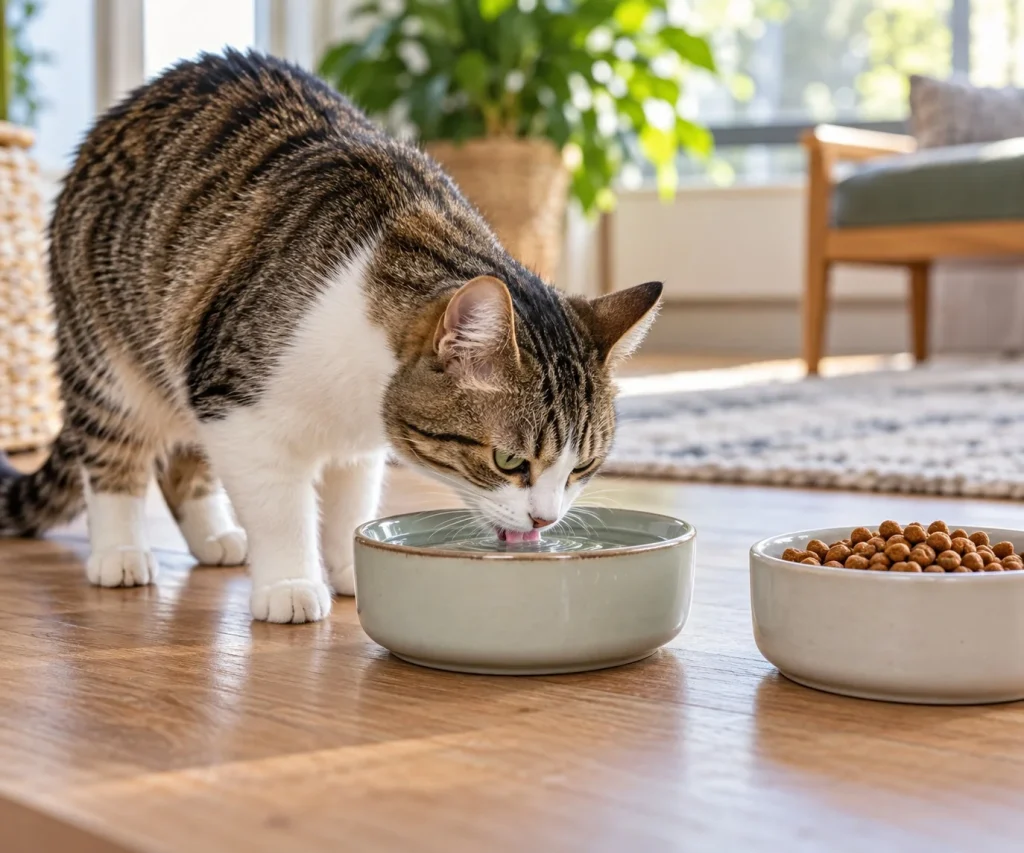
It is common to see a cat not eating but drinking water, and many owners are reassured that their cat is still drinking. Drinking is a good sign in the sense that it helps prevent dehydration, but it does not rule out illness or make a lack of food safe. A cat still needs food to avoid the risks described above.
In fact, drinking more than usual while eating less can itself be a reason to see the vet. Cornell lists increased thirst among the signs that should prompt a veterinary visit in a cat that is also vomiting, and conditions such as kidney disease and diabetes can increase thirst. If you notice your cat at the water bowl more often, bigger clumps in the litter box, or drinking from unusual places, mention it. MyyCat’s hydration guide explains how to recognize dehydration in cats if you are also worried your cat is not drinking enough.
Cat Not Eating but Acting Normal
Cats are good at hiding illness, so “acting normal” is less reassuring than it sounds. If your cat has skipped a single meal but is otherwise playful, drinking, grooming, and using the litter box normally, it is reasonable to monitor closely for a short time and try the safe steps below. But if your cat has eaten nothing for about a day, or is eating much less than usual beyond a day or two, call your vet even if they seem fine otherwise.
Kittens, Senior Cats, and Overweight Cats
- Kittens: Cornell warns that in kittens younger than six weeks, avoiding food for just 12 hours can be life-threatening. Any kitten that is not eating should be seen promptly.
- Senior cats: A senior cat not eating may have an underlying condition such as kidney disease, hyperthyroidism, or dental disease, all of which appear among the causes of appetite loss listed by Cornell and International Cat Care. Contact your vet early rather than waiting.
- Overweight cats: VCA and Merck both identify overweight cats as being at greater risk of hepatic lipidosis when they stop eating. This is also why weight loss in cats must be gradual and vet-guided, as explained in MyyCat’s guide on helping your cat lose weight safely.
How to Encourage a Cat to Eat: Safe Steps at Home
These steps are only for a cat with no warning signs, as a short-term measure while you monitor or wait to speak with your vet. They are not a substitute for a veterinary visit for a cat not eating after you have tried them.
- Offer fresh food. Remove old food and offer a fresh portion of your cat’s usual diet.
- Warm wet food slightly. International Cat Care and VCA both mention warming food to make it more appealing. Warm it only slightly, then stir and check it so there are no hot spots.
- Try a favorite food or treat. International Cat Care suggests offering tasty treats. This can help show whether your cat will eat at all, but treats are not a complete diet.
- Use a quiet, calm feeding spot away from other pets, noise, and the litter box, and offer food in a shallow dish.
- Keep fresh water available at all times.
- Write down what your cat eats, roughly how much, and when, so you can tell your vet accurately.
If your cat eats a normal amount after one of these steps and continues to eat well, keep watching. If not, or if your cat’s appetite stays reduced, contact your veterinarian.
What Not to Do
- Don’t force-feed or syringe-feed unless your vet has specifically shown you how and told you to. International Cat Care warns that forcing a cat to eat can cause emotional distress or severe health complications. VCA notes that force-feeding raises the risk of inhaling food into the lungs and can worsen food aversion.
- Don’t give human medications, supplements, or appetite stimulants that have not been prescribed for your cat. Some human medications are toxic to cats.
- Don’t wait several days because your cat is still drinking or seems otherwise normal.
- Don’t withhold food as a “rest” for the stomach unless your vet advises it.
- Don’t switch to a completely new diet while your cat is unwell unless your vet recommends it.
- Don’t add seasoned foods or broths that contain onion or garlic, which are toxic to cats.
When to Take a Cat to the Vet for Not Eating, and What to Expect
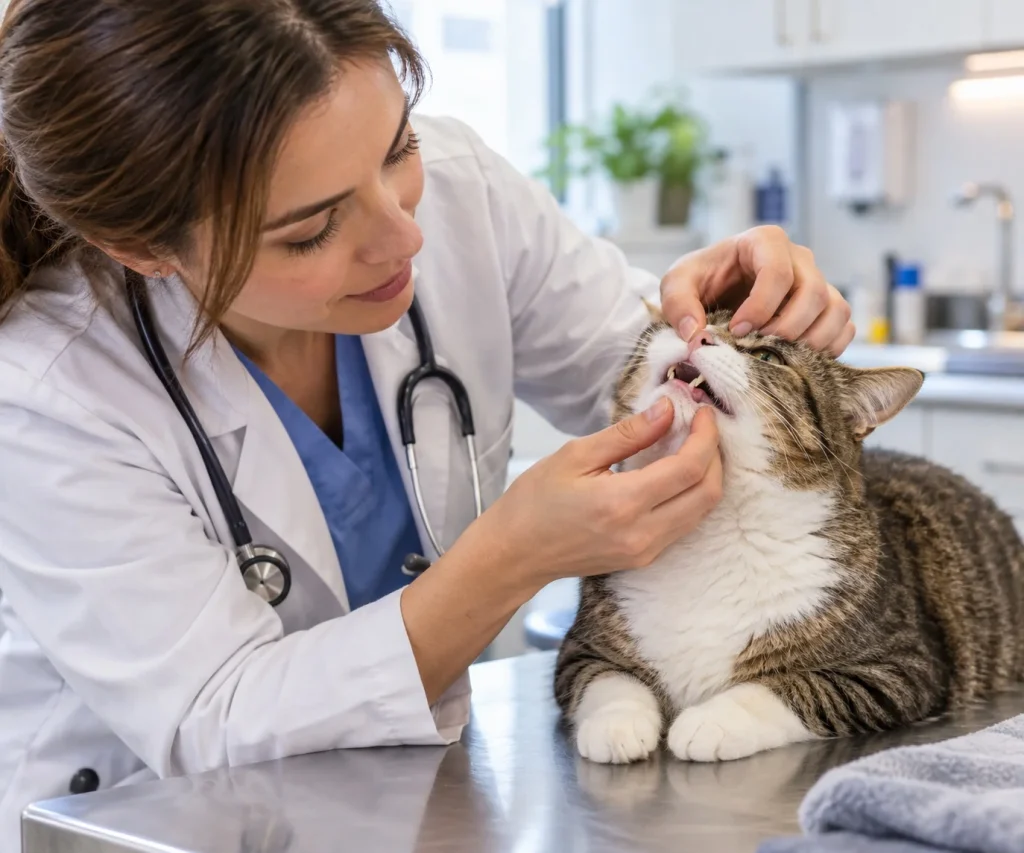
Use the table near the top of this article to judge how soon a cat not eating needs to be seen. At the appointment, your veterinarian will usually start with a history and a physical exam. Be ready to describe:
- When the appetite change started and how much your cat has eaten
- Whether your cat seems to want food but can’t eat it
- Any vomiting, diarrhea, drooling, thirst, or litter box changes
- Recent changes at home, new foods, medications, or possible access to toxins or string
The exam typically includes checking the mouth and teeth, hydration, body weight, and body condition. Depending on the findings, your vet may recommend tests such as blood work, a urinalysis, or imaging. Not every cat needs every test.
Treatment depends on the cause. According to VCA, Cornell, and Merck, veterinarian-directed options may include treating the underlying problem, fluid therapy, anti-nausea medication, appetite stimulants, and, for cats that cannot eat enough on their own, a feeding tube to deliver nutrition. Merck notes that nutritional support, often through a feeding tube, is the cornerstone of recovery from hepatic lipidosis. If your vet prescribes medications, MyyCat’s Cat Medication Schedule Generator can help you keep track of doses at home.
Tracking Appetite and Weight
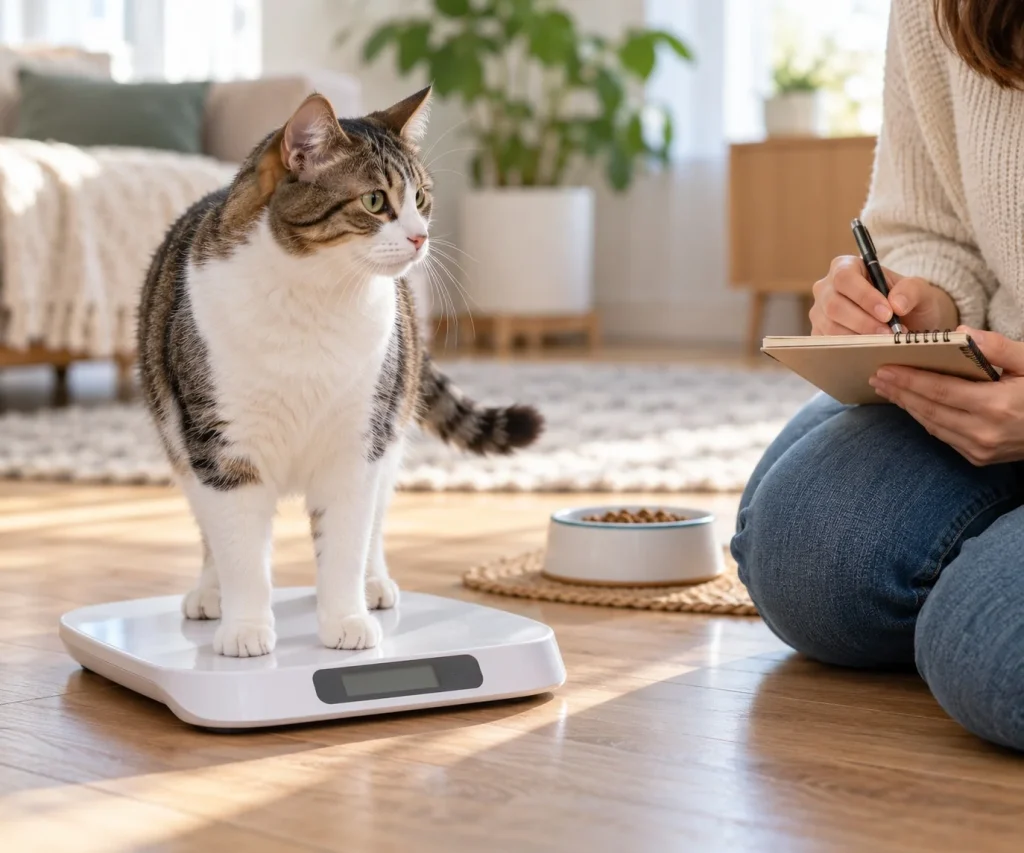
Appetite changes can be gradual, and a cat not eating their full portion is easy to miss, especially in multi-cat homes. A simple daily note of how much your cat eats, plus regular weigh-ins on a pet or baby scale, gives your vet clear information and helps you catch a problem early. MyyCat’s Cat Weight Calculator can help you put your cat’s weight in context. Any unexplained weight loss is worth discussing with your vet.
Frequently Asked Questions
Is it normal for a cat to skip a meal?
An occasional skipped meal in a healthy adult cat that is otherwise acting normally is not always a cause for alarm. But cats should not go long without eating. If your adult cat eats nothing for around a day, or eats much less than usual for more than a day or two, contact your vet.
Why is my cat not eating after moving house?
Moving is stressful, and stress can reduce appetite. Set up a quiet room with food, water, a litter box, and familiar bedding, and keep routines predictable. Because a stressful event followed by poor eating is a known trigger for fatty liver disease, especially in overweight cats, contact your vet if your cat is not eating within about a day of the move.
How can I get a sick cat to eat?
Follow your veterinarian’s plan. Your vet may suggest warming food, offering a highly palatable diet, or treating nausea or pain so your cat feels like eating. For cats that still cannot eat enough, vets may prescribe appetite stimulants or place a feeding tube. Don’t force-feed at home unless your vet has shown you how and advised it.
Can stress make a cat stop eating?
Yes. International Cat Care and Cornell both list stress and environmental changes as possible causes. But illness can look similar, so stress should only be assumed after a vet has checked your cat, particularly if the appetite loss continues.
Key Takeaways
- A cat not eating needs attention sooner than many owners expect.
- Go to a vet immediately if appetite loss comes with lethargy, vomiting, pain, breathing problems, jaundice, straining to urinate, or a suspected toxin.
- Call your vet about an adult cat that has eaten nothing for about a day, or is eating much less for more than a day or two. Kittens, seniors, overweight cats, and cats with health conditions may need care sooner.
- A cat not eating but drinking water, or acting normally, can still be unwell; neither rules out illness.
- Hepatic lipidosis is a serious risk when cats, especially overweight cats, go without enough food.
- At home, offer fresh or slightly warmed food in a quiet spot, but never force-feed or give unprescribed medications.
More From MyyCat
The weight and medication tools mentioned in this guide are collected with MyyCat’s other free resources on the MyyCat cat care tools page. For more reading on everyday cat health and care, you can also browse MyyCat’s books.
This article is for informational and educational purposes only and is not a substitute for professional veterinary diagnosis, treatment, or advice. Please read our veterinary disclaimer.
Sources & References
- Cornell Feline Health Center — Anorexia
- Cornell Feline Health Center — Vomiting
- VCA Animal Hospitals — Anorexia in Cats
- VCA Animal Hospitals — Hepatic Lipidosis in Cats (Fatty Liver Syndrome)
- International Cat Care — Inappetence in Cats
- Merck Veterinary Manual — Feline Hepatic Lipidosis
- University of Illinois College of Veterinary Medicine — Hepatic Lipidosis: When Cats Don’t Eat