
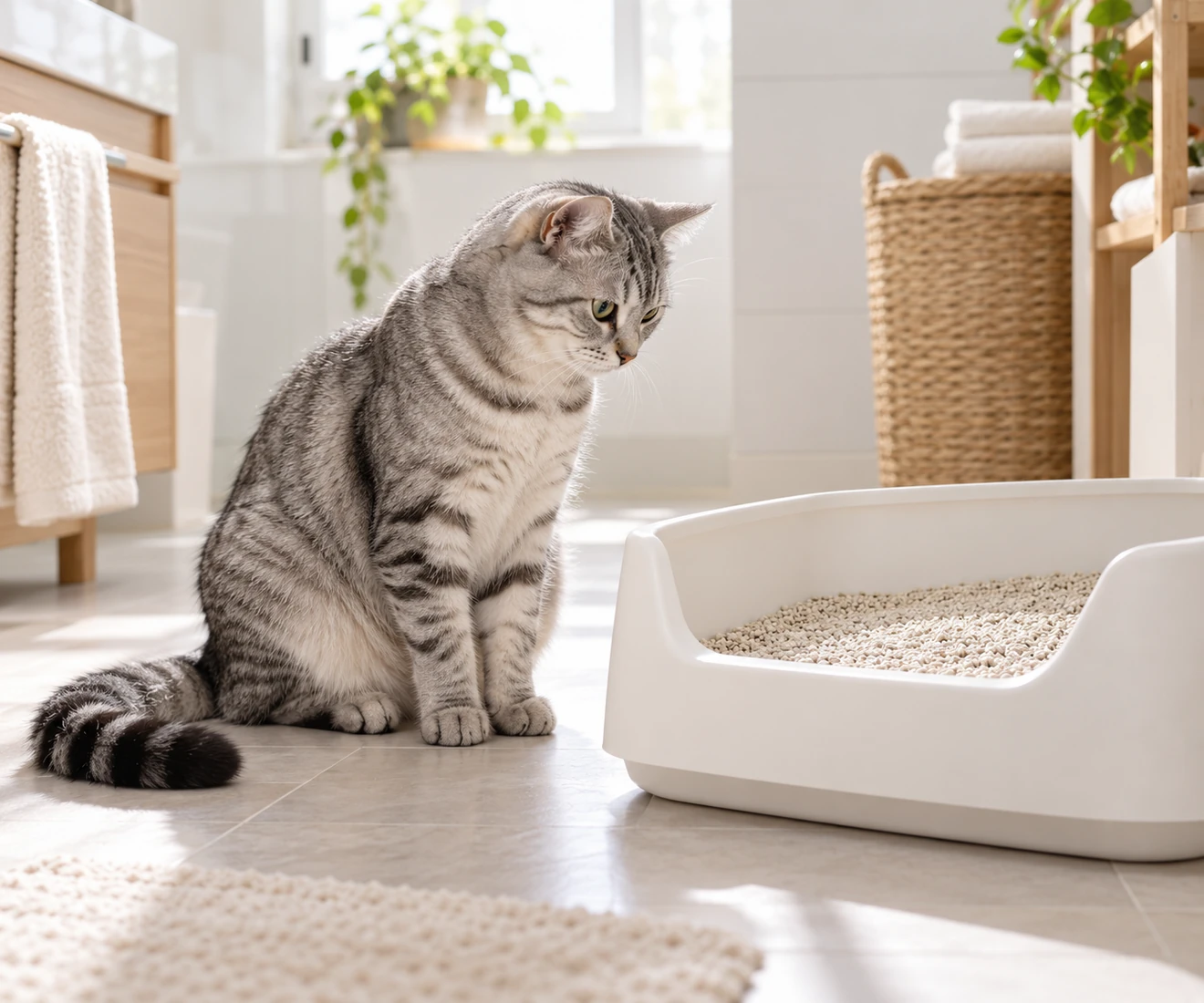

You scoop the litter box and find something soft, runny or far more frequent than usual. Cat diarrhea is common, and many cases are mild and short-lived, often after a change in food or a stressful few days. But diarrhea is also a sign of many different illnesses, and in some cats it causes dehydration quickly. The key is knowing which situation you are looking at.
Quick answer: If your cat has diarrhea along with vomiting, lethargy, a painful belly, blood or black, tarry stool, or is not eating, contact your veterinarian promptly. Kittens and senior cats with diarrhea should also be checked sooner. If your adult cat has mild diarrhea but is otherwise bright, eating, drinking and behaving normally, you can usually monitor at home for a short time, but call your vet if it has not settled within about a day or if any other sign appears.
This guide is general information to help you decide what to do next and talk with your veterinarian. It cannot tell you why your cat has diarrhea. Only a vet can examine your cat and find the cause.
Table of Contents
When Is Cat Diarrhea an Emergency?
Diarrhea is a symptom, not a diagnosis, so how worried you should be depends on what else is going on. The table below draws on warning signs listed by VCA Animal Hospitals and the PDSA. Use it as a general guide, and when in doubt, call your vet.
| What you see | What to do |
|---|---|
| Diarrhea with repeated vomiting, weakness, collapse, a painful or tense belly, or signs of dehydration | Contact a vet or emergency clinic now |
| Large amounts of blood in the stool, or black, tarry stool | Contact a vet now |
| Diarrhea and you suspect your cat ate something toxic, such as a poisonous plant or medication | Contact a vet or animal poison control now |
| Straining in the litter box with little or nothing coming out | Contact a vet now, because it can be hard to tell straining to poop from straining to pee |
| A kitten or senior cat with diarrhea | Call your vet the same day |
| Diarrhea plus poor appetite, lethargy or weight loss | Call your vet promptly |
| Mild diarrhea in an adult cat that is otherwise acting completely normal | Monitor closely, follow the safe steps below, and call your vet if it lasts beyond about a day or any other sign appears |
| Diarrhea that keeps coming back or has gone on for weeks | Book a vet appointment |
The straining point matters. A cat crouching in the litter box and producing little or nothing may be constipated, may have colitis, or may have a urinary blockage, which is a life-threatening emergency, especially in male cats. Do not assume it is “just” a bowel problem.
What Counts as Diarrhea in Cats?
VCA describes diarrhea as unformed or loose stools passed in larger amounts or more often than usual. The Cornell Feline Health Center adds that it may be watery, oddly colored (gray or yellow), unusually foul-smelling, and sometimes streaked with mucus or blood.
It happens when food moves through the intestines too quickly, so less water, nutrients and electrolytes are absorbed, as International Cat Care explains. That lost fluid is why diarrhea can dehydrate a cat, and why the Merck Veterinary Manual warns that ongoing diarrhea with large fluid losses can lead to dehydration, electrolyte imbalance and even shock.
Because cats bury their waste, it is easy to miss changes. If you share a box between several cats, try to work out which cat is affected before calling the vet.
Small Bowel vs. Large Bowel Diarrhea: Clues Worth Noting
Vets often start by asking whether the diarrhea looks like it comes from the small intestine or the large intestine (colon), because the two point toward different causes. The Merck Veterinary Manual summarizes the typical differences:
| Clue | Small intestine | Large intestine (colon) |
|---|---|---|
| How often | Normal or slightly more often | Very frequent |
| Amount each time | Normal to large | Small |
| Urgency and straining | Usually absent | Usually present |
| Mucus | Usually absent | Frequent |
| Blood | Dark black (tarry) | Fresh red |
| Weight loss | May be present | Rare |
You don’t need to make this call yourself, and many cats don’t fit neatly into one column. But noting how often your cat goes, how much comes out, and whether you see mucus, fresh blood or black stool gives your vet a useful head start. Merck notes that black, tarry stool can be a sign of bleeding in the stomach or small intestine, so always report it.
What Causes Cat Diarrhea?
Cornell, VCA, International Cat Care and the PDSA all describe a long list of possible causes of cat diarrhea. Some are simple and pass quickly; others need diagnosis and treatment. Several look identical at home, which is why persistent or worrying diarrhea needs a vet’s examination.
Food Changes, Treats and Food Intolerance
Dietary change is among the causes of cat diarrhea listed by Cornell, and the PDSA names a sudden change in diet as one of the most common. New treats, table scraps or a rich food your cat isn’t used to can do the same. This is why diets should be changed gradually; MyyCat’s guide on how to change cat food safely walks through a step-by-step transition. Some cats react to particular ingredients long term; MyyCat’s guide to food allergies in cats explains how vets investigate that with a diet trial.
Parasites and Infections
VCA and the PDSA list intestinal worms and other parasites, including protozoa such as coccidia, and bacterial or viral infections among the causes. MyyCat’s guide to worms in cats covers the main parasites and prevention. Feline panleukopenia (feline distemper), which Cornell lists among the causes, is a serious viral disease that core vaccination helps protect against; see MyyCat’s cat vaccination schedule.
Stress
Cornell notes that stress, such as travel or a trip to the vet, can trigger diarrhea. Moving house, a new pet, or changes in routine may have the same effect in some cats. Diarrhea triggered by stress may settle once the stressful event has passed, but stress should not be assumed to be the cause if it persists. MyyCat’s guide to cat anxiety can help you reduce stress triggers at home.
Toxins and Things Your Cat Shouldn’t Have Eaten
VCA lists toxins and poisonous plants among the causes of diarrhea. If there is any chance your cat has eaten a toxic plant, a human or dog medication, or a household chemical, contact your vet or an animal poison control service right away rather than waiting to see what happens.
Underlying Illness
Diarrhea can also be a sign of disease elsewhere in the body. Cornell lists hyperthyroidism, kidney disease and liver disease, and the PDSA includes pancreatitis among the more common causes. MyyCat has guides to hyperthyroidism and pancreatitis in cats if your vet mentions either.
For diarrhea that lasts weeks, vets also consider chronic inflammatory gut conditions, often called inflammatory bowel disease (IBD), and intestinal lymphoma. According to Merck, telling these two apart in cats can be challenging and may require biopsies. This is not something to worry about after a single bout of loose stool, but it is one reason chronic diarrhea should always be investigated.
How Long Does Cat Diarrhea Last, and When Should You Call the Vet?
Mild diarrhea caused by something simple, such as a food change, may settle quickly once the trigger is removed. But there is no single safe waiting period, and veterinary sources word their advice differently:
- The PDSA says mild diarrhea in a cat that is otherwise well and has had it for less than 24 hours may be settled at home, and to contact your vet if it continues beyond that.
- Cornell advises contacting a veterinarian if diarrhea persists longer than a day or two and the cat also has signs such as poor appetite, lethargy or vomiting.
- VCA advises consulting your vet if frequent liquid or semi-liquid stools persist for more than two days.
- International Cat Care recommends a vet check whenever diarrhea is severe, comes with other signs of illness, or lasts more than a few days.
These figures describe different situations and levels of caution, not a deadline to wait for. The practical takeaway: for an adult cat that is otherwise completely normal, call your vet if mild diarrhea hasn’t clearly improved within about a day. Call sooner, or go straight in, if your cat is a kitten or a senior, has a health condition, or shows any of the warning signs in the table above.
Vets generally call diarrhea that has lasted for weeks “chronic.” Merck describes chronic gastrointestinal signs as those lasting three weeks or longer. Chronic or recurring diarrhea, even in a cat that seems fine, deserves a proper workup rather than repeated home treatment.
Cat Diarrhea but Acting Normal
If your cat has one or two loose stools but is eating, drinking, playing and grooming as usual, it is reasonable to monitor closely for a short time. Look for a likely trigger, such as a new food, extra treats or a recent upheaval, and remove it if you can.
Cats are good at hiding illness, though, so “acting normal” is not a reason to let diarrhea run on. If it continues beyond about a day, keeps recurring, or your cat starts eating less, hiding or vomiting, contact your vet. MyyCat’s checklist of signs your cat may be sick can help you spot subtler changes.
Diarrhea and Vomiting Together
Diarrhea and vomiting at the same time mean fluid is being lost from both ends, so dehydration can develop faster. Both Cornell and VCA list vomiting alongside diarrhea as a reason to involve your vet, and repeated vomiting with diarrhea should be treated as urgent. MyyCat’s guide to cat vomiting explains which vomiting patterns need emergency care.
If your cat has diarrhea and has also stopped eating, read MyyCat’s guide on what to do when your cat is not eating. Cats should not go without food for long, so the two together are a reason to call your vet promptly.
Kittens and Senior Cats
Kittens: The PDSA advises contacting your vet about any kitten with diarrhea, because young cats are at greater risk of dehydration. Parasites and infections are among the causes vets will want to rule out, and Cornell notes that developmental issues can also play a role in kittens. Don’t try to manage kitten diarrhea at home without advice.
Senior cats: The PDSA gives the same advice for elderly cats. Kidney disease and hyperthyroidism, which Cornell lists among the causes, are conditions vets see more often in older cats, and the PDSA notes that elderly cats are also at greater risk of dehydration. Call your vet early.
What to Feed a Cat With Diarrhea: Safe Steps at Home
These steps are only for an adult cat with mild diarrhea and no warning signs, as a short-term measure while you monitor or wait to speak with your vet. They are not a substitute for a veterinary visit if the diarrhea continues.
- Keep fresh water available at all times. VCA and the PDSA both stress constant access to water. If you are worried your cat isn’t drinking enough, MyyCat’s cat hydration guide explains how to spot dehydration and encourage drinking.
- Don’t starve your cat. The PDSA notes there is no need to withhold food from a cat with mild diarrhea. Cats can become seriously ill if they go too long without eating, so only withhold food if your vet specifically tells you to.
- Offer small, bland, frequent meals. The PDSA suggests small meals of something bland, such as plain boiled chicken or white fish. Serve it plain, with no seasoning, butter, onion or garlic, and remove bones and skin.
- Ask your vet about a gastrointestinal diet. VCA and International Cat Care describe highly digestible veterinary diets as part of treatment. Plain chicken or fish is not a complete, balanced diet, so it is only suitable for a short time.
- Return to the usual food gradually. Once your cat is passing solid stools again, the PDSA recommends reintroducing the normal diet slowly over a few days.
- Stop extra treats and table food until things have settled. MyyCat’s cat treats guide covers which treats are better choices once your cat is well.
- Keep notes. Write down when the diarrhea started, how often it happens, what it looks like, and what your cat has eaten. A photo can help your vet too.
If the diarrhea isn’t clearly improving within about a day, or your cat develops any other sign of illness, stop home care and contact your veterinarian.
What Not to Do
- Don’t give human anti-diarrhea medicines or other over-the-counter products unless your vet prescribes them. Cornell warns that some over-the-counter medications can be harmful to cats.
- Don’t use leftover antibiotics. The PDSA notes that antibiotics are rarely needed for diarrhea and can make it worse by disrupting healthy gut bacteria.
- Don’t fast your cat to “rest the gut” unless your vet advises it.
- Don’t switch between several new foods trying to find one that works. Repeated changes can keep the gut upset.
- Don’t wait days because your cat still seems fairly normal, especially if your cat is a kitten or a senior.
- Don’t start supplements or probiotics on your own without checking with your vet; VCA notes that the quality and effectiveness of these products are not always known.
What to Expect at the Vet
Your vet will usually start with a history and a physical exam, including checking hydration, body weight and the belly. Be ready to describe:
- When the diarrhea started, how often it happens, and what it looks like
- Any vomiting, appetite change, weight loss, or change in thirst
- Recent food changes, new treats, or anything unusual your cat may have eaten
- Recent stress, travel, new pets, or medications
- Deworming and vaccination history
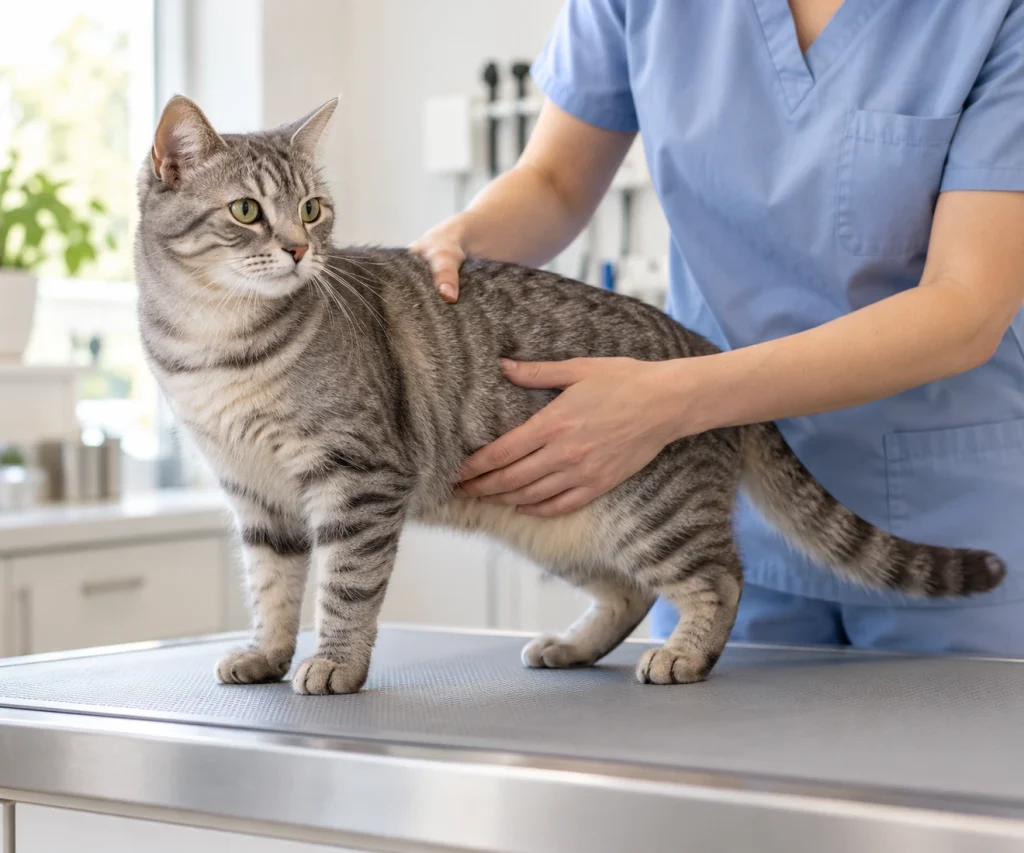
Ask whether to bring a fresh stool sample, since fecal tests are commonly used to look for parasites and infections. Depending on the findings, VCA and Merck describe further tests such as blood work, urine tests, X-rays or ultrasound, and for chronic cases endoscopy and biopsies. Not every cat needs every test; Cornell notes that the approach depends largely on the cat’s age and how severe the signs are.
Treatment for cat diarrhea depends on the cause. According to VCA and International Cat Care, veterinarian-directed options may include fluid therapy for dehydration, a highly digestible diet, deworming or other medication aimed at the cause, and sometimes probiotics. Once your cat improves, VCA advises moving back to the regular diet gradually, over about seven to ten days. For chronic diarrhea, Merck describes diet trials with a novel or hydrolyzed protein diet as an important step. If your vet prescribes several medications, MyyCat’s Cat Medication Schedule Generator can help you keep track of doses at home.
Can You Prevent Cat Diarrhea?
You can’t prevent every case of cat diarrhea, but these habits reduce common triggers:
- Change foods gradually rather than overnight, as described in the food-change guide above.
- Keep treats and human food to a minimum.
- Follow your vet’s advice on parasite control and keep core vaccinations up to date.
- Keep toxic plants, medications and chemicals out of reach.
- Reduce stress where you can, especially around moves, travel and new pets.
- Weigh your cat regularly. Unexplained weight loss alongside diarrhea is a reason to see your vet, and MyyCat’s Cat Weight Calculator can help you put your cat’s weight in context.
Frequently Asked Questions
Is cat diarrhea an emergency?
Not always. A single soft stool in an otherwise healthy adult cat is often minor. It becomes urgent when it comes with vomiting, lethargy, a painful belly, blood or black stool, dehydration, a suspected toxin, or when the cat is a kitten or a senior. When in doubt, call your vet.
Can I give my cat human medicine for diarrhea?
No, not unless your veterinarian prescribes it. Cornell warns that some over-the-counter medications can be harmful to cats, and Merck notes that anti-diarrhea drugs are not always helpful because diarrhea can help flush out harmful organisms.
Why does my cat have diarrhea but is eating normally?
A recent food change, new treats, stress or a mild intestinal upset are common reasons. A cat that eats normally can still have parasites or an underlying condition, though, so call your vet if it lasts beyond about a day or keeps coming back.
What does blood in cat diarrhea mean?
Fresh red blood or mucus often points toward irritation of the large intestine (colon), while black, tarry stool can mean bleeding higher up in the digestive tract, according to Merck. A small streak in an otherwise well cat still deserves a call to your vet; a lot of blood, or black stool, needs prompt veterinary care.
Can stress cause diarrhea in cats?
Yes. Cornell lists stress, such as travel or vet visits, among the causes. It may settle once the stressful event has passed, but if it doesn’t, your vet should rule out other causes.
Key Takeaways
- Cat diarrhea is common and often mild, but it is a symptom with many possible causes.
- Contact a vet now if diarrhea comes with vomiting, lethargy, belly pain, blood or black stool, dehydration, straining with nothing passing, or a suspected toxin.
- Kittens and senior cats with diarrhea should be checked by a vet promptly.
- For an otherwise well adult cat, call your vet if mild diarrhea hasn’t improved within about a day.
- At home, keep water available, offer small bland meals, and don’t starve your cat or give human medicines.
- Diarrhea that lasts for weeks or keeps returning needs a proper veterinary workup.
More From MyyCat
The weight and medication tools mentioned in this guide are collected with MyyCat’s other free resources on the MyyCat cat care tools page. For more reading on everyday cat health and care, you can also browse MyyCat’s books.
This article is for informational and educational purposes only and is not a substitute for professional veterinary diagnosis, treatment, or advice. Please read our veterinary disclaimer.
Sources & References
- Cornell Feline Health Center — Diarrhea
- VCA Animal Hospitals — Diarrhea in Cats
- International Cat Care — Diarrhoea in Cats
- PDSA — Diarrhoea in Cats
- Merck Veterinary Manual (Cat Owners) — Introduction to Digestive Disorders of Cats
- Merck Veterinary Manual (Cat Owners) — Disorders of the Stomach and Intestines in Cats
- Merck Veterinary Manual — Differentiation of Small Intestinal from Large Intestinal Diarrhea
- Merck Veterinary Manual — Chronic Enteropathies in Small Animals