
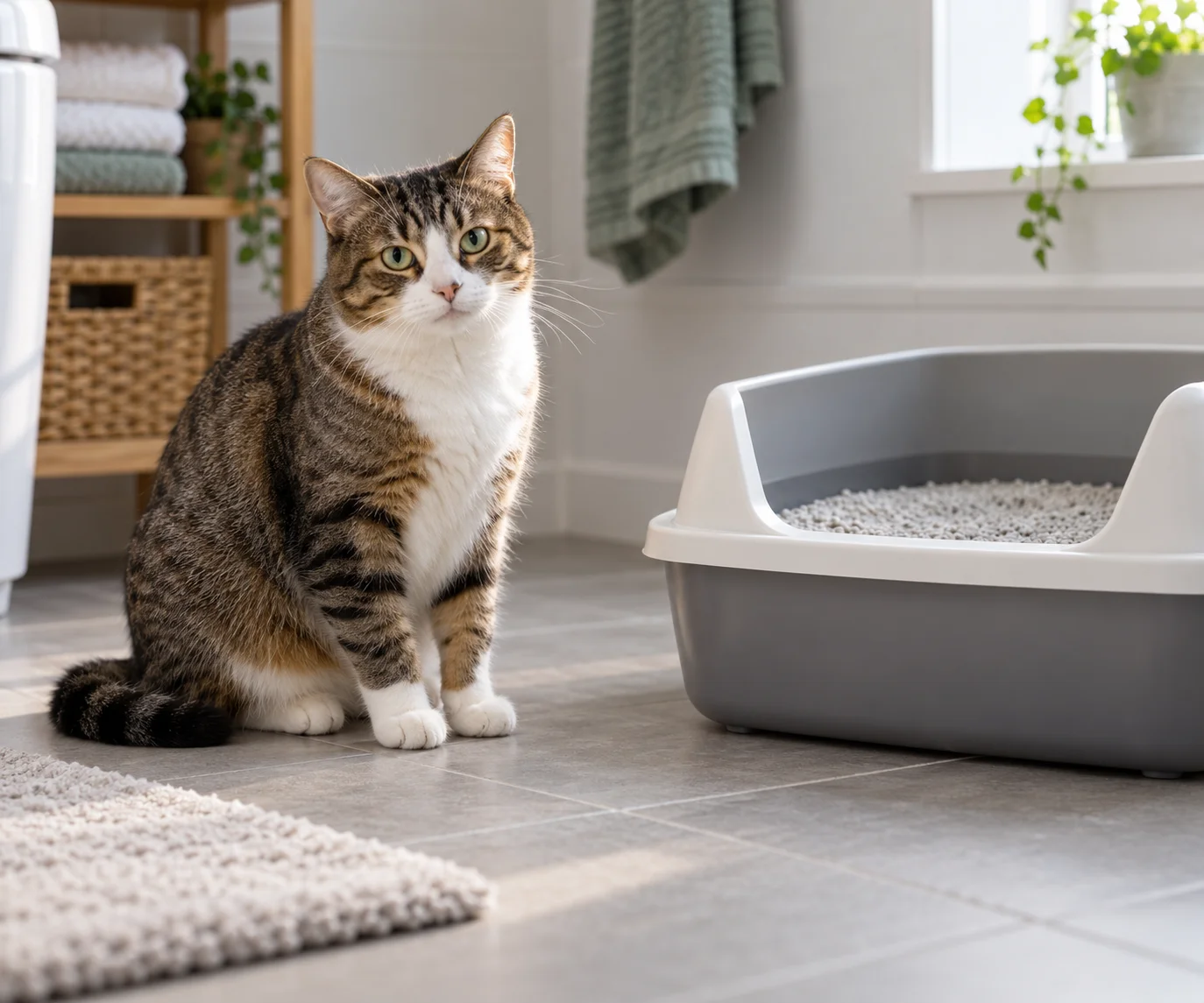

You step onto the bathmat and it is wet. Or you find a puddle on the bed, a damp patch on the rug beside the litter box, or a sharp smell coming from a pile of laundry. It is frustrating, and it is tempting to assume your cat is being stubborn or getting back at you. In reality, a cat peeing outside the litter box is almost always telling you that something is wrong with their health, their litter box, or their sense of safety at home.
Quick answer: The main causes of a cat peeing outside the litter box are medical problems (such as bladder inflammation, urinary stones, kidney disease, thyroid disease, diabetes, or pain), problems with the litter box itself, and stress or conflict at home. Because many of these causes are medical, a veterinary exam is always the first step. And if your cat is straining in the litter box but passing little or no urine, treat it as an emergency and get to a vet right away.
This guide is general educational information to help you understand the problem and work with your veterinarian. It cannot diagnose your cat. Only a vet can examine your cat, test their urine, and tell you what is actually going on.
Table of Contents
First: Is This an Emergency? Check for Urinary Blockage
Before you think about litter brands or box placement, rule out the one situation that cannot wait. A cat whose urethra is blocked cannot empty their bladder. They may keep returning to the litter box, or squat in other places, trying to urinate without success.
⚠️ Go to a veterinarian or emergency animal hospital immediately if your cat:
- Strains in the litter box but produces only a few drops of urine, or nothing at all
- Makes frequent trips to the litter box, or squats repeatedly in other places, without producing much urine
- Cries out while trying to urinate
- Seems increasingly distressed or in pain, or seems unwell in other ways, alongside any of the signs above
The Cornell Feline Health Center’s guide to lower urinary tract disease describes urethral obstruction as a true medical emergency. When the urethra is completely blocked, the kidneys can no longer clear toxins or keep fluids and electrolytes in balance, and the cat’s condition can deteriorate rapidly. Cornell warns that the time from complete obstruction to death may be less than 24 to 48 hours, so treatment should never be delayed. Male cats, including neutered males, are at greater risk because their urethra is longer and narrower, but any cat showing these signs needs to be seen right away.
Do not wait until morning to “see if it passes,” and do not try to treat a possible blockage at home. MyyCat’s guide to the signs of a urinary blockage in cats explains what to expect at the emergency clinic.
Even if your cat is still passing urine normally, blood in the urine, peeing more often than usual, frequent licking of the genital area, or a sudden change in litter box habits all deserve a prompt vet appointment.
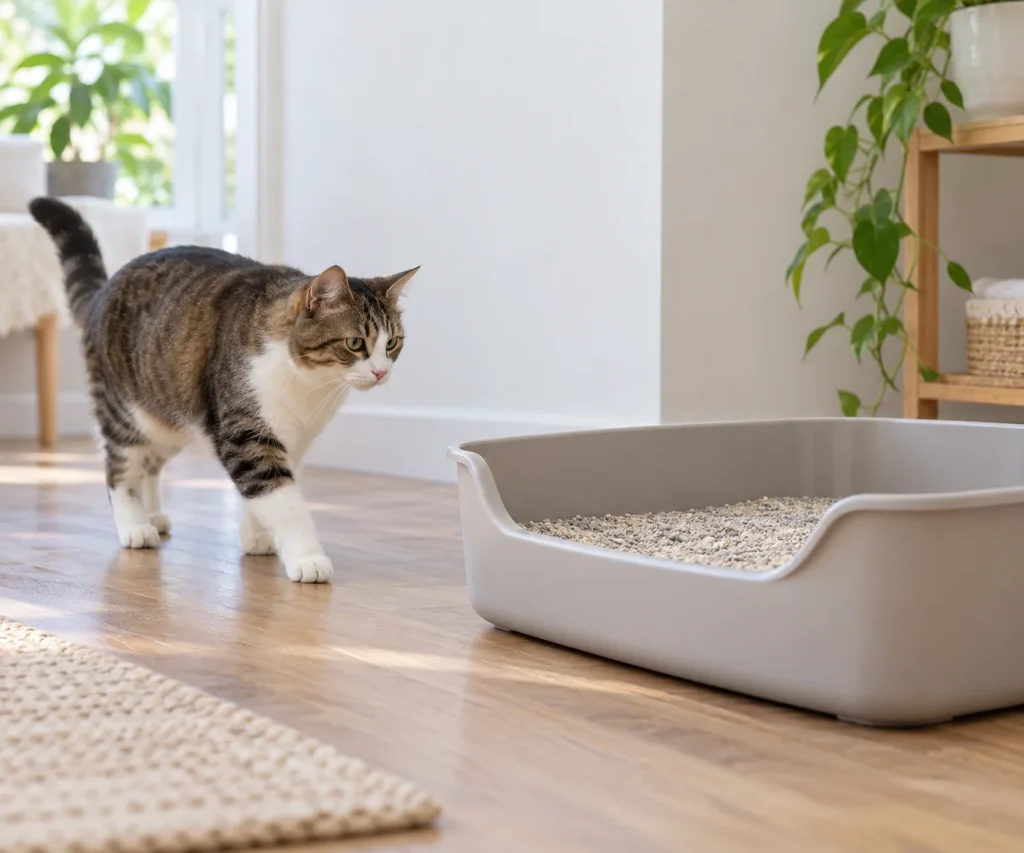
Why Is My Cat Peeing Outside the Litter Box?
Veterinarians call this problem house soiling, and it is extremely common. According to the Cornell Feline Health Center’s house-soiling guide, it is the most common behavior problem cat owners report.
It is not spite. The AAFP/ISFM house-soiling guidelines, written for veterinarians by two major feline veterinary organizations, stress that cats do not soil out of anger toward their owners. They do it because a physical, social, or medical need is not being met. The guidelines even use the term “house soiling” rather than “inappropriate urination” to avoid implying that the cat is misbehaving.
Most cases fall into one or more of these groups:
- Medical problems that make urinating painful, urgent, more frequent, or physically difficult
- Litter box aversion, where something about the box, the litter, or the location puts your cat off
- A preference for another spot or surface, such as soft bedding or a cool tile floor
- Stress, conflict, or urine marking, often triggered by changes at home or tension with other cats
These causes often overlap. Cornell points out that one can lead to another: a cat with a painful bladder may start avoiding the box, then keep using a new spot even after the medical problem is treated. That is why solving the problem usually means checking all of these areas, starting with health.
Step One Is Always a Vet Visit
It can feel like a behavior problem, but a veterinary exam comes first, even if your cat seems otherwise healthy. Cornell recommends a thorough physical exam and appropriate tests for any house-soiling cat, noting that cats with medical conditions may not always act sick. MyyCat’s guide on other early signs your cat is sick covers other subtle changes worth mentioning at the appointment.
Your vet will typically start with a physical exam and a urinalysis. Depending on what they find, they may recommend blood work, X-rays, an ultrasound, or a urine culture. If everything comes back normal, that is useful information too: it means you can focus on the environment and behavior with more confidence.
Keep working on the litter box setup while you wait for the appointment, but do not let changes at home replace the exam. A cleaner box will not fix a bladder stone.
Is Your Cat Peeing or Spraying?
Before you can work out the cause, it helps to know which behavior you are dealing with. Normal urination and urine spraying (marking) look different and often have different triggers.
| Urinating outside the box | Spraying (urine marking) | |
|---|---|---|
| Posture | Squats, as in the litter box | Stands with tail raised and often quivering |
| Surface | Usually horizontal: floors, rugs, beds, laundry, bathtubs | Usually vertical: walls, furniture backs, doors, curtains |
| Amount | Often a full puddle | Usually a small amount |
| Common drivers | Medical problems, litter box aversion, surface or location preference, stress | Territory, perceived threats (new cats, outdoor cats), frustration, hormones in unneutered cats |
Spraying is not limited to intact cats. Cornell reports that about 10% of neutered males and 5% of neutered females also spray, and in homes with more than seven cats, it is likely that at least one cat will spray. Cornell’s advice to have a house-soiling cat examined for underlying medical problems applies to spraying cats too.
If you are not sure which cat is responsible, or whether the cat is squatting or spraying, a simple home camera can help. Cornell also notes that your vet can provide a safe dye given by mouth that shows up in urine, which helps identify the culprit in multi-cat homes.
Where Your Cat Pees Can Offer Clues (But Not a Diagnosis)
Owners often notice patterns: the cat always goes right beside the box, or only on the bed, or only on soft fabrics. These patterns are worth writing down and sharing with your vet. But they are possible clues, not evidence. The same pattern can come from very different medical, environmental, or behavioral causes, and several causes can be happening at once.
Please read this table carefully: it lists some possibilities to discuss with your veterinarian. It cannot tell you why your cat is having accidents, and it is not a substitute for an exam and urine testing. Any of these patterns can have a medical cause.
| Pattern you notice | Some possibilities to discuss with your vet (not a diagnosis) |
|---|---|
| Right next to the litter box | Discomfort or pain when urinating; difficulty getting in or out (for example, from joint pain); box too small, too dirty, or with sides that are too high; dislike of the litter |
| On soft items such as beds, clothing, towels, or rugs | A medical problem causing urgency or discomfort; a developing preference for soft surfaces; stress or anxiety; litter box aversion |
| On cool, smooth surfaces such as bathtubs, sinks, or tile | Urinary discomfort; a developing surface preference; litter box aversion |
| Many different places around the house | A medical problem causing frequent or urgent urination; litter box aversion; household stress |
| Small amounts on vertical surfaces | Urine marking (spraying) linked to territory, other cats, or stress, though medical causes still need to be ruled out |
| Only when you are away, or on your belongings | Stress related to changes in routine or separation; a litter box that is not cleaned often enough while you are gone; a medical problem that happens to show up at those times |
| Near doors or windows | Tension caused by outdoor cats; territorial marking; general stress |
| Large puddles, or larger clumps in the box than usual | Increased urine production, which can occur with conditions such as kidney disease, hyperthyroidism, or diabetes |
Use the table to organize what you notice, then let your veterinarian interpret it alongside the exam and test results. The litter box log below shows what to record.
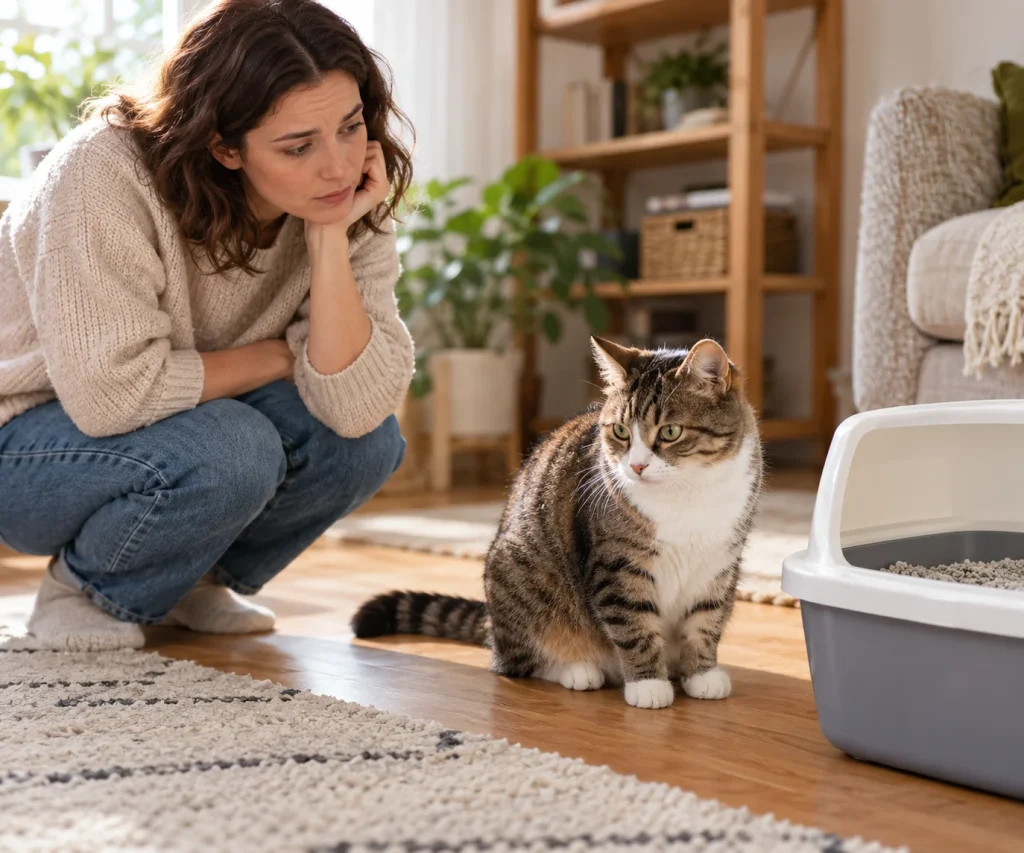
Medical Causes of Peeing Outside the Litter Box
Cornell explains that any condition that interferes with normal urination can cause litter box problems, especially if the cat starts to associate the box with pain. Here are the main groups your vet will consider.
Lower Urinary Tract Disease and Feline Idiopathic Cystitis
Feline lower urinary tract disease (FLUTD) is a group of conditions affecting the bladder and urethra. Cornell lists its common signs as difficult or painful urination, peeing more often, crying out while urinating, blood in the urine, urinating outside the litter box, and frequent licking of the genital area.
The most common diagnosis in cats with these signs is feline idiopathic cystitis (FIC), a painful bladder inflammation without a single identifiable cause. Stress appears to play an important role in FIC. Cornell notes that changes in environment, routine, feeding schedule, or the number of animals in the home can all be factors, and that lower urinary signs are seen most often in middle-aged, overweight, less active indoor cats that drink less water.
Urinary Stones and Blockages
Urinary stones (uroliths) and urethral plugs can irritate the bladder or block the urethra entirely. Some stones can be dissolved with a prescription diet and others need to be removed, which is why testing matters. Early signs of a blockage can look like other urinary problems, which is why any cat that is straining should be checked right away.
Conditions That Make Cats Drink and Pee More
Cornell lists kidney disease, thyroid disease, and diabetes as possible causes of litter box problems because they often make cats drink more and urinate more often. A box that was cleaned often enough before can suddenly become too full, and a cat that needs to go more urgently may not make it in time. Signs to watch for include bigger or more frequent clumps, drinking from sinks or glasses, and weight loss despite a good appetite, a pattern described in MyyCat’s guide to hyperthyroidism in cats.
Changes in water intake in either direction are worth knowing about. The Cat Water Intake Calculator can give you a rough baseline for how much water a cat of your cat’s size may need from food and drinking combined, so you have a reference point when you talk to your vet. It cannot tell you whether your cat is ill. MyyCat’s guide on how much water cats need explains why hydration matters for urinary health and how to encourage drinking.
Pain, Mobility Problems, and Aging
Sometimes the problem is simply getting into the box. Cornell notes that age-related diseases affecting mobility or thinking can make it harder for a cat to reach the litter box in time, and it recommends low-sided boxes for elderly cats and cats with joint pain. Arthritis in cats is a common example: stepping over a high side can hurt, and Cornell advises not placing the box up or down stairs for a cat that has trouble climbing them.
If you are not sure whether your cat counts as senior, the Cat Life Stage Calculator gives an approximate life stage and general care considerations. For older cats, low-entry boxes on the same floor where they spend their time are simple changes that remove barriers.
Litter Box Problems That Push Cats Away
Once your vet has ruled out medical causes, or while you are treating them, take an honest look at the litter box setup. The AAFP/ISFM guidelines recommend optimizing the litter box as one of two universal steps for every house-soiling case, whatever the cause. Here is what Cornell’s recommendations cover.
Not Enough Litter Boxes
The common rule is one litter box per cat, plus one extra. Cornell recommends this to reduce competition and give each cat a box of their own. Cornell also recommends placing boxes in different areas of the home rather than grouping them in one spot.
MyyCat’s Cat Litter Box Calculator estimates how many boxes your household may need and helps you create a printable placement plan, which is especially useful in multi-cat homes and homes with several floors.
A Box That Isn’t Clean Enough
Some cats will refuse to use a box that has any urine or feces in it at all. Cornell recommends scooping clumping litter daily, topping up with fresh litter, and changing the litter often enough that it looks and smells clean and dry. When you wash the box, use a gentle detergent rather than strong-smelling products. Replace boxes that are cracked or hold odors.
The Wrong Litter
According to Cornell, most cats prefer unscented, fine-textured litter about one to two inches deep. A sudden switch in litter brand or type is a common trigger. If you need to change, mix the new litter into the old gradually rather than swapping it overnight.
The Wrong Box
- Size: Larger and overweight cats need bigger boxes they can turn around in comfortably.
- Sides: Kittens, older cats, and cats with mobility problems need boxes with low sides.
- Covers: Hoods are convenient for people, but Cornell notes that they hold odors in and that most cats prefer an uncovered box with a 360-degree view.
- Liners: They can make cleaning easier, but many cats dislike them.
If you are not sure what your cat likes, try offering a second box with a different design or litter and see which one they choose.
The Wrong Location
Cornell advises placing boxes somewhere quiet and private, away from food and water, and accessible at all times. A box next to a noisy washing machine, in a busy hallway, behind a door that sometimes closes, or in a corner where another cat can trap your cat may be avoided. Giving the box more than one exit route helps cats that feel ambushed.
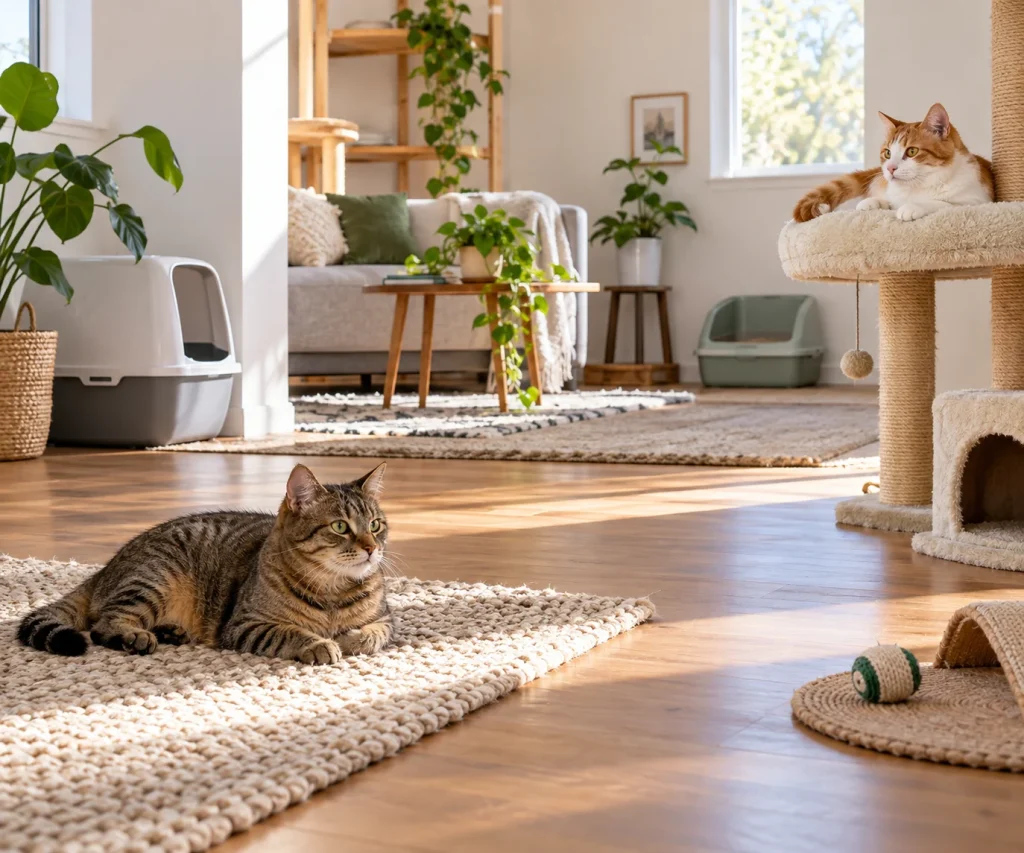
Stress, Conflict, and Changes at Home
Cats are sensitive to change. A move, renovations, a new baby, a new pet, a new work schedule, or even new furniture can unsettle a cat enough to affect litter box habits. Stress also appears to contribute to feline idiopathic cystitis, which is one reason medical and behavioral causes so often overlap. If your cat is also hiding more, overgrooming, or less interested in play, MyyCat’s guide to signs of anxiety in cats can help you spot and reduce the triggers.
Some cats soil on their owner’s bed or clothing mainly when left alone or after a change in routine. If that pattern sounds familiar, and your vet has found no medical cause, separation anxiety training may be part of the solution.
In multi-cat homes, tension between cats is a frequent factor. A cat that is chased, stared down, or blocked near the litter box may simply stop trying to use it. Signs of territorial aggression between cats can be subtle, such as one cat sitting in a doorway or near the box, so watch how your cats interact around resources. Cornell also notes that outdoor cats seen through windows can trigger spraying, and that closing blinds or deterring visiting cats from the yard may help.
The second universal recommendation in the AAFP/ISFM guidelines is meeting the “five pillars” of a cat’s environmental needs. As VCA Animal Hospitals summarizes the five pillars of feline environmental needs, they are a safe place to retreat to; multiple, separated key resources such as food, water, litter boxes, scratching areas, and resting spots; opportunities for play and predatory behavior; positive, consistent, and predictable interaction with people; and an environment that respects the cat’s sense of smell.
How to Stop Your Cat Peeing Outside the Litter Box: A Step-by-Step Plan
Cornell stresses acting promptly, because the longer the behavior continues, the more likely it is to become a habit. Work through these steps in order.
- Rule out an emergency. Straining with little or no urine means an immediate trip to the vet.
- Book a veterinary exam. Ask about a urinalysis and bring your notes on where, when, and how often accidents happen. Follow any treatment plan fully, even if your cat seems better quickly.
- Identify the cat and the behavior. In multi-cat homes, work out which cat is involved and whether they are squatting or spraying.
- Audit the litter boxes. Check the number, size, sides, cover, litter type and depth, location, and cleaning routine against the recommendations above.
- Clean every soiled area thoroughly. Remaining odor can draw your cat back to the same spot (see the next section).
- Make soiled spots less appealing. Cornell suggests changing what an area means to your cat, for example by placing food bowls, treats, or toys where accidents happened, since cats prefer not to eliminate where they eat. You can also block access by closing doors or covering the area.
- Work with your cat’s preference. If your cat keeps choosing one spot, try placing a litter box there. Once they use it reliably, Cornell recommends moving it gradually toward where you want it, just a few inches a day, and moving it back a step if your cat stops using it.
- Reduce stress and conflict. Give each cat access to separate resources, keep routines predictable, and add daily play.
- Be patient, and ask for more help if needed. Improvement can take weeks. If the problem continues, ask your vet about referral to a veterinary behaviorist. Anti-anxiety medication is sometimes used, particularly for spraying, but Cornell notes it must be combined with environmental changes and monitored by a veterinarian.
Cleaning Up Accidents the Right Way
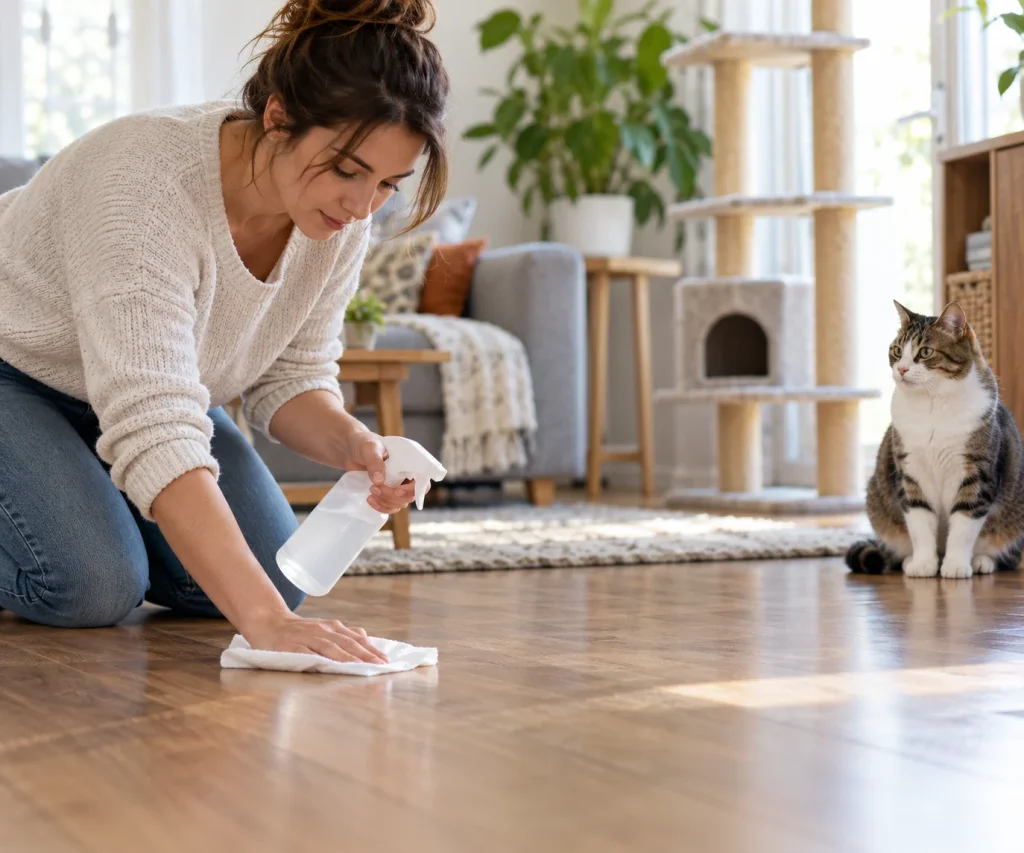
Cats tend to return to places that smell like urine, so cleaning is part of the treatment, not just housekeeping. Cornell advises cleaning soiled items as soon as possible and neutralizing odors rather than just covering them up, because a cat’s sense of smell is far better than ours.
- Blot up as much urine as you can first.
- Use a cleaner made to break down pet urine odor, such as an enzyme-based product, and follow the label directions.
- Avoid cleaners containing ammonia or vinegar. Cornell notes that they smell like urine and can be irritating, which may encourage your cat to return.
- Wash bedding and clothing promptly, and keep laundry off the floor while you work on the problem.
- For old or hidden stains, an inexpensive UV flashlight can help you find areas you missed.
What Not to Do
- Do not punish your cat. Cornell is clear that hitting, yelling, or rubbing a cat’s nose in the mess is ineffective. Cats do not connect the punishment with the accident, and the extra anxiety can make house soiling worse.
- Do not assume it is behavioral and skip the vet, especially if the change was sudden.
- Do not change everything at once without a plan. Changing the litter, box, and location on the same day makes it hard to know what helped and can add stress.
- Do not use scented litter or strong air fresheners near the box to mask odor. Keeping the box clean does the job better.
- Do not change your cat’s diet or stop a prescribed urinary diet without talking to your vet.
Keep a Litter Box Log for Your Vet
A few days of simple notes can make your vet visit much more productive and help you see whether changes are working. Record:
| What to note | Why it helps |
|---|---|
| Date, time, and location of each accident | Reveals patterns linked to places, times, or events |
| Urine or stool, puddle or small spray | Helps separate urination from marking |
| Number and size of clumps in the box | Shows changes in how often and how much your cat urinates |
| Straining, crying, or blood in the urine | Possible urinary problem that needs prompt veterinary attention |
| Water intake, appetite, and weight changes | Can point your vet toward conditions worth testing for |
| Recent changes at home | Identifies possible stress triggers |
| Litter box changes you made, and when | Shows what helped and what did not |
Frequently Asked Questions
Why is my cat suddenly peeing outside the litter box?
A sudden change often points to a medical problem, such as bladder inflammation, a urinary infection, stones, or a condition that increases urine production, though a recent change in litter, box, location, or household routine can also be responsible. Because you cannot tell these apart at home, a sudden change calls for a vet visit. If your cat is straining and producing little or no urine, go immediately.
Why is my cat peeing on my bed?
Beds are soft, absorbent, and smell strongly of you. Cats may choose them because of a medical problem that causes urgency or discomfort, a dislike of the litter box, stress or changes in routine, or a developing preference for soft surfaces. It is not revenge. Start with a vet exam, wash the bedding with an odor-neutralizing cleaner, and keep the bedroom door closed while you work on the cause.
Why is my cat peeing right next to the litter box?
Going just outside the box suggests your cat is trying to use it but something is getting in the way. Possibilities include pain when urinating, difficulty stepping over high sides, a box that is too small or not clean enough, or dislike of the litter. Cornell suggests that when a cat perches on the edge of the box, avoids touching the litter, or eliminates right beside it, the first thing to check is whether the box is clean. Because pain when urinating is also a possible cause, a vet check still comes first.
Can a UTI cause a cat to pee outside the litter box?
Yes. Bacterial urinary tract infections are one possible cause, but they are only one of several urinary problems. In many cats with urinary signs, the cause turns out to be idiopathic cystitis, stones, or another condition, and some need very different treatment. That is why your vet will test the urine rather than assume an infection.
How many litter boxes do I need?
The general guideline is one per cat plus one extra, placed in different areas of the home. That means two boxes for a single cat. Homes with several floors, or cats that do not get along, may need more.
Will my cat go back to using the litter box?
Many cats do, especially when the underlying cause is found and treated early and the litter box setup is improved. The longer the habit continues, the harder it can be to change, so it helps to act quickly. If progress stalls, your vet or a veterinary behaviorist can help you build a more tailored plan.
Key Takeaways
- A cat straining with little or no urine needs emergency veterinary care immediately.
- House soiling is not spite; it signals a medical, environmental, or social need that is going unmet.
- Always start with a vet exam and urine testing, even if your cat seems healthy.
- Where your cat pees can offer clues, but it cannot diagnose the cause.
- Provide one box per cat plus one, keep boxes clean and uncovered where possible, use unscented litter, and place boxes in quiet, accessible spots.
- Clean accidents with an odor-neutralizing product, avoid ammonia and vinegar, and never punish your cat.
More From MyyCat
The litter box, water intake, and life stage calculators mentioned in this guide, along with MyyCat’s feeding and grooming planners, are collected on the MyyCat cat care tools page. And if you would like to understand more about how your cat thinks and communicates, take a look at MyyCat’s books.
This article is for informational and educational purposes only and is not a substitute for professional veterinary diagnosis, treatment, or advice. Please read our veterinary disclaimer.
Sources & References
- Cornell Feline Health Center — Feline Behavior Problems: House Soiling
- Cornell Feline Health Center — Feline Lower Urinary Tract Disease
- American Association of Feline Practitioners / International Society of Feline Medicine — 2014 AAFP/ISFM Guidelines for Diagnosing and Solving House-Soiling Behavior in Cats
- VCA Animal Hospitals — Environmental Needs of Young Cats (AAFP and ISFM Feline Environmental Needs Guidelines)