

If your cat races around the house, meows or wakes you up in the small hours, you are not alone. Cat night behavior like this is common, and in most cases it is normal cat biology clashing with a human sleep schedule rather than a sign that something is wrong. Your cat is not being spiteful.
This guide explains why cats are active at night, the most common reasons they wake their owners, the medical problems that can cause night-time restlessness, and practical, humane ways to shift your cat’s routine so you can both get more sleep.
Table of Contents
Understanding Your Cat’s Natural Sleep Cycle
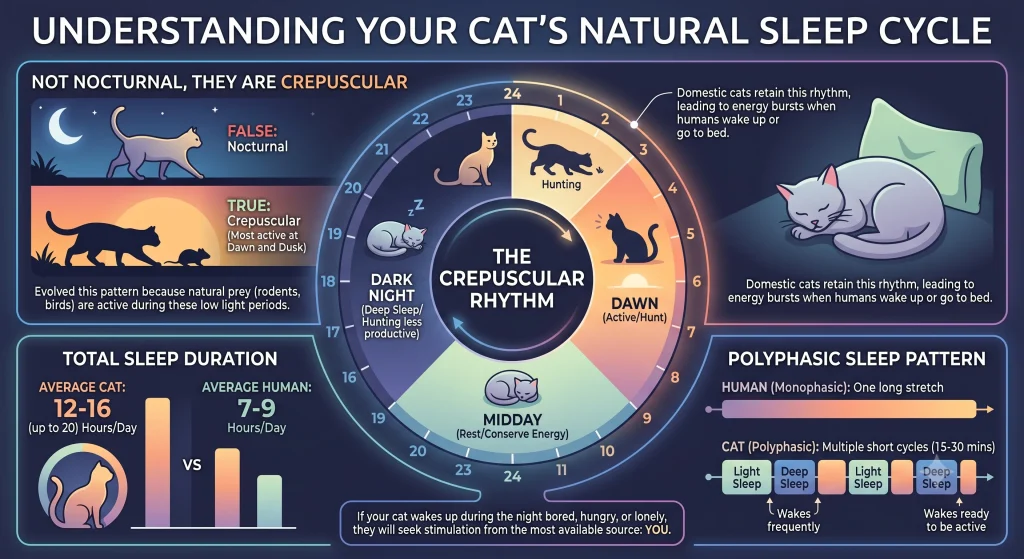
Cats are often described as nocturnal, but they are actually crepuscular, meaning they tend to be most active around dawn and dusk (VCA Animal Hospitals). Those twilight hours are when many of their natural prey animals, such as rodents, are active too. That is why many cats get lively in the late evening and again in the early morning, just when people are trying to fall asleep or are still in bed.
Cats also sleep differently from people. Rather than one long night’s sleep, they rest in many shorter bouts spread across the day and night, and adult cats commonly spend well over half the day resting or asleep. Each time they wake, they may want to eat, play, explore or interact. If they wake up hungry, bored or wanting attention at night, the most interesting thing around is often you.
Common Reasons Cats Wake Owners at Night
Hunger and Feeding Schedule
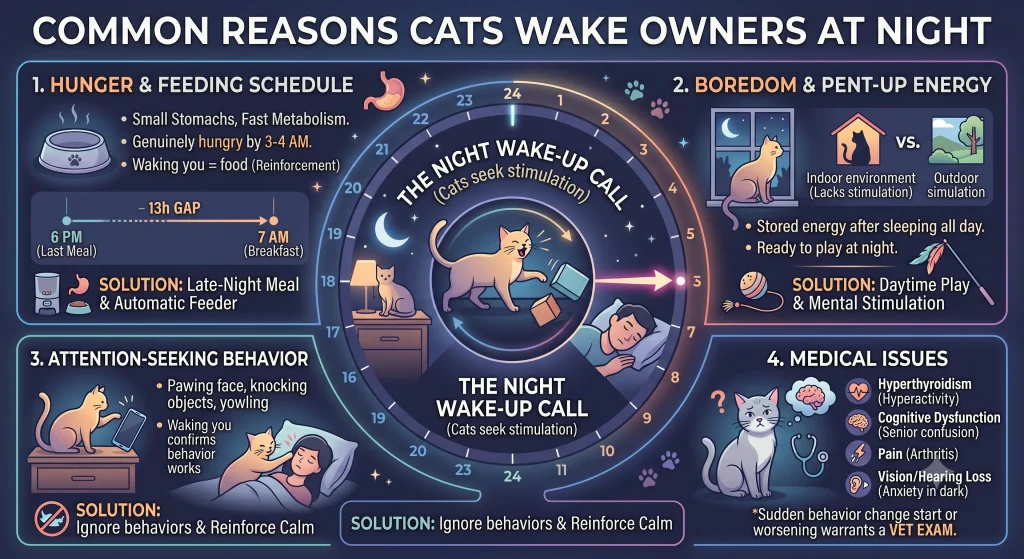
Hunger is one of the most common reasons cats wake their owners. In the wild, cats eat many small meals spread over the day and night. If the last meal is in the early evening and breakfast is not until morning, that is a long gap for a cat. Many cats quickly learn that waking you up leads to food. Even getting up and moving around without feeding them can keep the habit going, because it sometimes pays off.
Boredom and Pent-Up Energy
Indoor cats that spend much of the day alone and asleep can have plenty of energy left by bedtime. If they do not get enough play, exercise and mental stimulation while you are awake, they may make up for it at night with “zoomies”, chasing, climbing and exploring. Our guide on how to tell if your cat is bored covers the signs and solutions.
Attention-Seeking Behavior
Cats learn quickly which behaviors get a response. If pawing your face, knocking things off the nightstand or meowing at the door sometimes leads to you getting up, talking to them or feeding them, those behaviors are rewarded and become more likely. Even a reaction such as telling the cat off can count as attention for some cats.
📚 Recommended Cat Guides
🐱 The Trainable Cat Book
Learn proven methods to train your cat and stop unwanted behaviors.
View Book →❤️ Complete Cat Care Manual
Your complete guide to cat nutrition, health, grooming, behavior, and daily care.
Get the Manual →Medical Issues
New or worsening night-time activity or vocalizing can have a medical cause, and it is worth ruling these out, especially in older cats:
- Hyperthyroidism, which is common in older cats, can cause restlessness, a bigger appetite and more vocalizing, often at night, according to VCA Animal Hospitals. See our guide to cat hyperthyroidism.
- Cognitive changes in some senior cats can cause wandering, night-time meowing and apparent confusion, although the Cornell Feline Health Center notes that other conditions can cause similar signs.
- Arthritis and other pain can make it hard for a cat to get comfortable and may lead to restlessness. Our cat arthritis guide explains the subtle signs.
- Hearing or vision loss and conditions such as high blood pressure can also change how a cat behaves at night.
None of these can be diagnosed from night behavior alone. If the change is sudden, getting worse, or comes with other signs such as weight loss, increased thirst or a change in appetite, book a vet visit.
How to Shift Your Cat’s Activity Schedule
Increase Daytime and Evening Activity
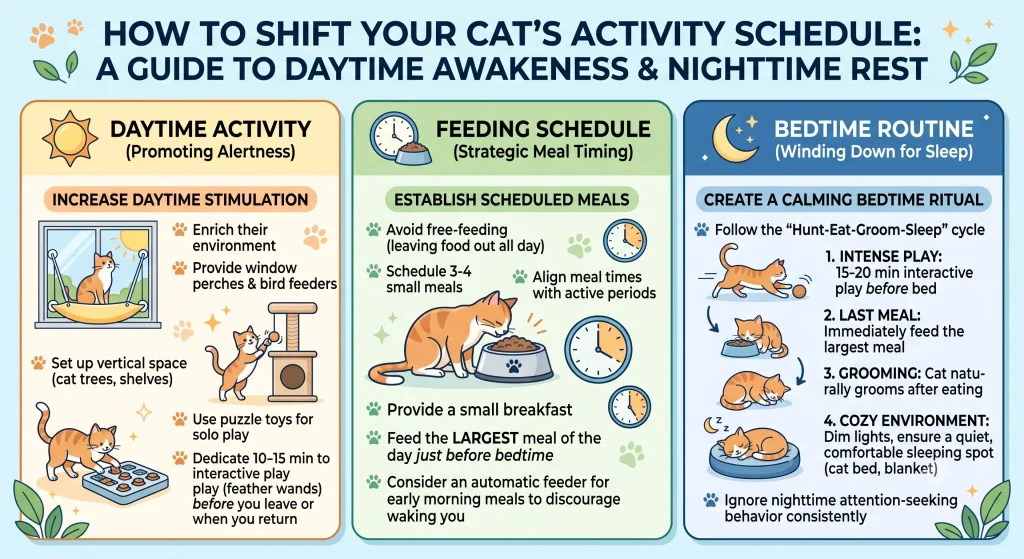
The aim is to move your cat’s active time into the hours when you are awake. VCA recommends encouraging play and feeding during the day and evening so the cat’s schedule better matches the household’s. Aim for several short, interactive play sessions a day, including one in the hour or so before bed. Wand toys that move like prey work well: let your cat stalk, chase and pounce, slow the game down towards the end, and let them “catch” the toy. Puzzle feeders and food-dispensing toys add mental stimulation when you are not available to play.
Adjust the Feeding Schedule
Instead of feeding one large evening meal, divide your cat’s daily food allowance into several smaller meals, with one of them after the bedtime play session. Many cats will then groom and settle down to sleep. Use a consistent feeding schedule, and make sure the total amount for the day does not increase, so your cat does not gain weight.
If your cat wakes you early for breakfast, an automatic feeder set to open at a fixed time in the early morning can help, because the food comes from the feeder rather than from you. This works best for waking that is driven by hunger or habit. It will not fix night activity caused by pain, illness, anxiety or boredom.
Create a Bedtime Routine
Cats like predictability. A simple, consistent routine helps signal that the evening is winding down, for example: an active play session, then a meal, then quiet time with gentle petting or brushing if your cat enjoys it, then lights out. Try to keep the timing similar every night, including weekends. Consistency matters more than the exact activities.
Environmental Changes That Encourage Night-Time Sleep
- Offer independent night-time entertainment. Puzzle feeders or treat balls (using part of the daily food allowance) can keep your cat busy without needing you.
- Create comfortable sleeping spots. Provide warm, cozy beds in quiet places. Many cats like heated or self-warming beds and high resting spots.
- Reduce outside distractions. Closing blinds or curtains can reduce stimulation from outdoor animals, lights and passing cars.
- Try background noise. White noise or quiet music may mask sounds that disturb your cat, although evidence for its effect on night activity is limited.
- Think carefully about a second cat. A well-matched companion may provide play and company for some cats, but it is not a guaranteed fix and can create new problems. Only consider it if it suits your household; see our guide on how to introduce cats.
- Close the bedroom door if needed. Shutting your cat out of the bedroom is reasonable if they keep disturbing your sleep. Make sure they have food, water, a litter box, a bed and toys in the rest of the home. Expect some meowing or scratching at the door at first. Ignore it consistently, and avoid punishment or harsh deterrents.
Managing Night-Time Vocalization
Night-time yowling can be distressing for owners. In older cats, new or increasing vocalizing should always be checked by a vet first, because hyperthyroidism, cognitive changes, hearing loss, high blood pressure and pain can all play a part. Unspayed female cats in heat also call loudly, often at night. Our guide on why your cat meows so much covers this in more detail.
If medical causes have been ruled out, the approach is to stop rewarding night-time meowing and to give attention for quiet behavior instead. VCA advises that cats that are vocal at night should be ignored, since any response, whether food, attention or affection, reinforces the demand. Be aware that when a behavior stops being rewarded, it often gets worse for a while before it improves (an “extinction burst”). Giving in at that point teaches the cat to meow even more, so consistency is essential. Never punish your cat, as this increases stress and can make behavior problems worse.
If your cat’s night activity does not improve with these changes, talk to your vet. They can check for medical causes and discuss further options, including whether short-term medication might be appropriate.
Key Takeaways
- Night activity is usually normal. Cats are naturally most active around dawn and dusk.
- Do not reward night waking. Avoid feeding or playing with your cat when they wake you, and do not punish them either.
- Shift activity to your waking hours. Interactive play during the day and before bed, followed by a meal, helps many cats settle.
- Use automatic feeders for early-morning hunger. They take you out of the feeding routine.
- Rule out medical causes. Sudden or worsening night activity or yowling, especially in senior cats, needs a vet check.
- Be consistent. A simple routine followed every night works better than an elaborate one followed occasionally.
FAQ
Why is my cat so active at night?
Cats are crepuscular, so they are naturally most active around dusk and dawn. Indoor cats that sleep most of the day and do not get enough play while you are awake often have extra energy at night. Hunger and learned attention-seeking are also common reasons.
How do I get my cat to sleep through the night?
Play with your cat during the day and in the evening, finish with a meal before bed, keep a consistent bedtime routine, and do not reward night-time demands. An automatic feeder can help with early-morning hunger. Many cats adjust gradually, but some will always be a little active at night.
Why does my cat wake me up at 3 am every day?
Often because they are hungry or have learned that waking you leads to food or attention. Splitting food into smaller meals, including one before bed, using an automatic feeder for early morning, and not responding to wake-up calls usually help. If the habit starts suddenly in an older cat, see your vet.
Is it normal for cats to yowl at night?
Occasional night-time meowing can be normal, especially in young cats or unspayed females in heat. Persistent or new yowling, particularly in a senior cat, should be checked by a vet, because conditions such as hyperthyroidism, cognitive changes and hearing loss can be involved.
Should I lock my cat out of the bedroom at night?
It is reasonable if your cat keeps waking you. Make sure they have everything they need outside the bedroom, including a litter box, water, a comfortable bed and toys. Expect some protest at first and ignore it consistently.
Why is my senior cat suddenly active at night?
Possible causes include hyperthyroidism, high blood pressure, arthritis or other pain, vision or hearing loss, and age-related cognitive changes. These cannot be told apart from behavior alone, so a vet visit is the right first step. Many of these conditions can be treated or managed.
How long does it take to change a cat’s night behavior?
There is no fixed timeline. When the cause is behavioral, consistent changes often help within days to a few weeks. Expect a temporary increase in demanding behavior at first. Medical causes need veterinary treatment rather than time alone.
This article is for general information and is not a substitute for advice from your veterinarian. If you are worried about your cat’s behavior or health, contact your vet.
Sources & References
- VCA Animal Hospitals — Cat Behavior Problems: Nocturnal Activity
- VCA Animal Hospitals — Hyperthyroidism in Cats
- Cornell Feline Health Center — The Special Needs of the Senior Cat
[…] if your cat sleeps almost all day and then turns your home into a racetrack at two in the morning, you may want to add more activity during the […]