
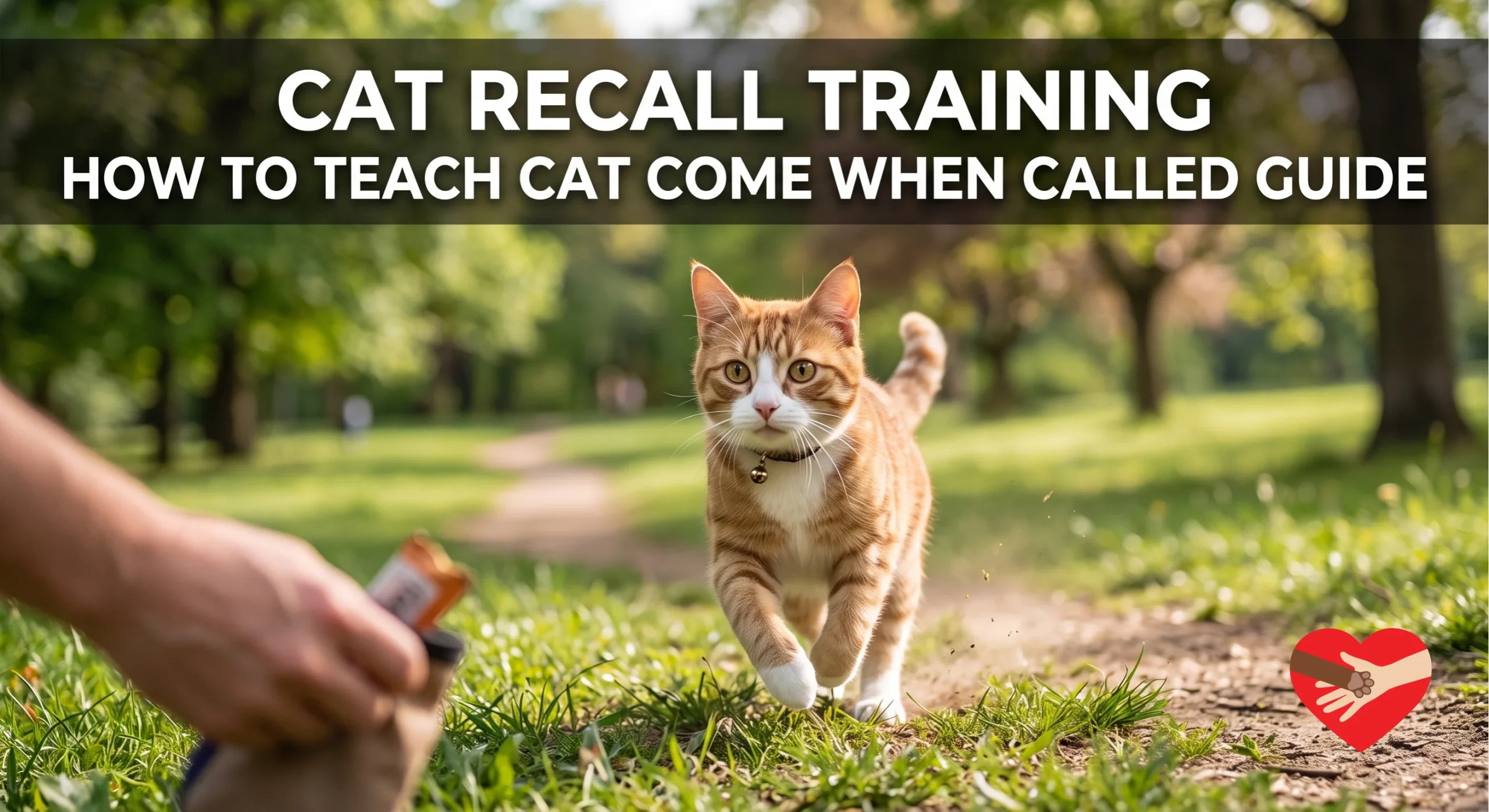

You call your cat from the kitchen, and they look at you with those half-lidded eyes, slowly blink, and go back to watching birds through the window. You call again, louder this time, and they flick an ear in your direction without moving a muscle. Then you shake the treat bag, and suddenly they are at your feet as if they teleported. Your cat can hear the treat bag from three rooms away, yet seems unable to hear you calling their name from ten feet.
It can be frustrating when a cat appears to hear you but chooses not to approach. The good news is that cat recall training works for many cats: with positive reinforcement, cats can learn to come when called, although responsiveness varies with the individual cat, the reward, the environment, and the level of distraction. The problem is usually not that cats are untrainable. More often, the call has been used right before things the cat dislikes, such as vet visits, baths, or nail trims, so it no longer predicts anything good.
Reward-based methods that work with your cat’s natural motivations can help many cats respond more reliably when called. A good recall is handy in everyday life, for example when you need to find your cat at home or bring them to a meal, and it may help in some situations. However, it should never be treated as a guaranteed emergency safety system.
Recall training can be useful, but it is not a substitute for physical safety measures. A cat that responds reliably indoors may still fail to return when called outdoors, particularly when frightened or distracted by wildlife, traffic, unfamiliar surroundings, or loud noises. Use secure doors, carriers, cat-secure enclosures, or appropriately supervised harness training rather than relying on recall alone to keep a cat safe (TICA).
This guide explains why cats ignore calls, how to rebuild a positive association with your cat’s name, a step-by-step process for teaching a dedicated recall cue, which rewards to use, and how to troubleshoot common problems. Teaching a cat to come when called is one of the most practical everyday skills you can work on together.
Table of Contents
Why Your Cat Ignores You When Called
A common reason cats ignore a call is a history of unpleasant associations. If you mostly call your cat before putting them in a carrier, trimming their nails, giving medication, or doing something else they dislike, they can learn that coming when called predicts something bad. From the cat’s point of view, staying put makes sense. Cats learn associations between cues and what happens next, so repeatedly pairing a call with an unpleasant event can make responding less likely.
Another reason is that the name may have stopped meaning anything specific. When a cat’s name is used constantly throughout the day, to chat, to scold, or with no consistent outcome, it can fade into background noise. Cats tend to tune out sounds that have no predictable consequence.
Motivation and competing distractions matter too. The reward you offer has to be worth more to your cat, in that moment, than whatever they are doing. Finally, a lack of response is not always a training issue: fear, stress, pain, illness, or hearing changes can all reduce responsiveness (see the troubleshooting section below).
Resetting Your Cat’s Name Association
Before teaching recall, it helps to make sure that your cat’s name and your recall cue both predict good things. It is useful to think of them as two separate signals:
- Your cat’s name is an attention cue. It asks your cat to look at you or orient toward you.
- The recall cue means “come to me.” This is a dedicated, consistent signal, such as the word “come,” a whistle, or another distinctive sound. For a cat with hearing loss, a visual signal such as a hand gesture can work instead.
Start by pairing your cat’s name with something pleasant. Say the name in a cheerful tone, then immediately offer a small treat, a favorite toy, or a brief stroke if your cat enjoys being touched. Do this at different times of day and in different rooms. Practice several brief repetitions and stop while your cat is still engaged.
While you are rebuilding the association, avoid using the name or recall cue right before something your cat dislikes, and avoid saying either in a scolding tone. You don’t need to stop using your cat’s name in everyday life, but aim for it to predict something neutral or pleasant. When your cat regularly looks toward you, and sometimes approaches, on hearing their name, you are ready to move on. Progress at your cat’s pace rather than following a rigid calendar.
Step-by-Step Recall Training Process
Phase One: Short-Distance Indoor Training
Start in a quiet room with few distractions, at a time when your cat is alert and interested in interacting. Sitting or crouching at your cat’s level can make you seem less imposing. Say your cat’s name once in a cheerful tone. When your cat looks at you or takes a step toward you, mark that moment with a clicker or a consistent marker word such as “yes,” then give the reward. If your cat doesn’t respond yet, you can briefly show the treat, but fade this lure as soon as possible so the cue itself, not the sight of food, predicts the reward.
Keep sessions brief and positive, and stop while your cat is still engaged or before signs of frustration, stress, or loss of interest appear (Petplan). At this stage, reward any response to the name, even a glance. This builds the foundation that hearing their name means a reward is available.
Phase Two: Increasing Distance
Once your cat consistently looks at you when they hear their name, increase the distance slightly. Move a little farther away, say their name, and encourage them to walk toward you, for example by holding the treat low and backing away slowly. As they approach, mark and reward generously. Gradually increase the distance over multiple sessions. If your cat does not respond at a new distance, go back to the distance where they were successful and practice there before advancing again.
Phase Three: Adding the Come Cue
When your cat reliably approaches on hearing their name at various distances indoors, add your dedicated recall cue, often called the cat recall command. Say the name to get your cat’s attention, then give the recall cue (“Milo, come!”) and reward generously when your cat reaches you. Over time, the recall cue becomes the signal that specifically means “come to me.” Keep practicing until your cat responds to the recall cue as readily as to their name alone.
Phase Four: Adding Distractions
Gradually introduce mild distractions. Practice when another person is in the room but not interacting with your cat, when a toy is visible but out of reach, and in different rooms of the house. Successful recalls around distractions help the behavior generalize to new situations. If your cat doesn’t respond when a distraction is present, the distraction was probably too strong for their current level, so make it easier and try again.
Phase Five: Real-World Practice
Start using recall in everyday situations at home. Call your cat before meals instead of carrying food to them, call them from another room and reward them for arriving, and sometimes call them simply to give a treat and then let them go back to what they were doing. That way, coming to you doesn’t always mean the end of something enjoyable.
Recall is not a way to manage outdoor access or prevent escapes. Never open an outside door and rely on calling your cat back. If your cat goes outdoors, use a truly cat-secure enclosure or catio, or a properly fitted harness with a leash or long line under direct supervision, and do any outdoor recall practice only within that secure setup (TICA). If your cat tries to slip out whenever a door opens, our humane door-dashing training plan can help. Think of recall as a useful extra on top of secure doors, carriers, harnesses, enclosures, and responsible supervision, never as a replacement for them.
Rewards That Work
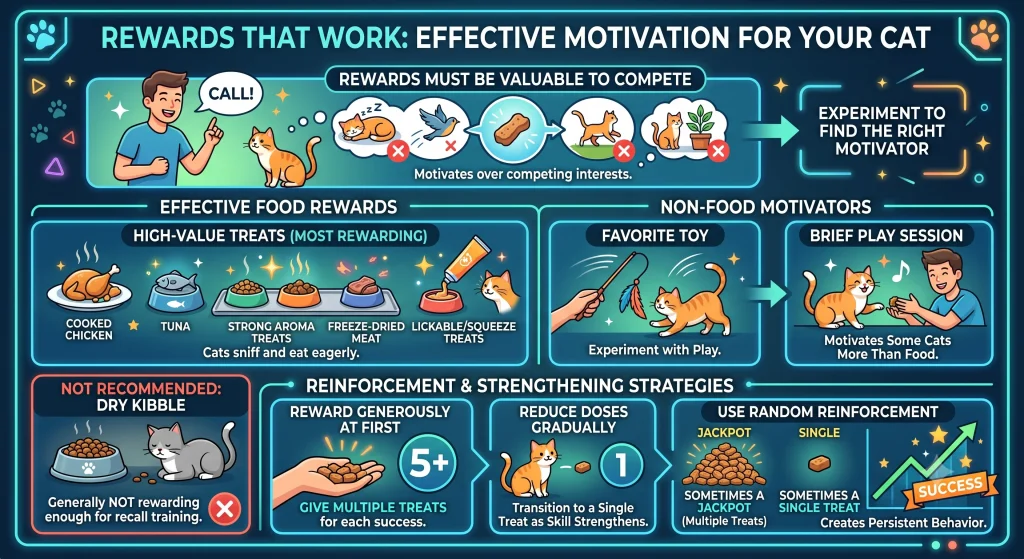
The reward needs to be worth leaving whatever your cat was doing. The best reward depends on the individual cat. Some cats respond strongly to high-value treats, such as tiny pieces of plain cooked chicken or fish, freeze-dried meat, or lickable treats, while others may happily work for kibble, play, petting, or another preferred reward. More distracting environments may require a more valuable reward. Our guide to healthy cat treats covers safe options.
Keep food rewards small and count them toward your cat’s daily food allowance (Petplan). The MyyCat Cat Treat Calculator can help you estimate a sensible daily treat limit.
Reward generously while your cat is learning. Once the behavior is established, you can vary the rewards, offering sometimes a single treat, sometimes a few, sometimes a short game or a chin scratch, but keep reinforcing recall often enough that coming to you remains worthwhile. If the rewards stop altogether, the response is likely to fade.
Troubleshooting Common Problems
If your cat stops responding after initial progress, you may have advanced too quickly. Go back to the last stage where they were successful and practice there. If your cat responds to the treat bag but not to the verbal cue, practice saying the cue first and then producing the reward, so the cue becomes the predictor. If your cat comes partway and then gets distracted, try a more valuable reward or a shorter distance.
If your cat approaches but stops just out of reach, try backing away slowly to encourage them to follow, and reward generously when they complete the approach. Avoid chasing your cat or immediately grabbing them after they come. That can create an unwanted association between coming to you and being caught, and may reduce future responsiveness. Most of the time, let your cat come to you, reward them, and let them go. If you do need to pick your cat up, practice gentle handling separately with rewards so it isn’t always unpleasant.
A cat may recognize a familiar recall cue without responding every time. A missed response does not automatically mean your cat has forgotten the training. Consider distractions, motivation, stress, and the environment before changing your approach.
Never scold, punish, or handle your cat roughly for failing to come when called. These reactions can create negative associations with the cue and make future training more difficult.
If a cat that previously responded to familiar cues suddenly stops responding, especially alongside other behavioral changes, arrange a veterinary evaluation. Hearing changes, pain, illness, or age-related cognitive changes may contribute to reduced responsiveness and should not automatically be treated as training problems (ASPCA). This guide offers general training information and is not a substitute for advice from your veterinarian.
Key Takeaways
One of the most important rules of cat recall training is this: avoid calling your cat right before something unpleasant. If you call your cat and then put them in a carrier, clip their nails, or give them medication, you risk undermining your recall training. Instead, calmly go to your cat for necessary tasks, and use carrier training and gradual nail-trimming training to make those tasks less stressful.
With consistent, reward-based practice, many cats can learn to respond more reliably when called. Using the cue for positive experiences helps build that response, but no cat can be expected to come every single time. Fear, distractions, unfamiliar environments, and sudden noises can interfere with recall, especially outdoors.
- Rebuild the name association first. Pair your cat’s name with good things until they reliably look toward you, progressing at your cat’s pace.
- Keep the name and recall cue distinct. The name asks for attention; a dedicated cue such as “come” or a whistle means “come to me.”
- Get down to your cat’s level. Sitting or crouching can make you seem less imposing.
- Keep sessions brief and positive. Stop while your cat is still engaged or before signs of frustration, stress, or loss of interest appear.
- Find your cat’s best reward. Treats, kibble, play, or petting can all work; use more valuable rewards around bigger distractions.
- Avoid calling for unpleasant experiences. Go to your cat for the carrier, nail trims, or medication instead.
- Don’t chase or grab. Let your cat come to you, reward them, and release them.
- Increase difficulty gradually. Add distance and distractions slowly as your cat’s skill improves.
- Never rely on recall for safety. It does not replace secure doors, carriers, harnesses, cat-secure enclosures, or supervision.
FAQ
Can cats actually be trained to come when called?
Yes. Many cats can learn a recall cue through positive reinforcement, especially when the reward is something they value. Reliability varies between cats and situations, and no cat responds every time, so recall should never replace physical safety measures.
How long does it take to train recall?
There is no fixed timeline. Some cats make noticeable progress quickly, while others need much longer. Progress depends on the individual cat, motivation, the environment, and distractions, so move at your cat’s pace rather than following a rigid calendar. Outdoor recall is particularly unpredictable.
What treats work best for recall training?
The best reward depends on the individual cat. Many cats respond well to tiny pieces of plain cooked chicken or fish, freeze-dried meat, or lickable treats, but some will happily work for kibble, play, or petting. Use a more valuable reward in more distracting settings, and count food rewards toward your cat’s daily food allowance.
Why does my cat ignore me when I call?
Common reasons include being called before unpleasant experiences, a name that no longer predicts anything, rewards that are not motivating enough, or strong distractions. Fear, stress, pain, or hearing loss can also reduce responsiveness, so a sudden change is worth discussing with your veterinarian.
Should I use a clicker for cat recall?
A clicker is optional. A clicker or a consistent marker word such as “yes” can help mark the exact moment your cat does the right thing, which makes the timing of the reward clearer. Always follow the marker with a reward.
Can I train an older cat to come when called?
Yes, older cats can learn new cues, but progress varies. Hearing changes, pain, mobility limitations, or cognitive changes may affect training, so keep sessions short and easy, and consider a visual cue for a cat with hearing loss. If responsiveness changes suddenly, a veterinary evaluation may be appropriate.
How do I practice recall outdoors?
Only practice outdoors inside a truly cat-secure enclosure or catio, or with your cat in a properly fitted harness on a supervised leash or long line. A normal fenced yard may not safely contain a cat. Never rely on recall alone to prevent escape; it is not a substitute for secure doors, carriers, harnesses, enclosures, and supervision.
What if my cat comes partway and stops?
The reward may not be valuable enough, the distance may be too great, or something nearby may be worrying your cat. Try a more valued reward, reduce the distance, and back away slowly to encourage your cat to follow.
Should I call my cat’s name throughout the day?
You can use your cat’s name normally. It works best as an attention cue that usually predicts something neutral or pleasant. Save your dedicated recall cue, such as “come,” for times when you can reward a response, and avoid using either right before something your cat dislikes.
How do I maintain recall once trained?
Keep practicing in everyday situations, continue rewarding recall often enough that it stays worthwhile, and avoid calling your cat for unpleasant experiences. Expect occasional misses, especially around strong distractions, and go back a step if responses become less reliable.
Sources & References
- TICA (The International Cat Association) — Safe Outdoor Time for Cats: Yes, It’s Possible and Important — https://tica.org/blogs/safe-outdoor-time-for-cats-yes-its-possible-and-important/
- ASPCA — Older Cats with Behavior Problems — https://www.aspca.org/pet-care/cat-care/common-cat-behavior-issues/older-cats-behavior-problems
- Petplan (Nicky Trevorrow, Cats Protection) — How to Train a Cat Using Positive Reinforcement — https://www.petplan.co.uk/cat-insurance/cat-care-and-advice/positive-reinforcement-cat-behaviour-training.html