
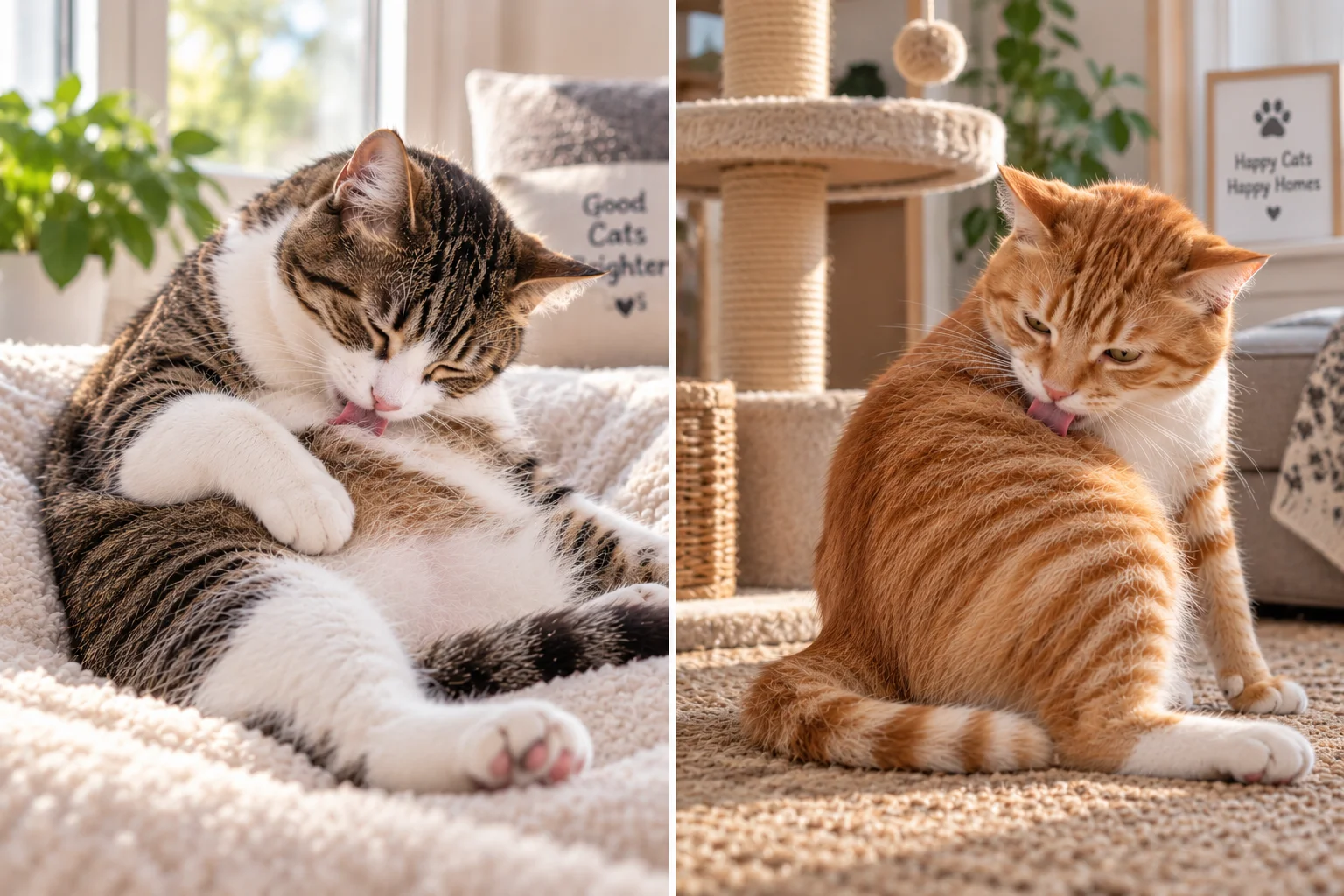

Your cat has a bald patch on their belly that wasn’t there last month. Or a bare strip running down one leg. You probably didn’t notice it happening, because most cats groom in private, in the quiet moments when nobody is watching.
Quick answer: Cat overgrooming — licking, chewing, or pulling out fur until bald patches or irritated skin appear — is usually caused by one of four things: parasites (especially fleas), an allergy, pain or skin irritation, or stress. Because the first three are far more common than pure stress-related licking, a veterinary check is the right first step for almost every cat, not a last resort after everything else fails.
Table of Contents
What Counts as Cat Overgrooming?
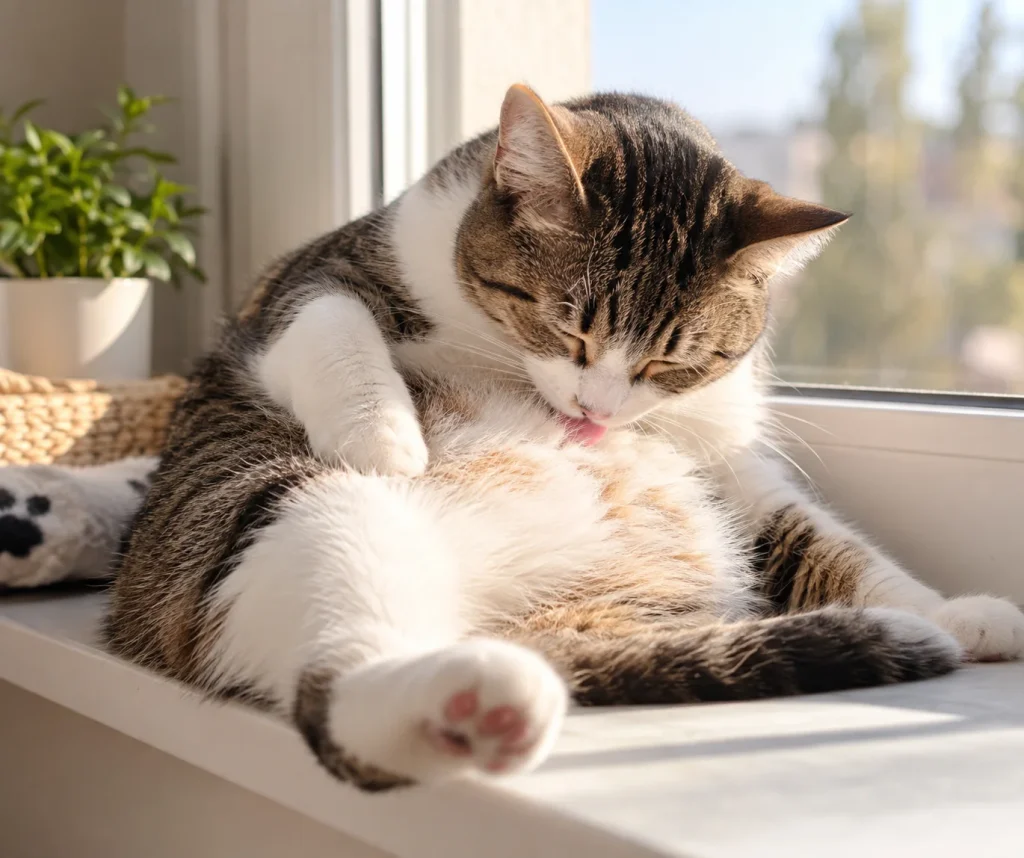
Cats are naturally tidy animals, and grooming is a normal part of their day. It cleans the coat, spreads natural oils, helps regulate body temperature, and seems to be genuinely comforting for them. That’s all healthy. Cat overgrooming is different: it’s licking, chewing, or barbering (biting hair off close to the skin) done often enough, or hard enough, that it starts damaging the coat or the skin underneath.
Signs that grooming has crossed into overgrooming include:
- Bald or thinning patches, often symmetrical on both sides of the body
- Stubbly, uneven fur rather than a clean bald patch (a sign the cat is barbering hair off rather than it falling out on its own)
- A preference for the belly, inner thighs, flanks, or lower back
- Skin that looks normal underneath, or skin that’s pink, scabbed, or has small sores
- More hairballs than usual, since all that extra fur has to go somewhere
- Visible damp or discolored fur from constant licking
The Cornell Feline Health Center notes that licking which causes noticeable hair loss or an increase in hairballs isn’t normal grooming, and is worth investigating rather than dismissing as a quirk.
What Causes Cat Overgrooming?
Most cats that overgroom have an underlying medical trigger. Skin that itches, stings, or hurts gets licked, and cats don’t scratch the way dogs do — they lick instead, which is part of why the cause can be so easy to miss.
Fleas and Other External Parasites
Flea allergy dermatitis is one of the most common reasons cats overgroom, and it doesn’t take a heavy infestation to trigger it. A single flea bite can cause an intensely itchy reaction that lasts for days in a sensitive cat. Indoor cats are not immune — fleas travel in on shoes, other pets, or visitors. Cats often concentrate their licking near the base of the tail and lower back when fleas are the cause, though this isn’t a hard rule.
Food or Environmental Allergies
Allergies to a food ingredient, pollen, dust mites, or mold can all produce itchy skin that a cat responds to by licking. Allergic cats tend to focus on the belly, face, ears, and paws, and may also have recurring ear infections or vomiting alongside the skin symptoms. If you’ve already gone down the food-sensitivity road with your cat, MyyCat’s guide to cat food allergies walks through the elimination-diet process vets typically recommend.
Pain and Joint Problems
Cats sometimes lick a specific area because it hurts, not because it itches. A cat with a sore joint, a bladder problem, or an old injury may groom that spot obsessively, sometimes to the point of a bald patch directly over the painful area. This is especially common in older cats with arthritis, who may groom over stiff or aching joints as a form of self-soothing — something covered in more detail in MyyCat’s guide to cat arthritis.
Skin Infections and Irritation
Bacterial or fungal skin infections (including ringworm), contact irritation from a new fabric or cleaning product, and even mild sunburn on thin-furred areas can all make a patch of skin uncomfortable enough for a cat to lick at it repeatedly.
Stress, Anxiety, and Psychogenic Alopecia
Once medical causes are ruled out, some cats do overgroom purely from stress. Licking releases endorphins, so for an anxious cat it can become a self-soothing habit, similar to a person biting their nails. Vets call the resulting hair loss psychogenic alopecia, and it’s considered a diagnosis of exclusion — meaning it’s only confirmed after medical causes have been checked and ruled out, not assumed from the start.
Common stress triggers include a move, a new pet or baby in the house, a change in routine, conflict with another cat in the home, boredom, or an owner’s absence. If your cat’s licking tends to spike when you’re away, it’s worth reading MyyCat’s guide to cat separation anxiety, and MyyCat’s broader guide to cat anxiety for calming strategies that can reduce the licking along with the underlying stress. A cat that’s overgrooming from anxiety often shows other stress signals too, like spending more time hiding or a change in how relaxed their body language looks day to day.
According to Veterinary Partner, psychogenic alopecia is only diagnosed after other medical causes have been ruled out, precisely because a genuine medical cause for the itching is far more common than a purely behavioral one — which is exactly why skipping the vet visit and assuming stress is the risk to avoid.
How to Tell Medical Licking From Stress Licking
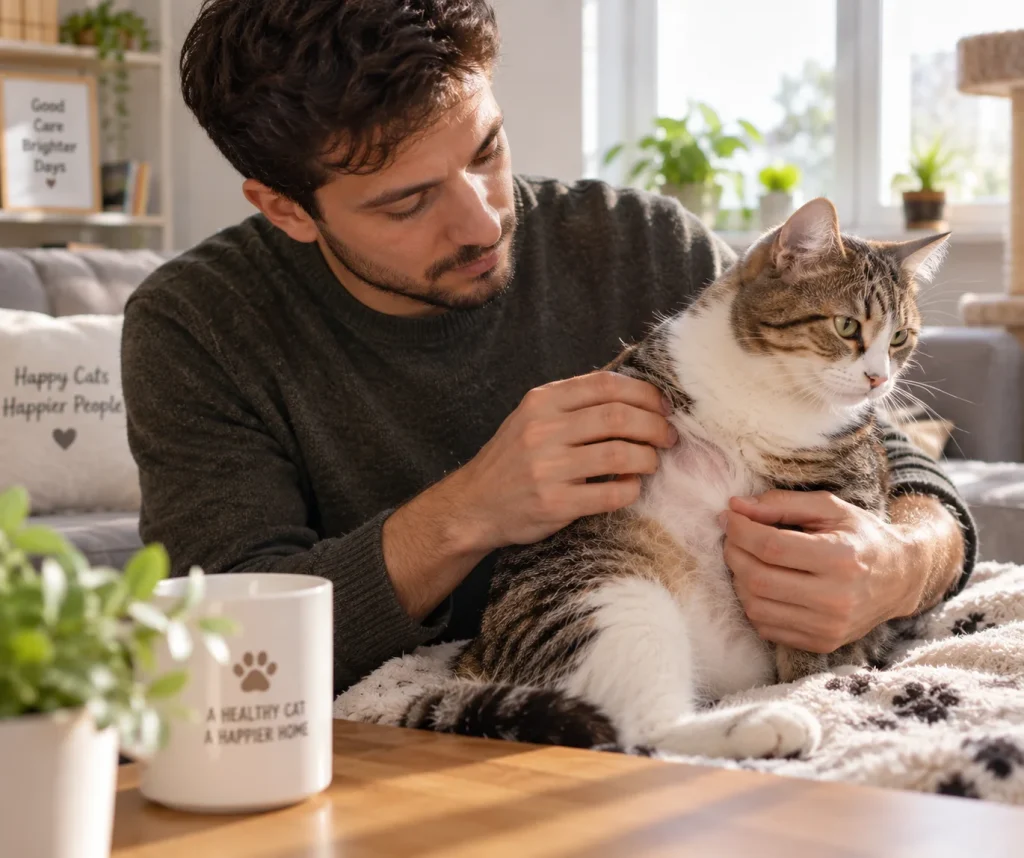
You can’t diagnose your cat at home, but a few patterns can help you describe what’s happening more precisely when you do call the vet:
- Symmetry: Bald patches that mirror each other on both sides of the body lean toward a medical or allergic cause. One-sided or irregular patches can point either way.
- Skin condition: Red, scabbed, or broken skin usually means something is actively irritating it — parasites, allergy, or infection. Normal-looking skin under thinning fur is more consistent with pure barbering from licking.
- Other symptoms: Vomiting, diarrhea, changes in appetite, limping, or litter box changes alongside the licking all point toward a medical cause that needs attention first.
- Timing and triggers: Licking that ramps up around specific events (you leaving the house, a new pet arriving, a loud thunderstorm) suggests a stress component, though it doesn’t rule out an underlying medical issue too.
- Body language: A cat who’s otherwise tense, flattened, or avoidant may be telling you more than the bald patch alone, so it’s worth paying attention to their overall posture and behavior, not just the bald patch itself.
How to Help a Cat That’s Overgrooming
Once your vet has confirmed or ruled out a medical cause, there’s a lot you can do to support your cat and reduce the licking:
- Start with a veterinary exam. This is the step that actually solves the problem for most cats, since it identifies whether you’re dealing with parasites, allergies, pain, or infection.
- Get flea prevention right. Consistent, vet-recommended flea prevention (not just an occasional over-the-counter product) rules out one of the single biggest causes of itchy skin.
- Reduce obvious stressors where you can. Predictable feeding and play times, enough vertical space, and separate resources (food, water, litter boxes) in multi-cat homes all lower baseline stress.
- Add enrichment. Short, regular play sessions that let your cat stalk and pounce at something can burn off the same energy that sometimes goes into compulsive licking.
- Don’t punish the licking. Scolding a cat for grooming adds stress on top of whatever is already driving the behavior, and tends to make things worse rather than better.
- Follow your vet’s plan for allergies. That might mean a prescription diet trial, flea control, or medication for skin inflammation — consistency matters more than any single product.
- Use an e-collar only if your vet recommends it. It can stop self-trauma while the underlying cause is treated, but it’s a short-term tool, not a fix on its own.
Common Mistakes Cat Owners Make
A few patterns come up again and again with cat overgrooming, and they tend to make the problem last longer than it needs to:
- Assuming it’s “just a cat thing” and waiting months before mentioning it to a vet
- Trying human anti-itch creams or essential oils, some of which are unsafe for cats
- Treating it as purely behavioral before parasites, allergies, and pain have been ruled out
- Changing food, litter, and environment all at once, which makes it impossible to tell what actually helped
- Stopping flea prevention because they “don’t see any fleas” — a cat can have flea allergy dermatitis without a visible infestation
When to Contact a Veterinarian
Overgrooming is rarely a true emergency, but it’s always worth a scheduled vet visit rather than a wait-and-see approach, especially if you notice:
- Open sores, bleeding, or an unpleasant smell where the fur is missing
- Hair loss that’s spreading or getting worse over a few weeks
- Licking alongside vomiting, diarrhea, appetite changes, or litter box changes
- A cat that seems uncomfortable, restless, or less social than usual
If you’re also noticing other signs that something is off with your cat more generally, MyyCat’s guide on how to tell if your cat is sick covers the broader warning signs worth mentioning to your vet at the same appointment.
Frequently Asked Questions About Cat Overgrooming
Is overgrooming the same thing as normal grooming?
No. Normal grooming keeps the coat clean and doesn’t cause hair loss or skin damage. Cat overgrooming is frequent or intense enough to cause thinning fur, bald patches, or irritated skin.
Can stress alone cause bald patches in cats?
It can, but true stress-driven hair loss (psychogenic alopecia) is less common than medical causes like fleas, allergies, or pain. Vets typically rule out medical issues first before treating it as purely behavioral.
Will the fur grow back?
In most cases, yes, once the underlying cause is identified and addressed. Regrowth can take several weeks to a few months depending on the cause and how long the licking had been going on.
Do indoor-only cats really get fleas?
Yes. Fleas can hitch a ride indoors on people, shoes, or other pets, so being strictly indoors reduces the risk but doesn’t eliminate it.
Is it okay to just trim the bald area or use a topical product I have at home?
It’s best to avoid over-the-counter creams, oils, or human products until a vet has looked at the skin, since some common ingredients aren’t safe for cats and can mask symptoms your vet needs to see.
Key Takeaways
- Cat overgrooming means licking, chewing, or barbering that damages the coat or skin — not normal daily grooming.
- Fleas, allergies, pain, and skin infections cause most cases, so a veterinary exam should come before assuming it’s stress.
- Psychogenic alopecia (stress-driven licking) is real, but it’s diagnosed only after medical causes are ruled out.
- Symmetrical bald patches, irritated skin, and other symptoms like vomiting or appetite changes are all reasons to see a vet sooner rather than later.
- Fur usually regrows once the underlying cause is treated, though it can take time.
This article is for informational and educational purposes only and is not a substitute for professional veterinary diagnosis, treatment, or advice.
Sources & References
- Cornell Feline Health Center — Cats That Lick Too Much
- PetMD — Cat Overgrooming: Why Is My Cat Licking Itself So Much?
- Veterinary Partner (VIN) — Psychogenic Alopecia
[…] are exceptions. If your cat follows you. And also shows signs of anxiety. Like hiding. Hissing. Overgrooming. Or aggression. The following might be a stress response. Not a happy one. In that case. You should […]
[…] other causes too, including food allergies and environmental allergies. MyyCat’s guides to cat overgrooming and food allergies in cats explain how vets work through the possibilities. Ruling out fleas is […]