
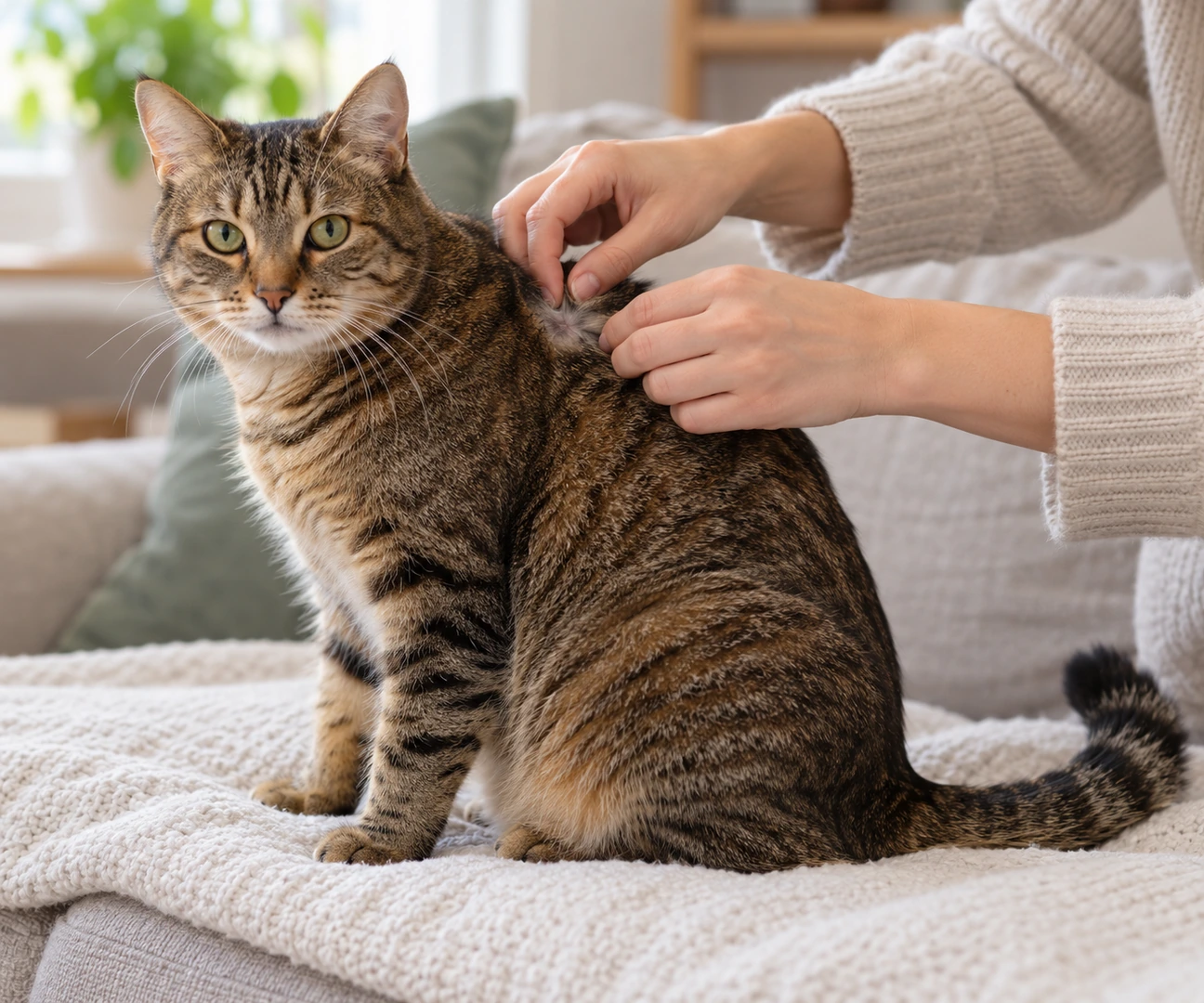

Your cat is scratching more than usual, nibbling at the base of the tail, or you have spotted tiny dark specks in the fur. Fleas on cats are one of the most common reasons for itching, and they are more than a nuisance: they can cause skin allergies, spread tapeworms and, in young kittens, lead to dangerous blood loss. The good news is that modern veterinary flea treatments work well when they are used correctly and consistently.
Quick answer: To get rid of fleas on cats, use a flea product your veterinarian recommends that is specifically labeled for cats, treat every dog and cat in the household at the same time, and clean the home to remove eggs and larvae. Expect it to take a couple of months, because new fleas keep emerging from the environment. Never use a dog flea product on a cat: some contain permethrin, which can cause tremors and seizures in cats. Contact a vet urgently if your cat shows twitching, tremors or seizures after flea treatment, or if a kitten with fleas is weak or has pale gums.
This guide is general information to help you understand fleas and talk with your veterinarian. It cannot diagnose your cat or replace veterinary care.
Table of Contents
How to Tell if Your Cat Has Fleas
The Cornell Feline Health Center describes flea bites as intensely itchy, and notes that cats are bitten mostly on the back of the neck and the top of the tail head. Common signs include:
- Scratching, licking or chewing at the skin, especially around the neck, back and base of the tail
- Small scabs or crusty bumps on the skin
- Thinning fur or bald patches from overgrooming
- Tiny dark specks in the fur, known as flea dirt
- Live fleas: small, fast-moving reddish-brown insects
The Flea Dirt Test
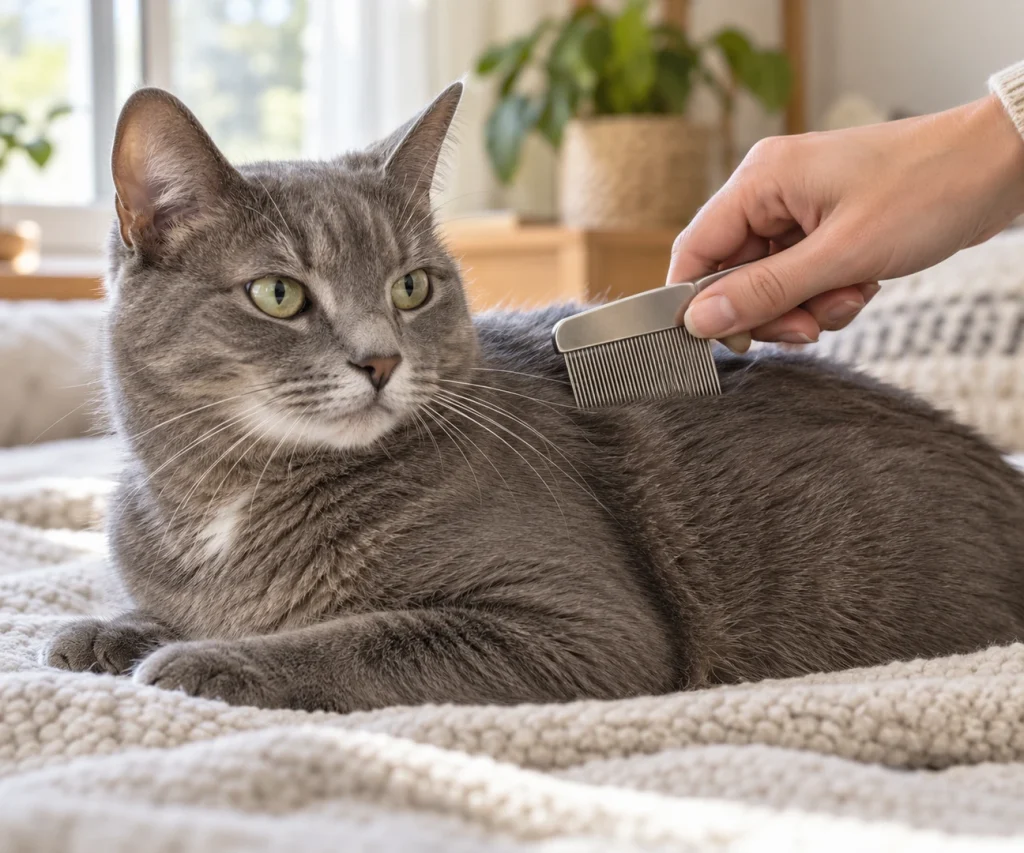
Live fleas move quickly and can be hard to spot, so flea dirt is often easier to find. The Merck Veterinary Manual describes it as reddish-black, comma-shaped specks of flea droppings. To check:
- Comb through your cat’s fur with a fine-toothed flea comb, especially along the back and near the tail, over a sheet of white paper.
- Tip any dark specks onto a damp paper towel.
- If the specks dissolve into a reddish-brown smudge, they are flea droppings, as Merck explains, and your cat has fleas.
Even if you only find a few specks, treat it as a flea problem. Fleas you can see on your cat are usually only part of the picture.
Why Fleas on Cats Are More Than Just Itchy
Flea Allergy Dermatitis
Some cats are allergic to flea saliva. Cornell explains that in allergic cats, just a few bites can cause the kind of skin damage that would take far more bites in a cat without the allergy. Merck describes a common pattern called miliary dermatitis: small, crusty bumps that feel like millet seeds, often over the back, neck and face. Affected cats may lick, scratch and chew themselves repeatedly, which can lead to hair loss and broken skin. Cornell notes that intense scratching can create wounds that are vulnerable to infection.
Itchy skin and overgrooming have other causes too, including food allergies and environmental allergies. MyyCat’s guides to cat overgrooming and food allergies in cats explain how vets work through the possibilities. Ruling out fleas is usually one of the first steps.
Tapeworms
Cornell, Merck and the Companion Animal Parasite Council (CAPC) all note that fleas carry tapeworm. The CDC explains that cats get this tapeworm by swallowing an infected flea, often while grooming, and that dried tapeworm segments look like small grains of rice. If your cat has fleas, ask your vet whether deworming is needed too. MyyCat’s guide to worms in cats covers tapeworms in more detail.
Anemia in Kittens
Fleas feed on blood. Cornell warns that it doesn’t take much feeding to cause anemia in a kitten carrying many fleas, and CAPC notes that heavy infestations can cause anemia and even death, particularly in young animals. Pale gums, weakness or lethargy in a flea-infested kitten need prompt veterinary attention.
Risks to People
According to the Centers for Disease Control and Prevention (CDC), the bacteria that cause cat scratch disease are spread by the scratch of cats that have been infected by fleas. CAPC also lists other diseases the cat flea can carry, including flea-borne typhus. Keeping your cat free of fleas protects the people in your home as well as your cat.
How to Get Rid of Fleas on Cats
Getting rid of fleas on cats means treating your cat, every other pet, and the home at the same time. Merck and CAPC both stress that all pets in the household need to be treated.
Step 1: Choose a Cat-Safe Flea Treatment With Your Vet
Cornell describes several types of flea treatment for cats, including topical products and medications that circulate in the bloodstream, and advises that flea products be used only with the advice and guidance of a veterinarian. Merck also notes that not all flea products are safe for cats. Your vet can recommend a product that suits your cat’s age, weight and health, and that fits your household. Always:
- Use only products labeled for cats
- Check the label for the minimum age and weight
- Follow the label instructions exactly, including how often to apply
- Never split a dog product or use a dog product on a cat
Step 2: Treat Every Pet in the Home
CAPC states that every pet in the home must be treated for flea control to work. If you treat only the itchy cat, fleas on another cat or dog will keep reinfesting the household. Make sure each animal gets a product made for its own species, and keep cats away from dogs treated with products that aren’t safe for cats (see below).
Step 3: Clean Your Home
Most of a flea’s life cycle happens off the cat. Cornell recommends meticulous vacuuming of furniture, rugs and carpeting, and notes that professional pest control may sometimes be needed. Practical steps include:
- Vacuum floors, rugs, furniture and your cat’s favorite resting spots regularly, and empty the vacuum promptly
- Wash your cat’s bedding and blankets
- Pay attention to protected spots such as under furniture and in pet bedding, as well as carpets, which CAPC notes are a typical place for flea larvae to develop
- If you use any household flea spray or hire pest control, choose products that are safe to use around cats and follow the instructions about keeping pets away
Step 4: Keep Going for Long Enough
Merck notes that flea control typically takes two to three months, and CAPC says moderate to severe infestations may take several months to bring under control. Seeing a few fleas in the first weeks of treatment doesn’t necessarily mean the product isn’t working. New adult fleas can keep emerging from the home until the immature stages are gone. Keep treating as directed and talk to your vet if fleas are still a problem after a couple of months.
Why Fleas Keep Coming Back: The Flea Life Cycle
Fleas go through four stages: egg, larva, pupa and adult. Merck notes that a single female flea can produce up to 50 eggs a day. CAPC explains that eggs fall off the cat within hours, and the larvae develop in protected places such as carpets. Adults then emerge from the pupal stage, and CAPC notes that in temperate climates most emerge within about three to five weeks.
Merck explains that the full life cycle typically takes 3 to 8 weeks, though it can be completed in as little as 12 to 14 days in favorable conditions. This is why one round of treatment is rarely enough, and why cleaning the home matters as much as treating the cat.

Never Use Dog Flea Products on Cats
This is one of the most important flea safety rules. International Cat Care explains that permethrin is an insecticide used in some dog flea products, often at high concentrations in spot-on treatments. Cats can’t break it down safely, so it builds up in the body and causes serious illness.
Poisoning can happen in two ways: a dog product applied to a cat by mistake, or a cat picking up permethrin from a recently treated dog. International Cat Care notes that permethrin can transfer to a cat’s coat when the cat rubs against a treated dog or sits on the same furniture.
International Cat Care lists signs of permethrin poisoning as:
- Tremors, shaking or twitching
- Oversensitivity to touch and sound
- Wobbliness or loss of coordination
- Seizures in more severe cases
If you see any of these signs, or think your cat has been exposed to a dog flea product, contact your vet or an emergency clinic immediately. International Cat Care notes that the outlook is good when cases are caught early and treated quickly, but severely affected cats may not survive. If you have dogs, ask your vet about flea products that are safe to use in a home with cats.
Indoor Cats, Kittens and Multi-Pet Homes
Indoor cats: CAPC notes that indoor pets remain vulnerable to fleas. Fleas can be brought into the home, for example by other pets. Cats that go outdoors or on supervised walks may have more exposure; MyyCat’s cat leash training guide discusses the parasite risks cats can face outdoors.
Kittens: Young kittens are at higher risk of anemia from fleas, and many flea products have minimum age and weight limits. Ask your vet before treating a kitten, and never use an adult product on a kitten unless the label and your vet say it is suitable.
Multi-pet homes: Every dog and cat in the home needs regular flea control, using species-appropriate products.
Preventing Fleas on Cats
CAPC recommends that flea prevention be tailored to each pet’s risk and notes that indoor pets still need protection. Talk to your vet about whether year-round prevention is right for your cat. Regular combing also helps you catch a problem early; MyyCat’s Cat Grooming Schedule Generator can help you build combing into your routine.
When to See a Vet About Fleas
Contact your veterinarian if:
- Your cat is very itchy, has scabs, sores or bald patches, or keeps overgrooming
- A kitten has fleas, or any cat with fleas has pale gums, weakness or lethargy
- You see small rice-like segments around your cat’s tail area or in the bedding, which the CDC describes as typical of dried tapeworm segments
- Fleas are still present after a couple of months of consistent treatment
- You are unsure which product is safe for your cat or other pets
Contact a vet immediately if your cat shows tremors, twitching, wobbliness or seizures, especially after a flea treatment or contact with a treated dog. MyyCat’s guide on how to tell if your cat is sick covers other warning signs.
Frequently Asked Questions
Can indoor cats get fleas?
Yes. CAPC notes that indoor pets remain vulnerable to fleas. Once fleas get inside, for example on another pet, they can complete their life cycle in the home.
Can I use dog flea treatment on my cat?
No. Some dog flea products contain permethrin, which International Cat Care warns can cause serious and sometimes fatal poisoning in cats. Use only products labeled for cats, ideally recommended by your vet.
How long does it take to get rid of fleas on a cat?
Merck notes that flea control typically takes two to three months, and CAPC says moderate to severe infestations can take several months. Treating all pets and the home at the same time gives the best results.
Do fleas cause tapeworms in cats?
Fleas can carry tapeworm. The CDC explains that cats become infected by swallowing an infected flea, often while grooming. Ask your vet whether your cat needs deworming as part of flea treatment.
Are natural or home flea remedies safe for cats?
Be cautious. Cornell advises using flea products only with veterinary guidance, and Merck notes that not all flea products are safe for cats. Products marketed as natural are not automatically safe or effective, so check with your vet before using any remedy on your cat.
Key Takeaways
- Itching, scabs around the neck and tail base, and flea dirt that turns reddish on damp paper are classic signs of fleas on cats.
- Fleas can cause flea allergy dermatitis, spread tapeworms, cause anemia in kittens and carry diseases that affect people.
- Use a vet-recommended product labeled for cats, treat every pet in the home and clean the environment.
- Expect flea control to take a couple of months because of the flea life cycle.
- Never use dog flea products on cats. Tremors, twitching or seizures after flea treatment are an emergency.
More From MyyCat
The grooming schedule tool mentioned in this guide is collected with MyyCat’s other free resources on the MyyCat cat care tools page. For more reading on everyday cat health and care, you can also browse MyyCat’s books.
This article is for informational and educational purposes only and is not a substitute for professional veterinary diagnosis, treatment, or advice. Please read our veterinary disclaimer.
Sources & References
- Cornell Feline Health Center — Fleas
- Cornell Feline Health Center — Flea Allergy
- Merck Veterinary Manual (Cat Owners) — Fleas of Cats
- Companion Animal Parasite Council — Fleas Guidelines
- International Cat Care — Permethrin Poisoning
- Centers for Disease Control and Prevention — About Bartonella
- Centers for Disease Control and Prevention — About Dog and Cat Tapeworm (Dipylidium)