

Table of Contents
How Long Can You Leave a Cat Alone? Complete Cat Care Guide
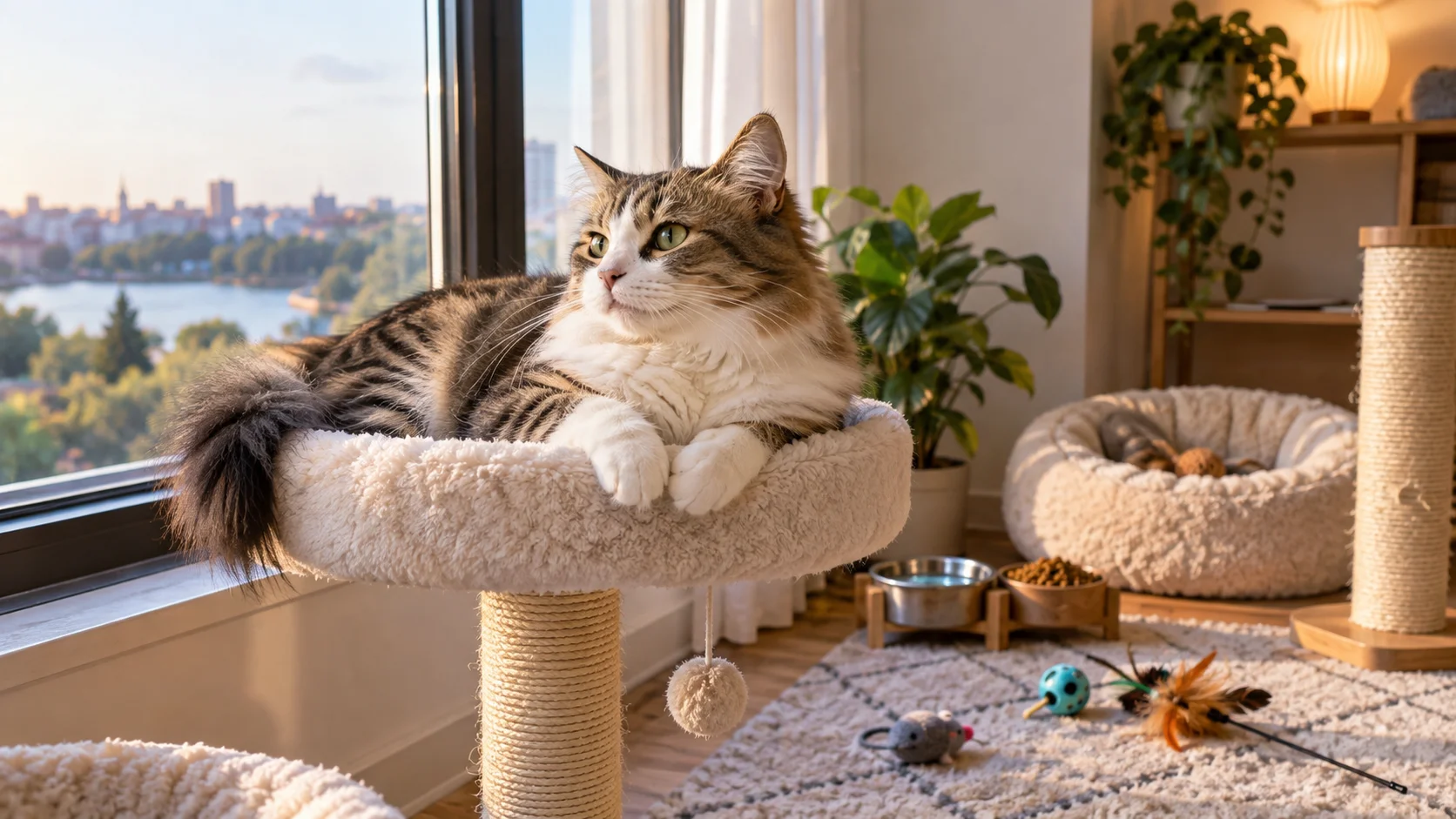
If you have a cat, there will probably be days when you need to leave home for work, errands, appointments, or a short trip. That naturally leads to an important question: how long can you leave a cat alone?
There is no single number of hours that works for every cat. A healthy adult cat may be comfortable spending part of the day alone, while a young kitten, senior cat, or cat with health problems may need considerably more attention.
The most important thing is not simply counting the hours. You also need to consider your cat’s age, health, personality, feeding routine, access to fresh water, litter-box setup, home safety, and opportunities for mental and physical stimulation.
This guide explains how to prepare your home, what to consider before leaving your cat alone, how to reduce boredom, and when arranging for someone to check on your cat makes more sense.
How Long Can You Leave a Cat Alone?
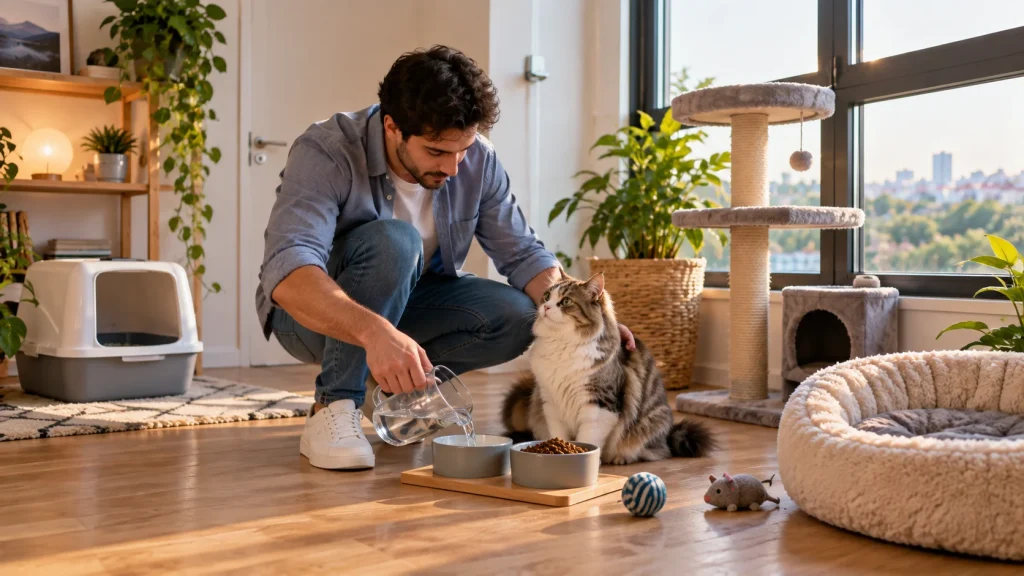
A healthy adult cat can often manage some time alone during the day when its basic needs are properly covered. Your cat should have access to fresh water, an appropriate feeding routine, a clean litter box, a safe environment, and suitable opportunities to rest and explore.
However, it is important not to treat a general guideline as a guarantee for every individual cat. Some cats are naturally independent and relaxed when their owners are away. Others are highly social, anxious, or strongly attached to their normal routine.
Before leaving, think about five basic needs:
- Food: Your cat should have an appropriate feeding routine.
- Water: Fresh drinking water should always be available.
- Litter: The litter box should be clean, accessible, and appropriate for your cat.
- Safety: Potential hazards should be removed before you leave.
- Enrichment: Your cat should have safe opportunities to scratch, explore, rest, and play.
Cornell University College of Veterinary Medicine recommends providing cats with essential resources such as food, water, litter boxes, and scratching opportunities, while keeping feeding and litter areas appropriately separated. Cornell Feline Health Center.
Can You Leave a Cat Alone During the Workday?
For many healthy adult cats, being home alone during a normal workday can be manageable if the environment has been prepared properly.
That does not mean your cat should simply have a bowl of food and an empty room.
Cats benefit from opportunities to perform natural behaviors such as stalking, pouncing, scratching, exploring, climbing, and observing their surroundings. Appropriate toys and enrichment can provide physical and cognitive stimulation.
Cornell’s Feline Health Center notes that toys can encourage natural behaviors such as stalking, pouncing, and problem-solving while also supporting exercise and enrichment.
Read Cornell’s guide to safe cat toys and enrichment.
Can I Leave My Cat Alone for 8 Hours?
Many healthy adult cats can manage a typical workday of around eight hours, provided their needs are met and there are no health or behavioral concerns that require more frequent supervision.
But eight hours should not be treated as a universal rule.
A cat that needs medication, has a medical condition, is recovering from an illness, or has recently experienced a major behavioral change may need a different care arrangement.
Your cat’s individual circumstances matter more than a number on the clock.
How Long Can You Leave a Kitten Alone?
Kittens generally require more supervision than adult cats.
They are curious, active, and still developing physically and behaviorally. A young kitten may investigate places that an adult cat normally ignores, chew objects, climb unstable surfaces, or become trapped somewhere unsafe.
For that reason, you should not automatically apply an adult cat’s routine to a kitten.
If you have a young kitten and need to be away for a substantial part of the day, arranging for a responsible person to check on the kitten may be appropriate.
Young kittens may also have feeding and social needs that make long periods alone less practical.
Can You Leave an Older Cat Alone?
Senior cats can enjoy quiet time, but aging can also bring changes that make regular monitoring more important.
An older cat may develop mobility problems, require medication, experience changes in appetite or drinking, or become more dependent on a familiar routine.
Cornell’s guidance on older cats notes that changes in behavior or health, including changes in sleeping, eating, hiding, or litter-box habits, deserve veterinary attention rather than simply being dismissed as normal aging.
Cornell Feline Health Center: Caring for Older Cats.
How to Prepare Your Cat Before Leaving Home
A few simple preparations can make your cat’s time alone safer and more comfortable.
Refresh the Water
Make sure fresh water is available before you leave.
If your cat has a habit of knocking over a single bowl, consider providing another stable water source in an appropriate location.
Cornell recommends ensuring cats have access to fresh water in places they can easily reach and notes that some cats may drink more from fountains, although individual preferences vary.
Learn more about feline hydration.
Clean the Litter Box
Start with a clean litter box before leaving.
Cats can be sensitive to litter-box cleanliness, and problems with elimination should not automatically be interpreted as stubbornness or bad behavior.
Cornell notes that litter-box problems can have behavioral, environmental, and medical causes and recommends keeping litter boxes clean and appropriately located.
Cornell: Understanding Litter Box Problems.
Check Windows and Doors
Before leaving, check that windows and doors are secure.
Do not assume a curious indoor cat will ignore an open window or an unsecured screen.
Remove Household Hazards
Look around the home from your cat’s perspective.
- Put away small objects that could be swallowed.
- Secure loose cords where appropriate.
- Keep cleaning products and chemicals inaccessible.
- Remove unsafe plants from areas your cat can reach.
- Put away plastic bags and other items that could create hazards.
- Make sure unstable objects cannot easily fall.
How to Keep a Cat Entertained While Alone
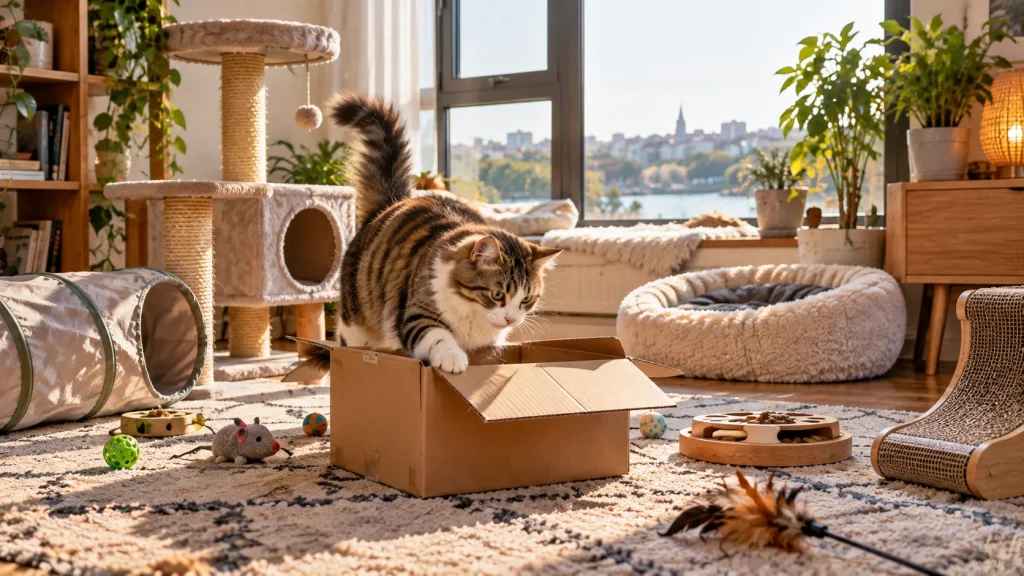
Leaving your cat alone does not have to mean leaving the environment boring.
You do not need dozens of expensive toys. What matters is giving your cat appropriate opportunities to investigate, scratch, climb, observe, rest, and interact with safe objects.
Create a Safe Window Area
Many cats enjoy observing the world outside.
A secure window perch can give your cat another place to relax while watching birds, people, trees, or other activity.
Make sure the window itself is secure and that your cat cannot escape.
Provide a Scratching Post
Scratching is a normal feline behavior. A stable scratching post or scratching surface gives your cat an appropriate place to scratch, stretch, and exercise.
Use Cardboard Boxes
A simple cardboard box can become an inexpensive exploration and resting area.
ASPCA recommends environmental enrichment that gives cats safe opportunities to explore different objects and spaces, including cardboard boxes and other appropriate enrichment items.
See ASPCA’s feline enrichment ideas.
Rotate Safe Toys
You do not need to leave every toy available at the same time.
Rotating appropriate toys can give your cat some variety and may make familiar objects more interesting.
Always choose toys appropriate for your individual cat and remove anything that could become dangerous if chewed, swallowed, or tangled.
Try Food-Based Enrichment
For cats that enjoy working for part of their food, an appropriate food puzzle can turn mealtime into a simple enrichment activity.
The amount of food used for enrichment should be considered part of your cat’s normal daily intake rather than extra food added on top.
If you want help estimating your cat’s food amount, you can use the MyyCat Cat Food Amount Calculator as a general planning tool.
For calorie planning, you can also explore the MyyCat Cat Calorie Calculator. These tools are intended as general guides and should not replace advice from your veterinarian.
How Much Food Should You Leave for Your Cat?
The answer depends on your cat’s normal feeding plan, body condition, age, activity level, and the type of food being provided.
It is usually better to maintain a consistent feeding routine rather than simply filling a very large bowl before leaving.
Some cats eat quickly, while others graze throughout the day. Wet food also has different handling considerations from dry food.
If you are unsure how much food your cat should receive, speak with your veterinarian and use your cat’s normal feeding plan as the starting point.
You can also use the Cat Food Amount Calculator to help organize your feeding information.
How to Read Your Cat’s Food Label
If you are changing foods or comparing products, it can be useful to understand the nutritional information on the package.
Rather than choosing food based only on advertising language on the front of a package, look at the nutritional information and consider your cat’s individual needs.
The MyyCat Cat Food Label Calculator can help you analyze information from a cat food label.
For cats with specific dietary requirements, allergies, chronic diseases, or other medical concerns, ask your veterinarian before making significant dietary changes.
Does Your Cat’s Age Affect How Long It Can Stay Alone?
Age is one of the factors worth considering before leaving a cat alone.
A young kitten may need more supervision, while a healthy adult cat may have a predictable routine and greater independence.
A senior cat may need additional monitoring if mobility, medication, appetite, hydration, or litter-box habits have changed.
If you want to estimate your cat’s age in human years, you can use the MyyCat Cat Age Calculator.
How to Tell If Your Cat Is Bored
Boredom can sometimes show up as destructive behavior, excessive attention-seeking, inactivity, or a lack of interest in the environment.
However, not every behavior change means your cat is bored.
Ask yourself:
- Does my cat have appropriate opportunities to play?
- Does my cat have somewhere safe to scratch?
- Can my cat observe its surroundings?
- Does my cat have places to climb or rest?
- Does my cat receive interactive play when I am home?
- Does my cat have opportunities to explore safely?
If your cat’s environment provides very little stimulation, improving enrichment may help.
For a more detailed guide, read How to Tell If Your Cat Is Bored.
Can Cats Get Lonely When Left Alone?
Cats have individual personalities. Some are comfortable spending quiet periods alone, while others strongly seek interaction with their people.
It is better to watch for changes from your cat’s normal behavior than to assume that every cat experiences being alone in exactly the same way.
Changes such as unusual vocalization, destructive behavior, hiding, appetite changes, or litter-box problems can have several possible causes.
In particular, a sudden behavioral change should not automatically be blamed on loneliness.
Can You Leave Two Cats Alone Together?
Having another cat does not automatically mean that your cats can be left alone for longer.
Some cats enjoy feline companionship, while others are territorial or prefer more personal space.
If you have multiple cats, provide enough resources so they do not have to compete unnecessarily.
- Multiple litter boxes
- Separate food and water areas when appropriate
- Several resting locations
- Multiple scratching surfaces
- Places where individual cats can retreat
Cornell recommends providing as many litter boxes as there are cats, plus one, which can help give cats more options and reduce competition.
Should Someone Check on Your Cat While You’re Away?
For a longer absence, having a trusted person check on your cat is a sensible option.
A person can notice problems that an automatic feeder cannot.
- Spilled water
- Unexpected vomiting
- Injury
- Unusual behavior
- A dirty or inaccessible litter box
- A feeding problem
- An environmental hazard
This becomes especially important for kittens, senior cats, cats taking medication, and cats with medical conditions.
What to Do Before Leaving Your Cat Alone for a Day
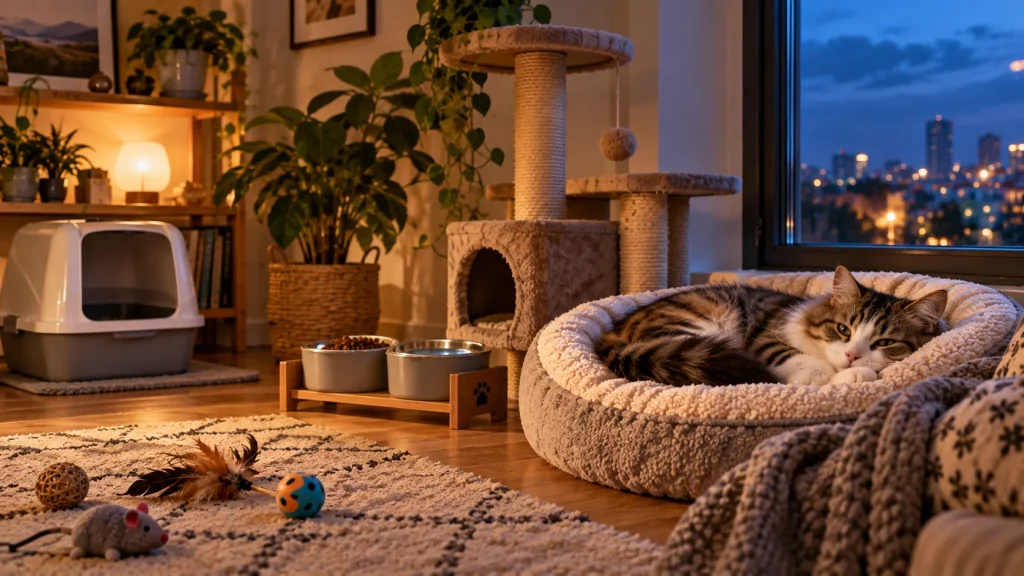
Use this simple checklist before leaving home:
- Refresh all water sources.
- Provide the normal food according to your cat’s feeding routine.
- Clean the litter box.
- Secure windows and doors.
- Remove dangerous objects.
- Check that your cat can safely access its normal resting areas.
- Provide a few appropriate enrichment options.
- Spend some interactive time with your cat before leaving.
A short play session before leaving can provide physical activity and interaction. Enrichment guidance from ASPCA also emphasizes giving cats opportunities for mental activity and natural behaviors.
ASPCA: Tips for Keeping Cats Busy and Engaged.
What If You Need to Leave Your Cat Alone Overnight?
An overnight absence requires more planning than a normal workday.
Before deciding whether your cat can stay home alone, consider its age, health, medication, feeding schedule, water needs, litter-box requirements, personality, and previous experience with being alone.
For a healthy adult cat, an occasional short absence may be manageable with appropriate preparation. Longer or repeated absences are better handled with a trusted person checking on the cat.
An automatic feeder can help with food timing, but it cannot replace human observation.
When You Should Contact a Veterinarian
If your cat suddenly behaves differently, do not automatically assume that the cause is boredom or loneliness.
Contact your veterinarian if you notice concerning changes such as:
- Persistent loss of appetite
- Unusual or severe lethargy
- Repeated vomiting
- Major changes in drinking or urination
- Difficulty breathing
- Signs of pain
- Sudden aggression
- Major changes in litter-box behavior
- Other symptoms that concern you
Cornell notes that litter-box problems can have medical causes and that cats may not always appear obviously ill when a health problem is present.
Learn more about feline litter-box problems.
Free Cat Care Tools and Calculators
Planning your cat’s routine becomes easier when you have the right information in one place.
MyyCat provides a collection of free resources for cat owners, including practical calculators and cat-care tools.
Explore the free Cat Care Tools & Calculators from MyyCat.
You can also use the individual resources mentioned throughout this guide:
Cat Books and Additional Resources
If you want to learn more about caring for your cat, you can also explore the MyyCat Books collection for additional cat-care resources.
Frequently Asked Questions
How long can you leave a cat alone during the day?
A healthy adult cat can often manage part of the day alone when it has appropriate food, fresh water, clean litter, a safe environment, and suitable enrichment. The appropriate amount of alone time depends on the individual cat’s age, health, personality, and routine.
Can I leave my cat alone for 8 hours?
Many healthy adult cats can manage a typical workday of around eight hours when their needs are properly prepared for. However, this is not a universal rule. Kittens, senior cats, sick cats, and cats requiring medication may need more frequent supervision.
Can cats be left alone overnight?
An overnight absence requires more preparation than a normal workday. A healthy adult cat may manage an occasional short absence when properly prepared, but longer or repeated absences are better handled with a trusted person checking on the cat.
How long can you leave a kitten alone?
Kittens generally need more supervision than adult cats because they are still developing and can get into unsafe situations more easily. The younger the kitten, the more important appropriate supervision and care become.
How do I keep my cat entertained while I am away?
Provide safe enrichment such as a scratching post, secure resting areas, a cardboard box, appropriate toys, and suitable food puzzles. Rotating toys and creating safe places for exploration and observation can also make the environment more engaging.
Do cats get bored when left alone?
Some cats may become bored when their environment offers little opportunity for activity or exploration. Providing enrichment, interactive play when you are home, scratching areas, safe observation points, and appropriate toy rotation can make the environment more stimulating.
How do I know if my cat is lonely?
A change from your cat’s normal behavior may indicate that something needs attention, but loneliness is only one possible explanation. Increased vocalization, hiding, destructive behavior, appetite changes, or litter-box changes can have behavioral or medical causes.
Should someone check on my cat while I am away?
For longer absences, having a trusted person check on your cat is a sensible option. They can refresh water, provide food, clean the litter box, check the cat’s behavior, and identify problems that an automatic feeder cannot detect.
Can two cats be left alone together?
Having another cat does not automatically mean that both cats can be left alone for longer. Cats have different personalities and may compete for resources. Multiple cats should have adequate food, water, litter boxes, resting areas, scratching surfaces, and opportunities to retreat.
What should I do before leaving my cat alone?
Refresh water, follow the normal feeding routine, clean the litter box, secure windows and doors, remove hazards, provide safe enrichment, and spend some interactive time with your cat before leaving.
Final Thoughts
So, how long can you leave a cat alone? There is no single number that applies to every cat.
A healthy adult cat may be comfortable spending part of the day alone when its basic needs are met and its environment is safe and stimulating. Kittens, senior cats, cats taking medication, and cats with health conditions may need more frequent care.
Instead of looking only at the clock, consider the complete picture: food, water, litter, safety, enrichment, health, and your cat’s individual needs.
For a short period away, good preparation can make your cat’s environment comfortable. For longer absences, arranging for a trusted person to check on your cat is the more responsible approach.
And if your cat suddenly changes its normal behavior, do not automatically assume that it is bored or lonely. A veterinary evaluation may be appropriate.
For more practical cat-care resources, visit MyyCat’s free cat care tools or explore the MyyCat Books collection.
[…] You come home from work to find your cat has shredded the curtain by the front door, urinated on your bed, knocked every item off the kitchen counter, or vocalized so loudly that your neighbor left a note asking if your cat is okay. Your cat is not being vindictive or poorly behaved. They are terrified of being alone. Separation anxiety in cats is a condition that causes extreme distress when the cat is separated from their primary caregiver or left alone for extended periods. […]