
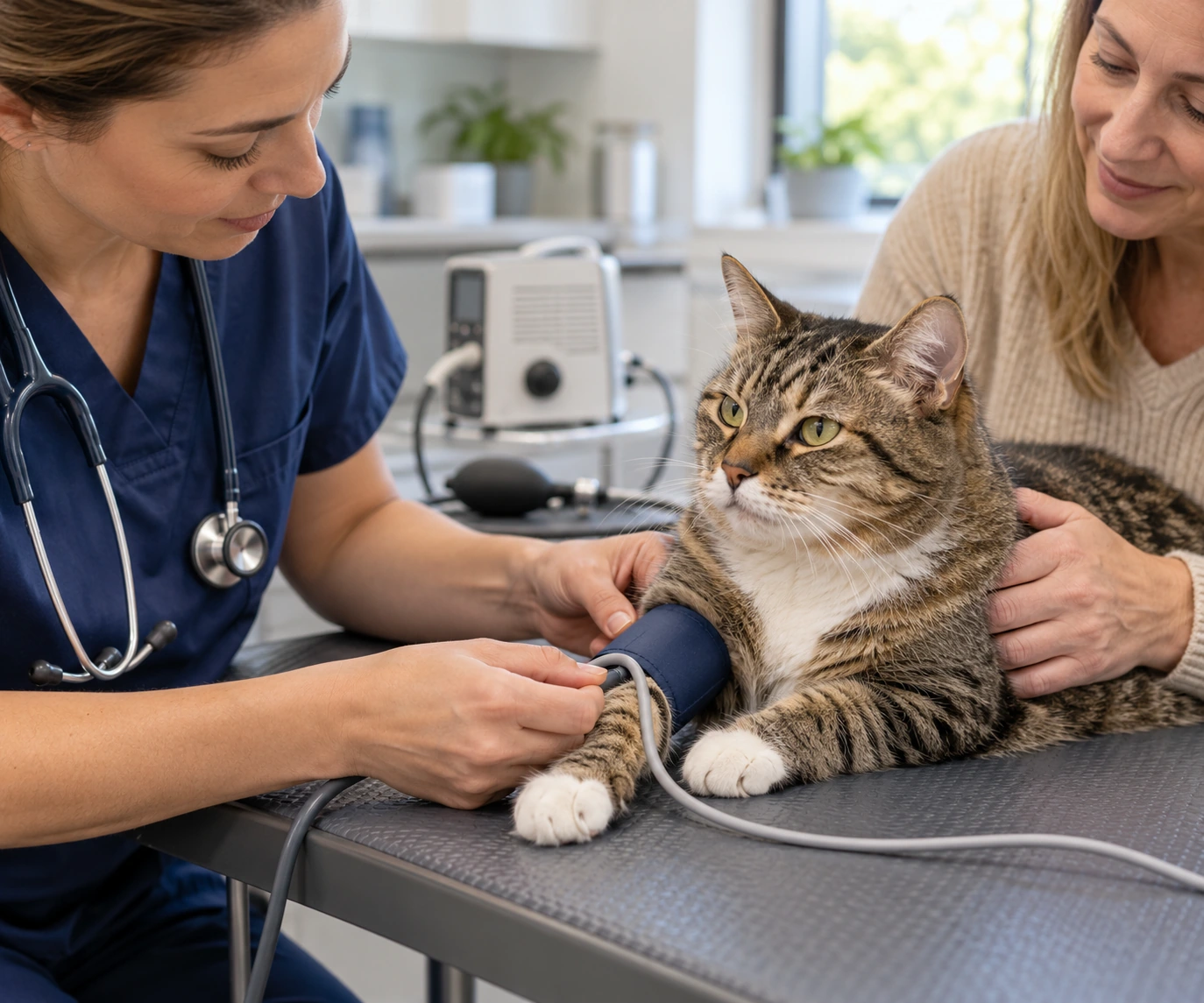

High blood pressure in cats, also called systemic hypertension, is common in older cats and usually develops silently. Most cats show no obvious signs until it damages the eyes, brain, kidneys or heart, and the first thing many owners notice is sudden blindness. The good news is that it can be detected with a simple, painless measurement at the vet clinic and usually controlled with a daily tablet.
In cats, high blood pressure is nearly always caused by another illness, most often chronic kidney disease or an overactive thyroid. This guide explains what high blood pressure in cats is, which cats are at risk, the warning signs, how vets measure it and decide when to treat, what treatment involves, and how often older cats should be checked. It draws on the International Society of Feline Medicine (ISFM) and American College of Veterinary Internal Medicine (ACVIM) consensus guidelines and the Cornell Feline Health Center.
Table of Contents
High blood pressure in cats at a glance
- Who gets it: mainly cats over 10 years old. The ISFM guidelines report a median age at diagnosis of 13 to 15 years.
- Main causes: chronic kidney disease and hyperthyroidism. Cornell reports that at least 60 percent of cats diagnosed with hypertension also show signs of kidney disease.
- Signs: often none at first. Later signs include sudden blindness, dilated pupils, blood in the eye, disorientation, wobbliness or seizures.
- Diagnosis: several blood pressure readings taken calmly at the clinic, usually confirmed on more than one visit unless there is evidence of organ damage.
- Treatment: usually lifelong daily medication, most often amlodipine, plus treatment of the underlying disease.
- Prevention: you cannot prevent it, but regular blood pressure checks in older and at-risk cats can catch it before damage occurs.
What high blood pressure in cats means
Blood pressure is the force of blood pushing against the walls of the arteries. Vets focus on systolic pressure, the peak pressure with each heartbeat, measured in millimetres of mercury (mmHg). Hypertension means that pressure stays persistently high, rather than rising briefly because a cat is excited or frightened.
Persistently high pressure damages small blood vessels. The organs most at risk, which vets call target organs, are the eyes, brain, kidneys and heart. Preventing this target organ damage is the whole point of diagnosing and treating hypertension.
Secondary and primary hypertension
According to the Cornell Feline Health Center, most hypertension in cats is secondary, meaning it is caused by another disease. When no underlying cause can be found, it is called primary or idiopathic hypertension. A third situation, sometimes called white coat or situational hypertension, is a temporary rise caused by the stress of the clinic visit itself, and it is not treated as disease.
What causes high blood pressure in cats
Chronic kidney disease
Chronic kidney disease is the most common underlying cause. Cornell reports that at least 60 percent of cats diagnosed with hypertension also show signs of kidney disease. Looked at the other way, the 2017 ISFM consensus guidelines report that between 19 and 65 percent of cats with kidney disease are hypertensive. The range is wide because studies use different definitions, measurement methods and groups of cats. The two conditions can also feed each other: high blood pressure can damage the kidneys and increase protein loss in the urine.
Hyperthyroidism
An overactive thyroid gland is the second major cause. The ISFM guidelines report that 10 to 23 percent of hyperthyroid cats are hypertensive at diagnosis, and that nearly a quarter of hyperthyroid cats with normal blood pressure at first may become hypertensive after their thyroid is treated. Cornell gives a figure of about 20 percent. For this reason, blood pressure should be checked both before and after thyroid treatment.
Less common causes
Cornell and the ISFM guidelines list several less common causes, including primary hyperaldosteronism (an adrenal gland disorder), hyperadrenocorticism (Cushing’s disease), a rare adrenal tumor called pheochromocytoma, and some medications. Unlike in people, Cornell notes, heart disease is rarely the cause of high blood pressure in cats, although hypertension can affect the heart.
What about diet, salt and weight?
Many people assume salt or diet causes high blood pressure in cats, as it can in people. The ISFM guidelines state that there is limited evidence that salt-sensitive hypertension exists in cats, and they do not make a salt-restriction recommendation for hypertension itself. Diets for cats with kidney disease are a separate question that your vet will advise on.
Signs of high blood pressure in cats
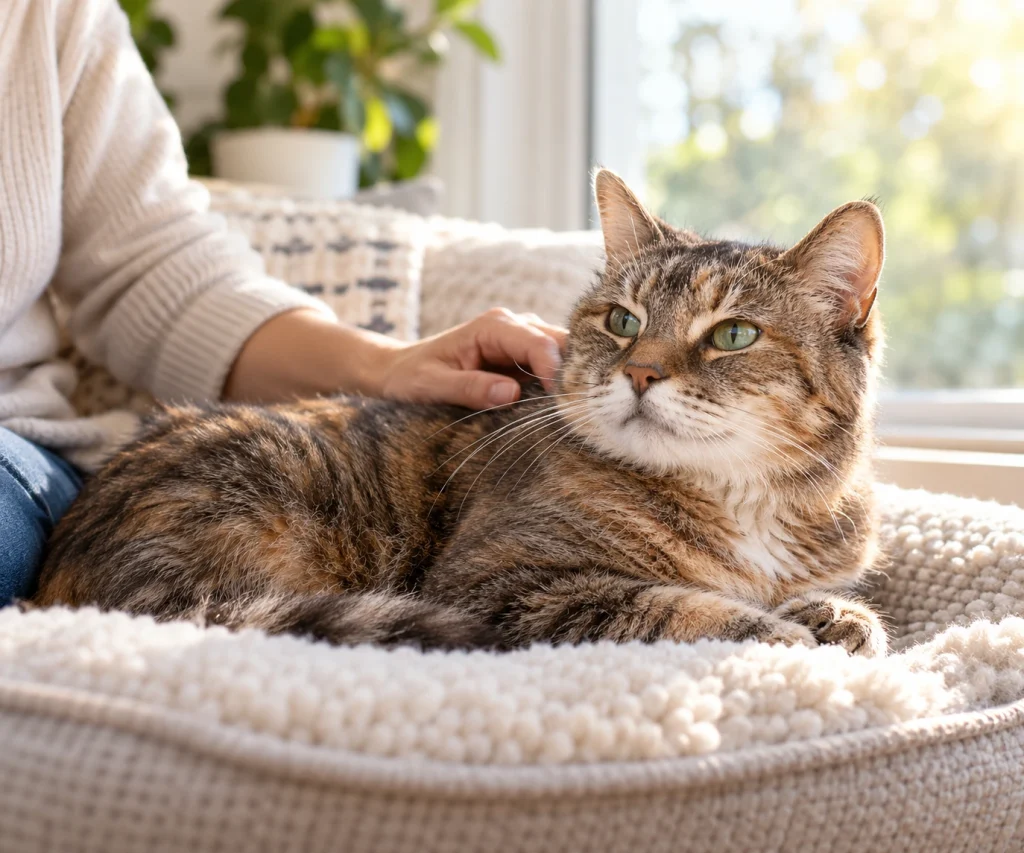
Hypertension itself causes no specific signs until it starts to damage organs. Many cats are diagnosed during a routine senior check or while being investigated for kidney or thyroid disease. When signs do appear, they reflect which organ is affected.
| Organ affected | What you may notice | Notes from veterinary sources |
|---|---|---|
| Eyes | Sudden blindness, bumping into things, widely dilated pupils, blood inside the eye, red or cloudy eyes | The ISFM guidelines report hypertensive eye changes in about 50 percent of hypertensive cats; retinal detachment can cause sudden blindness |
| Brain | Disorientation, wobbliness, head tilt, seizures, behavior changes, dullness | Cornell reports neurological signs in 15 to 40 percent of hypertensive cats, most often when pressure rises quickly |
| Kidneys | Usually none directly; worsening kidney disease, more drinking and urinating | Hypertension increases protein loss in urine, which is linked to shorter survival in cats with kidney disease |
| Heart | Often nothing at home; a vet may hear a murmur or gallop sound | Cornell reports heart changes, usually thickening of the heart wall, in up to 60 percent of hypertensive cats; heart failure is uncommon |
Eye changes: the most common warning sign
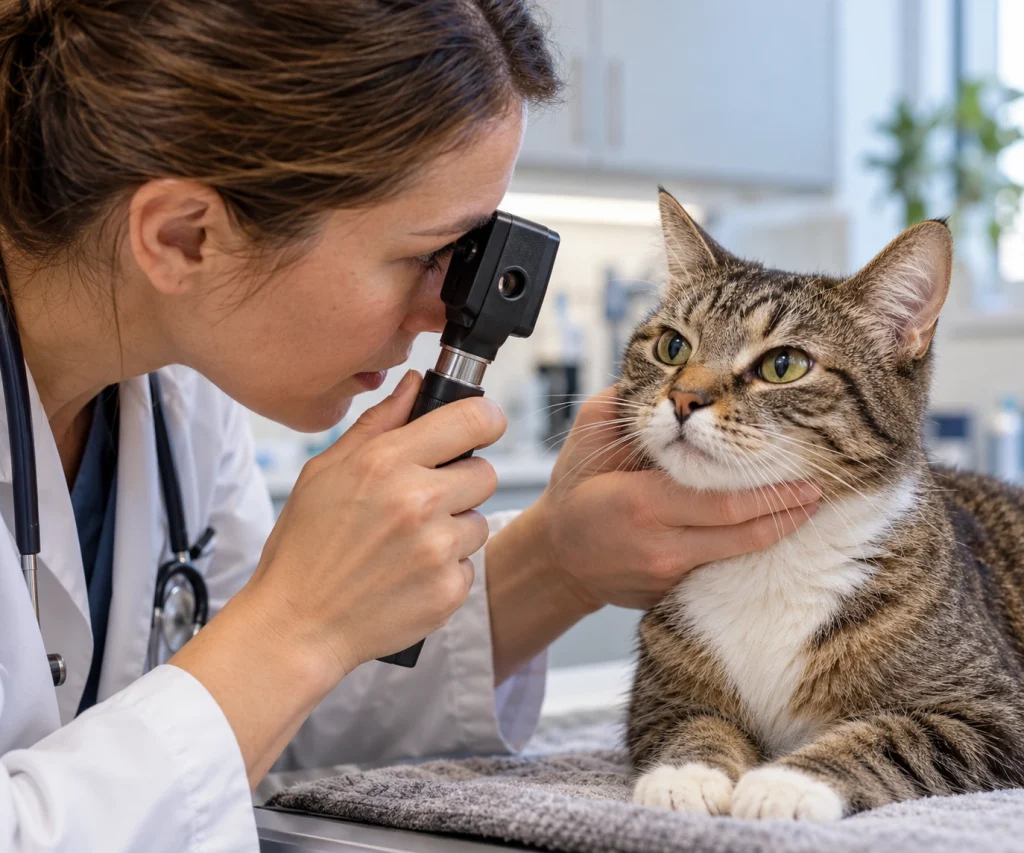
The eyes are the organ owners are most likely to notice. Bleeding or fluid behind the retina can lift it away from the back of the eye, causing sudden blindness in one or both eyes. Signs include a cat that suddenly bumps into furniture, misjudges jumps, seems hesitant in the dark, or has large pupils that do not shrink in bright light. Blood may also be visible inside the front of the eye.
Sudden blindness is an emergency. Cornell notes that blindness can sometimes be reversed if treated very quickly, but in most cases it is permanent, so the sooner treatment starts the better the chance of saving some vision.
Brain and behavior changes
High blood pressure can affect the brain and cause disorientation, unsteadiness, seizures or changes in behavior. The ISFM guidelines also note that some owners only realize their cat was lethargic or depressed when it brightens up after treatment. In older cats, extra vocalizing, night-time restlessness or hiding can have many causes, and high blood pressure is one of the conditions a vet may check for.
When to see a vet urgently
Contact your vet the same day, or an emergency clinic, if your cat:
- suddenly seems blind, bumps into objects, or has widely dilated pupils that do not respond to light
- has blood visible inside one or both eyes
- has a seizure, collapses, or becomes suddenly disoriented or wobbly
- develops a sudden head tilt or loss of balance
- has difficulty breathing
Book a prompt appointment, rather than an emergency visit, for gradual changes such as increased thirst, weight loss, or new behavior changes in an older cat. Our guide on how to tell if your cat is sick covers other early warning signs.
Which cats are most at risk
- Older cats. The ISFM guidelines describe hypertension as much more common in cats over 10 years old, although it has been reported in cats as young as 5 to 7.
- Cats with chronic kidney disease, at any stage.
- Cats with hyperthyroidism, both before and after treatment.
- Cats with other conditions such as hyperaldosteronism or Cushing’s disease, or on certain medications.
- Cats with signs of target organ damage, such as unexplained eye changes, neurological signs or heart changes.
If you are not sure whether your cat counts as senior, MyyCat’s Cat Life Stage Calculator shows which life stage your cat is in.
How vets measure a cat’s blood pressure
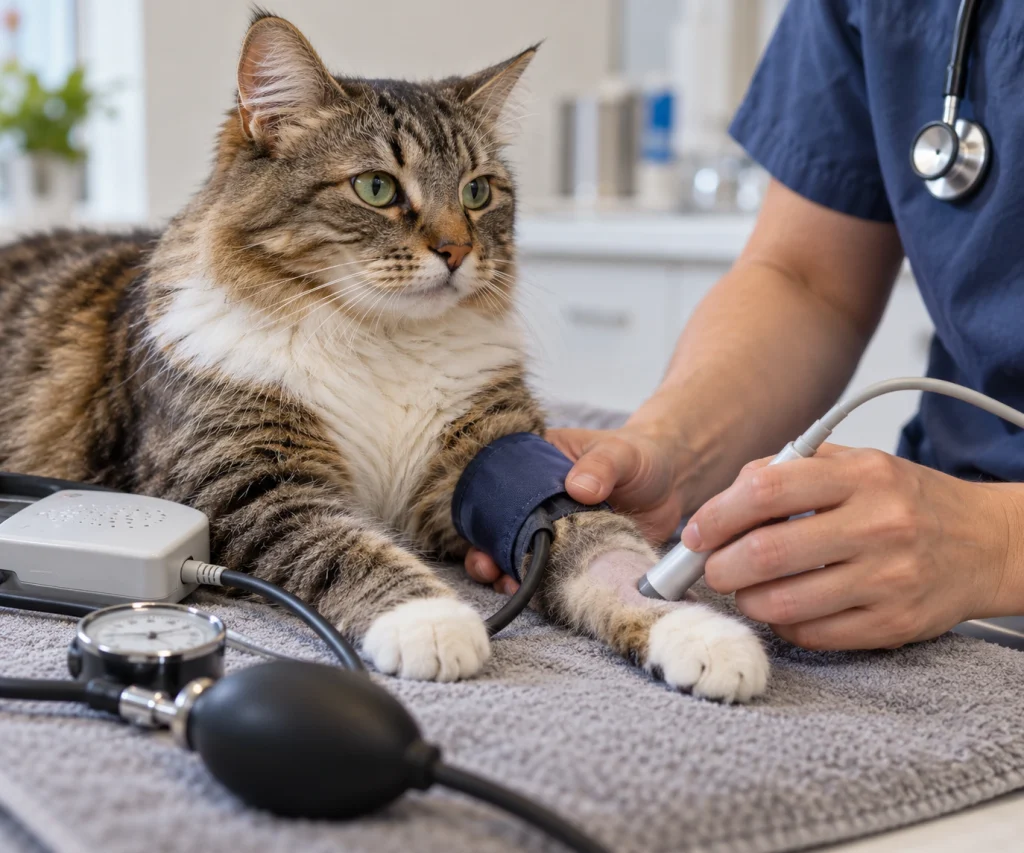
Measuring blood pressure in a cat is quick and painless. A small inflatable cuff is placed around a front leg or the tail, and the vet or nurse uses either a Doppler device, which lets them hear blood flow through a small probe, or an oscillometric machine. It works much like a human blood pressure check.
Why careful technique matters
Cats are easily stressed by clinic visits, and stress can push blood pressure up. The ISFM guidelines cite a study in which systolic pressure changed by up to 80 mmHg in response to a simulated clinic visit. To get reliable readings, both the ISFM and the ACVIM consensus statement recommend:
- a calm, quiet room away from other animals and noise
- letting the cat settle for 5 to 10 minutes before measuring
- gentle handling, without sedation
- a correctly sized cuff, about 30 to 40 percent of the circumference of the leg or tail
- discarding the first reading and averaging five to seven consistent readings
- using the same method, equipment and, where possible, the same person each time
Blood pressure is usually measured at the start of the visit, before other tests that might upset your cat. You can help by training your cat to accept the carrier and keeping car journeys calm; our guide to cat anxiety has more ideas for reducing stress.
Blood pressure ranges in cats
Vets use systolic blood pressure categories that reflect the risk of organ damage. Two major guidelines use slightly different cut-offs at the lower end:
| Systolic pressure (mmHg) | ACVIM 2018 category | ISFM 2017 category | Risk of organ damage |
|---|---|---|---|
| Below 140 | Normotensive | Normotensive (below 150) | Minimal |
| 140 to 159 | Prehypertensive | 140 to 149 normotensive; 150 to 159 borderline | Low |
| 160 to 179 | Hypertensive | Hypertensive | Moderate |
| 180 or above | Severely hypertensive | Severely hypertensive | High |
The difference reflects caution rather than disagreement: both guidelines agree that readings of 160 and above carry a meaningful risk of damage and that 180 and above is high risk. Your vet will interpret readings alongside your cat’s health, the measurement conditions and any signs of organ damage, not on a single number.
Confirming the diagnosis
Because a single high reading may be caused by stress, the ACVIM panel recommends repeating measurements on more than one occasion before diagnosing hypertension, over 1 to 2 weeks for severely high readings and over a longer period for borderline ones. The exception is a cat with clear evidence of organ damage, such as eye changes, where treatment can start after one careful measurement session. The ACVIM panel also notes that a young, otherwise healthy cat with a high reading should be presumed to have situational hypertension until it is confirmed on multiple occasions.
Looking for the underlying cause
Once hypertension is confirmed, your vet will look for its cause and for organ damage. This usually includes an eye examination, blood tests for kidney function and thyroid hormone, a urine test including protein levels, and sometimes a heart scan or tests for adrenal disease.
How high blood pressure in cats is treated
Treatment aims to lower blood pressure enough to protect the organs, while also treating the underlying disease. Cornell notes that most cats need lifelong medication.
When treatment starts
Guidelines differ slightly in detail, but treatment is generally recommended when carefully measured readings are persistently in the hypertensive range (160 or above), or sooner when there is evidence of organ damage such as eye changes or neurological signs. Cats with severely high readings or organ damage are treated promptly.
Medications
- Amlodipine is the first-line medication for cats in both the ISFM and ACVIM guidelines. It is usually given once daily as a small tablet. The ACVIM panel reports typical reductions in systolic pressure of about 28 to 55 mmHg, and the ISFM guidelines about 30 to 70 mmHg.
- Telmisartan is another option, used alone or with amlodipine, particularly for cats that also lose protein in their urine. The ACVIM panel describes it as an option especially for cats with kidney disease and proteinuria.
- ACE inhibitors such as benazepril lower blood pressure only modestly in cats and are generally used as additions rather than first-line treatment.
Doses are set and adjusted by your vet, often starting low and increasing if needed. Never give your cat human blood pressure medication. If tablets are a struggle, ask your vet about alternatives; Cornell notes that transdermal gels applied to the ear exist but are less reliable than tablets.
Treating the underlying disease
Managing the cause is just as important. That may mean treating hyperthyroidism, managing kidney disease with diet and medication, or treating rarer adrenal conditions. Treating hyperthyroidism can sometimes bring blood pressure back to normal, but not always, and some cats become hypertensive only after thyroid treatment.
Monitoring and targets
After starting medication, blood pressure is usually rechecked within about 7 to 10 days, or within 1 to 3 days if there is organ damage, according to the ACVIM panel. The dose is adjusted until pressure is controlled. Both guidelines aim for systolic pressure below 160 mmHg as a minimum, with the ACVIM panel describing below 140 as the optimal goal. Pressure that falls too low can also cause problems, so regular monitoring matters in both directions. Once stable, cats are rechecked every few months, along with blood and urine tests.
Living with a cat with high blood pressure
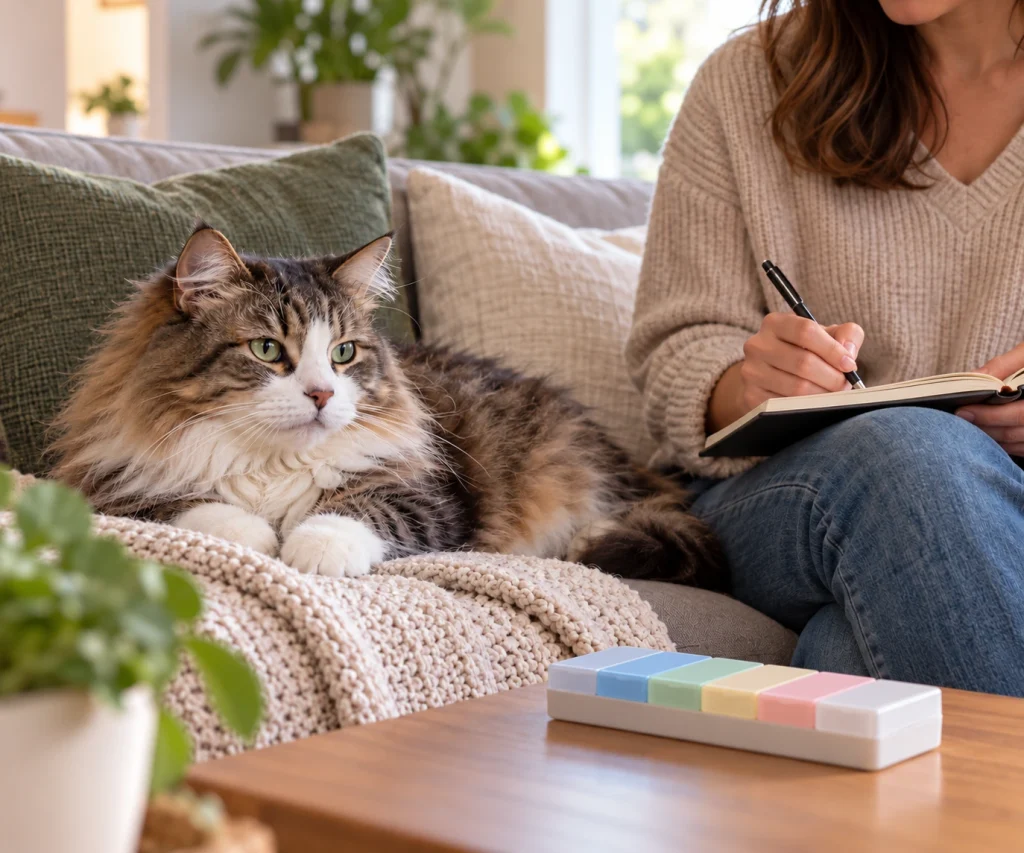
- Give medication every day at the same time. Missing doses lets pressure rise again. MyyCat’s free Cat Medication Schedule Generator can help you keep track, especially if your cat also takes thyroid or kidney medication.
- Keep recheck appointments, even if your cat seems well. Blood pressure cannot be judged by looking at your cat.
- Watch the eyes and behavior. Report any change in vision, pupils, balance or alertness promptly.
- Support the underlying condition, for example with the kidney diet or thyroid treatment your vet recommends. Our guide on what to feed a senior cat covers nutrition for older cats more broadly.
- Make life easier for a cat with reduced vision by keeping furniture, food, water and litter boxes in the same places and adding night lights if needed.
Outlook
Cornell describes high blood pressure in cats as generally manageable with regular medication. The outlook depends heavily on the underlying disease, especially kidney disease, and on whether damage has already occurred. Cornell notes that neurological signs may improve with treatment but blindness often does not, which is why early detection matters. The ISFM guidelines add that protein loss in the urine is linked to shorter survival, and that it has not yet been proven that treating hypertension itself improves survival, although the aim of treatment is to reduce the risk of organ damage.
How often should a cat’s blood pressure be checked?
Because high blood pressure is silent until damage occurs, regular checks are the only reliable way to catch it early. Recommendations differ slightly between guidelines:
| Cat | ISFM 2017 suggestion | ACVIM 2018 suggestion |
|---|---|---|
| Healthy adult, 3 to 6 years | Consider every 12 months | Routine screening not recommended for young healthy cats |
| Healthy senior, 7 to 10 years | At least every 12 months | Annual screening from 9 years of age |
| Healthy geriatric, 11 years and older | Every 6 to 12 months | Annual screening, more often if at risk |
| Kidney disease, hyperthyroidism or other risk conditions | Measure now, then every 3 to 6 months | Screen at diagnosis; recheck every 6 months for cats with CKD stage 2 or higher or hyperthyroidism |
In practice, ask your vet to include a blood pressure measurement in senior wellness visits, and more often if your cat has kidney or thyroid disease.
When to see a vet
Ask your vet about checking blood pressure if your cat is over about 9 to 10 years old, has kidney disease or hyperthyroidism, or has unexplained weight loss, increased thirst, behavior changes or eye changes. Seek urgent care for sudden blindness, blood in the eye, seizures, sudden disorientation or loss of balance. This article is general information and not a substitute for advice from your veterinarian; see our veterinary disclaimer.
Frequently asked questions
What is a normal blood pressure for a cat?
Under the ACVIM guidelines, a systolic pressure below 140 mmHg is considered normal, and the ISFM guidelines treat readings below 150 as normal. Readings of 160 or above, confirmed with careful technique, are considered hypertensive. A single reading taken in a stressed cat is not enough to make a diagnosis.
Can I check my cat’s blood pressure at home?
Not reliably with ordinary equipment. Human home monitors are not designed or validated for cats, and readings need the right cuff size and technique. The ACVIM panel notes that home measurement has not been systematically evaluated in veterinary medicine. Clinic measurements taken calmly and repeated over time remain the standard.
Is high blood pressure in cats painful?
High blood pressure itself is not thought to cause obvious pain, which is one reason it goes unnoticed. Its effects, such as sudden blindness, disorientation or seizures, can be distressing, and some owners notice their cat becomes brighter and more active once pressure is controlled.
Can a cat’s sight come back after hypertension causes blindness?
Sometimes, if treatment starts very quickly, but often it does not. Cornell notes that blindness from hypertension is usually permanent, while the ISFM guidelines report that milder eye changes respond better to treatment than advanced ones. Even when sight is not restored, controlling blood pressure protects the other organs.
Will my cat need medication for life?
Most cats do. If the cause, such as hyperthyroidism, is treated successfully, blood pressure sometimes returns to normal, but your vet will keep monitoring it because it can rise again, especially in cats with kidney disease.
Can stress at the vet cause a false high reading?
Yes. This is called white coat or situational hypertension, and it is why vets take several readings after letting your cat settle, and confirm the diagnosis on more than one visit unless there is evidence of organ damage. The ACVIM panel sees no justification for treating situational hypertension.
Sources
- Taylor SS, Sparkes AH, Briscoe K, et al. ISFM consensus guidelines on the diagnosis and management of hypertension in cats. Journal of Feline Medicine and Surgery. 2017;19(3):288-303.
- Acierno MJ, Brown S, Coleman AE, et al. ACVIM consensus statement: guidelines for the identification, evaluation, and management of systemic hypertension in dogs and cats. Journal of Veterinary Internal Medicine. 2018;32(6):1803-1822. Open-access copy.
- Cornell Feline Health Center. Hypertension.