

Pancreatitis in cats is inflammation of the pancreas, the small organ near the stomach that makes digestive enzymes and insulin. It is a common but often overlooked condition, because the signs in cats tend to be vague: many cats simply eat less, become quiet and lethargic, and may vomit or lose weight. Unlike people and dogs, cats often show little obvious belly pain.
This guide explains what cat pancreatitis is, the symptoms to watch for, how vets diagnose it, how it is treated in the hospital and at home, what to feed during recovery, possible complications, and what recovery usually looks like. Mild to moderate cases often have a good outlook with prompt treatment, so a cat that stops eating or seems unwell should see a vet early.
Table of Contents
Understanding the Pancreas and Pancreatitis
The pancreas has two main jobs. It produces digestive enzymes that help break down fat, protein and carbohydrates in the small intestine, and it produces hormones, including insulin and glucagon, that regulate blood sugar.
In pancreatitis, the pancreas becomes inflamed. Digestive enzymes that are normally activated only after they reach the intestine can become active inside the pancreas, damaging the tissue and triggering more inflammation. According to the Cornell Feline Health Center, in over 95 percent of cases no obvious underlying cause is found. Less commonly, pancreatitis has been linked to trauma, certain infections such as Toxoplasma, and liver flukes.
Pancreatitis in cats often occurs alongside other diseases, especially chronic intestinal disease (such as inflammatory bowel disease), inflammation of the liver and bile ducts (cholangitis), and diabetes. When the pancreas, liver and intestines are all inflamed at the same time, this is called triaditis. A 2020 review of triaditis notes that its exact causes and how the three conditions influence each other are still not fully understood.
Acute vs Chronic Pancreatitis
Acute pancreatitis comes on suddenly. It ranges from mild illness to a severe, life-threatening disease that affects the whole body. Chronic pancreatitis is a longer-lasting, low-grade inflammation that can cause milder, on-and-off signs such as a patchy appetite, occasional vomiting and gradual weight loss. Chronic pancreatitis appears to be more common in cats than the acute form, and some cats with chronic disease have acute flare-ups. Telling the two apart helps your vet plan treatment and long-term care.
Symptoms of Pancreatitis in Cats
Cat pancreatitis symptoms are often vague and overlap with many other illnesses. Cornell lists lethargy and reduced appetite as the most common signs, with vomiting or weight loss in about half of affected cats. Abdominal pain is reported in only about 10 to 30 percent of cats, although cats are good at hiding pain, so it may be missed.
Loss of Appetite
A reduced appetite, or refusing food altogether, is one of the most common signs. A cat may approach the bowl, sniff and walk away. Any cat that has not eaten for 24 hours or more without an obvious reason should see a vet, whatever the cause. Cats that go without food for several days, especially overweight cats, are at risk of hepatic lipidosis (fatty liver disease). Our guide on what to do if your cat is not eating explains this in more detail.
Vomiting and Nausea
Around half of cats with pancreatitis vomit, and in some it happens only now and then. Other cats show signs of nausea without vomiting, such as drooling, lip licking, repeated swallowing, or sitting hunched over the food bowl without eating. See our guide to cat vomiting for help telling when vomiting needs a vet.
Lethargy and Hiding
Lethargy is one of the most common signs. Affected cats sleep more, hide, and show less interest in people, play or their surroundings. A cat that usually greets you but now stays hidden under the bed is showing a change that is worth a vet visit.
📚 Recommended Cat Guides
🐱 The Trainable Cat Book
Learn proven methods to train your cat and stop unwanted behaviors.
View Book →❤️ Complete Cat Care Manual
Your complete guide to cat nutrition, health, grooming, behavior, and daily care.
Get the Manual →Abdominal Pain
Cats rarely show belly pain clearly. Possible signs include a hunched posture, reluctance to jump or move, and tensing up or reacting when the belly is touched. Many cats with pancreatitis show no obvious pain at all, so the absence of pain signs does not rule it out. Vets usually assume pancreatitis is painful and provide pain relief.
Weight Loss
Weight loss is common, especially with chronic pancreatitis, mainly because the cat eats less over time. If the pancreas is badly damaged, it may stop making enough digestive enzymes, which causes weight loss despite a normal appetite (see Complications below). Weight loss has many possible causes in cats, including hyperthyroidism, diabetes and kidney disease, so it always deserves a vet check.
Dehydration
Cats with pancreatitis can become dehydrated because they eat and drink less and may lose fluid through vomiting or diarrhea. Signs include dry or tacky gums, sunken eyes and reduced urination. Dehydrated cats usually need fluid therapy.
Body Temperature Changes
Some cats with pancreatitis have a fever, while others, particularly those with severe disease, have a low body temperature. A small number develop jaundice (a yellow tinge to the gums, skin or whites of the eyes), which often points to liver involvement. These changes are not specific to pancreatitis but help your vet judge how ill your cat is.
How Veterinarians Diagnose Pancreatitis
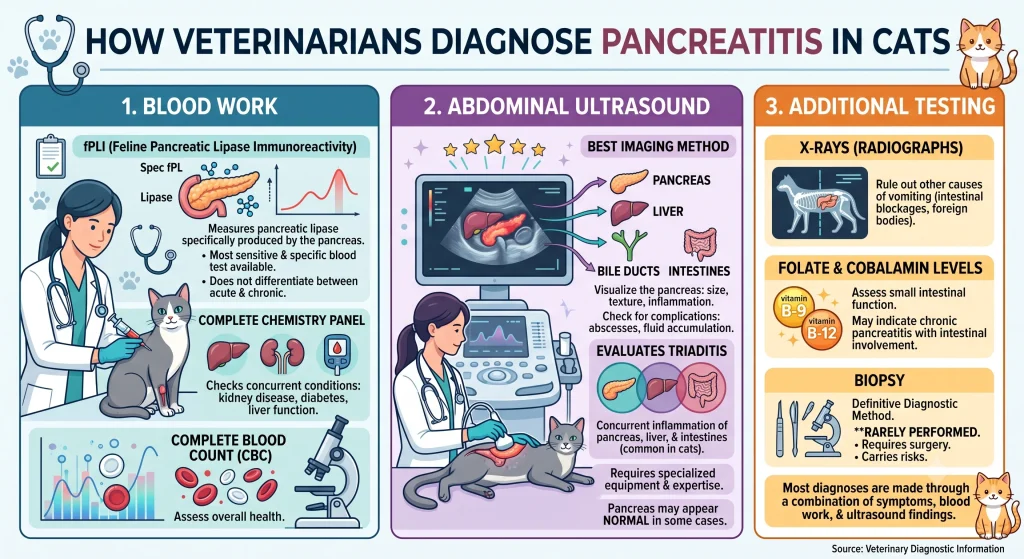
There is no single perfect test for pancreatitis in cats. Vets usually combine the history, physical examination, blood tests and ultrasound, and look for other diseases that commonly occur alongside it.
Blood Work
The most useful blood test is feline pancreatic lipase immunoreactivity, measured with the laboratory Spec fPL test or a rapid in-clinic SNAP test. Cornell describes it as the most specific blood test for feline pancreatitis, but it can miss mild or chronic cases, especially when using the rapid test. A normal result does not completely rule pancreatitis out, and a raised result needs to be interpreted alongside the cat’s signs. Your vet will usually also run a complete blood count and biochemistry panel to look for dehydration, liver involvement, diabetes, kidney disease and other problems. The Merck Veterinary Manual and VCA Animal Hospitals also describe pancreatic lipase testing as the key blood test.
Abdominal Ultrasound
Abdominal ultrasound is the most useful imaging test. It can show an enlarged or irregular pancreas, fluid around it and, rarely, complications such as cysts or abscesses. It also lets the vet look at the liver, bile ducts and intestines for related disease. Cornell notes that ultrasound detects changes in up to about two-thirds of cats with pancreatitis, so a normal scan does not rule it out, particularly with chronic disease. The quality of the result also depends on the equipment and the experience of the person scanning.
Additional Testing
X-rays may be used to rule out other causes of vomiting, such as a swallowed object. Blood levels of folate and cobalamin (vitamin B12) can point to intestinal disease, and low cobalamin is common in cats with chronic gut or pancreatic problems. A biopsy of the pancreas gives the most definitive diagnosis, but it requires anesthesia and abdominal surgery, so it is rarely done for pancreatitis alone.
Treatment Options for Pancreatitis
There is no medication that cures pancreatitis in cats. Treatment focuses on four goals that Cornell highlights: correcting dehydration, controlling nausea, relieving pain and getting nutrition back on track, while treating any related diseases.
Hospitalization for Severe Cases
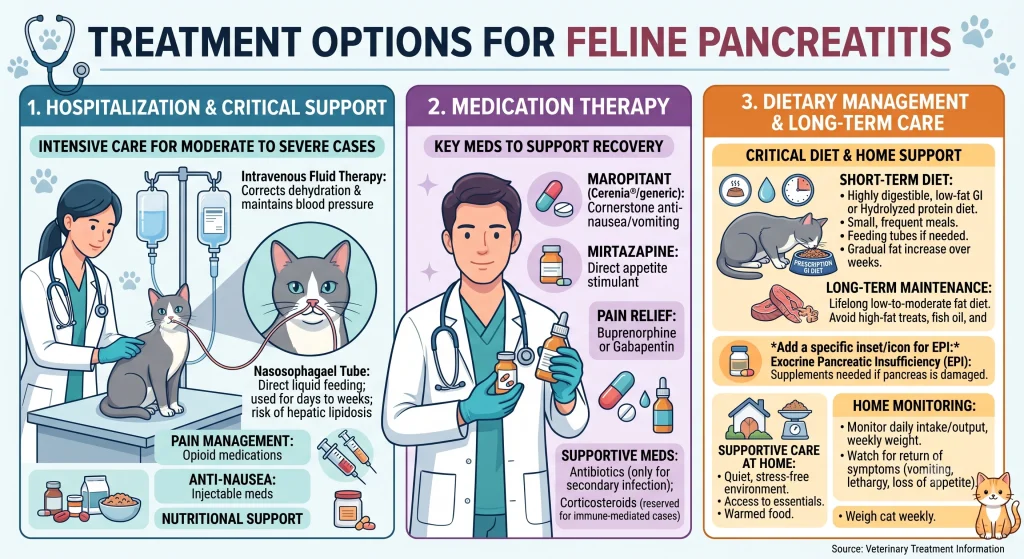
Cats that are dehydrated, vomiting, not eating or seriously ill usually need hospital care. This typically includes intravenous fluids, injectable anti-nausea medication, pain relief and nutritional support, with monitoring of blood glucose, electrolytes and other values.
Getting a cat to eat again is a priority, because going without food for several days can lead to hepatic lipidosis. The Cornell Feline Health Center links hepatic lipidosis closely to prolonged loss of appetite in cats. If a cat will not eat enough on their own, vets often place a feeding tube. A tube passed through the nose (nasoesophageal tube) is used for short-term feeding, while a tube placed in the side of the neck (esophagostomy tube) can be used for weeks and allows owners to continue feeding at home. Cats generally tolerate these tubes well.
Medications
The exact medications depend on your vet’s assessment. Commonly used options include:
- Anti-nausea medication, such as maropitant, which is widely used in cats with pancreatitis
- Pain relief, often with an opioid such as buprenorphine
- Appetite stimulants, such as mirtazapine, in some cats
- Antibiotics only if there is evidence of infection, as pancreatitis is not usually caused by bacteria
- Treatment for related conditions, such as cobalamin (vitamin B12) supplements if levels are low, or medication for intestinal or liver inflammation
Corticosteroids are not routinely used for pancreatitis but may be considered in selected cats with chronic disease, particularly when it occurs with inflammatory bowel disease or cholangitis. Never give your cat human painkillers or anti-nausea medicines, which can be dangerous for cats.
Dietary Management
What a cat with pancreatitis eats matters less than making sure they eat enough. In dogs, high-fat meals are a well-known trigger for pancreatitis, but dietary fat does not appear to play the same role in cats. The Merck Veterinary Manual suggests a moderately fat-restricted diet for cats but notes that fat content may be less critical in cats than in dogs.
In practice, vets often recommend a highly digestible gastrointestinal diet. Some cats, especially those with concurrent intestinal disease, may do better on a hydrolyzed or novel protein diet. Small, frequent meals are often easier to manage, and warming wet food slightly can make it more appealing. If your cat will only eat their usual food during recovery, tell your vet before you stop offering it, as getting calories in is the priority.
For cats with chronic pancreatitis, long-term diet is decided case by case with your vet. It is sensible to avoid rich table scraps and sudden food changes. If the pancreas has stopped producing enough digestive enzymes, your vet will prescribe enzyme supplements to add to food.
Supportive Care at Home
Cats recovering at home need a calm, quiet space with easy access to food, water and a litter box. Give medications exactly as prescribed and offer the recommended food in small portions several times a day. Each day, check how much your cat eats and drinks, how often they use the litter box, and whether they vomit. If you have a scale, weighing your cat regularly helps you and your vet track progress. Contact your vet promptly if your cat stops eating again, starts vomiting, becomes lethargic or shows any new signs.
Preventing Future Episodes
Because most feline pancreatitis has no identifiable cause, it cannot always be prevented, and some cats have repeated episodes. You can lower the risk and catch flare-ups early by:
- Following your vet’s diet and treatment plan, and avoiding rich table scraps and sudden diet changes
- Making sure related conditions, such as inflammatory bowel disease, cholangitis or diabetes, are diagnosed and managed
- Keeping up with recommended checkups and follow-up blood tests
- Contacting your vet early if your cat eats less, vomits or becomes lethargic, rather than waiting to see whether it passes
Complications of Pancreatitis
Possible complications include:
- Hepatic lipidosis: fat builds up in the liver when a cat goes without enough food. It can be life-threatening but often responds to intensive feeding support.
- Diabetes mellitus: pancreatitis and diabetes are closely linked in cats. Damage to the pancreas can reduce insulin production, and pancreatitis can make diabetes harder to control. Our guide to diabetes in cats explains the signs to watch for, such as drinking and urinating more.
- Exocrine pancreatic insufficiency (EPI): after long-term damage, the pancreas may not make enough digestive enzymes. Signs include weight loss despite a good appetite and large, greasy or soft stools. EPI is managed with enzyme supplements added to food and often cobalamin supplements.
- Concurrent liver and intestinal disease: when cholangitis or intestinal disease is also present (triaditis), each condition needs its own treatment.
- Severe systemic complications: rarely, severe acute pancreatitis causes fluid build-up, cysts, abscesses or problems with blood clotting and other organs, which need intensive care.
Long-Term Prognosis
The outlook depends on how severe the episode is, how quickly treatment starts, and whether complications or other diseases are present. Cornell describes the prognosis for mild to moderate disease as generally very good, although repeat episodes are possible. Merck describes the prognosis for severe pancreatitis as guarded. Many cats with chronic pancreatitis live comfortably for years with ongoing management and monitoring, and early treatment gives every cat the best chance.
Key Takeaways
- Signs are often subtle. Lethargy and a reduced appetite are the most common signs. Vomiting happens in only about half of cats, and many show no obvious pain.
- Do not wait if your cat stops eating. See a vet if your cat has not eaten for 24 hours or more. Going without food for days risks hepatic lipidosis.
- No single test is perfect. Diagnosis usually combines blood tests, including pancreatic lipase, with ultrasound and the cat’s history.
- Treatment is supportive. Fluids, anti-nausea medication, pain relief and nutrition, sometimes through a feeding tube, are the core of treatment.
- Getting enough food in matters most. Your vet will tailor the diet, and dietary fat appears less important in cats than in dogs.
- Watch for related problems. Pancreatitis is often linked with intestinal disease, liver disease and diabetes, so follow-up checks are important.
FAQ
Can cats recover from pancreatitis?
Yes. Many cats with mild to moderate pancreatitis recover well with prompt treatment, although some have repeat episodes or develop chronic pancreatitis. Severe cases carry a more guarded outlook and need intensive hospital care.
What causes pancreatitis in cats?
In most cats, no specific cause is found. Possible triggers include trauma, certain infections such as Toxoplasma, and liver flukes. Unlike in dogs, high-fat meals have not been clearly shown to cause pancreatitis in cats. It is often found alongside inflammatory bowel disease, liver and bile duct inflammation, or diabetes.
What should I feed a cat with pancreatitis?
Follow your vet’s advice. Many vets recommend a highly digestible diet, sometimes with moderate fat, offered as small, frequent meals. The most important thing is that your cat eats enough, so tell your vet if your cat refuses the recommended food.
Is pancreatitis painful for cats?
Pancreatitis is thought to be painful, even though only a minority of cats show obvious signs of abdominal pain. Vets usually give pain relief as part of treatment. Possible pain signs include a hunched posture, reluctance to move and sensitivity when the belly is touched.
How long does it take for a cat to recover from pancreatitis?
It varies. Mild cases may improve within days to a couple of weeks. Cats that need hospital care or a feeding tube often take several weeks to recover fully. Chronic pancreatitis needs long-term management rather than a single course of treatment.
Can pancreatitis cause diabetes in cats?
It can. Damage to the pancreas can reduce insulin production, and pancreatitis is common in diabetic cats, where it can make blood sugar harder to control. Not every cat with pancreatitis develops diabetes.
What is triaditis in cats?
Triaditis is inflammation of the pancreas, liver (bile ducts) and intestines at the same time. Cats may be more prone to it because their pancreatic duct and bile duct join before opening into the intestine. Each part needs to be diagnosed and treated.
Can stress cause pancreatitis in cats?
There is no good evidence that stress causes pancreatitis in cats. However, keeping a recovering cat calm and comfortable helps them eat and rest, which supports recovery.
This article is for general information and is not a substitute for advice from your veterinarian. If you are worried about your cat, contact your vet.
Sources & References
- Cornell Feline Health Center — Feline Pancreatitis
- Cornell Feline Health Center — Hepatic Lipidosis
- Merck Veterinary Manual — Pancreatitis in Dogs and Cats
- Merck Veterinary Manual — Disorders of the Pancreas in Cats
- VCA Animal Hospitals — Pancreatitis in Cats: Pancreas-Specific Lipase
- Lidbury JA, Mooyottu S, Jergens AE — Triaditis: Truth and Consequences (Veterinary Clinics of North America: Small Animal Practice, 2020)