

Your cat seems hungrier than ever, yet is getting thinner. The water bowl empties faster, and the litter box clumps are bigger than they used to be. These are the classic early signs of diabetes in cats. It is a serious condition, but it is also very treatable, and some cats even go into remission and no longer need treatment.
Quick answer: If your cat is drinking and urinating more, losing weight despite a good or increased appetite, or seems weak in the back legs, book a vet appointment. Diabetes is diagnosed with blood and urine tests and is usually managed with insulin injections, diet changes and weight control, and in some otherwise healthy cats with a newer oral medication. Contact a vet immediately if a cat with diabetes stops eating, vomits, becomes lethargic or has trouble breathing, or shows signs of low blood sugar such as wobbliness, trembling or seizures.
This guide is general information to help you understand diabetes in cats and talk with your veterinarian. It cannot diagnose your cat or replace veterinary care.
Table of Contents
What Is Diabetes in Cats?
Feline diabetes (diabetes mellitus) is a long-term condition in which blood sugar (glucose) stays too high because the body doesn’t make enough insulin or doesn’t respond to it properly, as the Merck Veterinary Manual describes. Insulin is the hormone that lets cells take in glucose for energy. Without enough of it, glucose builds up in the blood and spills into the urine.
The Cornell Feline Health Center notes that cats most commonly have a form similar to type 2 diabetes in people, and International Cat Care describes it as a disease of middle-aged and older cats. Cornell estimates that between 1 in 100 and 1 in 500 cats will be diagnosed with diabetes during their lifetime.
Which Cats Are Most at Risk?
Cornell lists the most important risk factors as:
- Obesity: Cornell notes that obese cats are up to four times more likely to develop diabetes than cats at an ideal weight.
- Increasing age
- Physical inactivity
- Being male
- Glucocorticoid (steroid) medications
If your cat takes steroids for another condition, don’t stop them on your own. Talk to your vet, who can weigh the benefits and risks. If you are unsure whether your cat is overweight, MyyCat’s Cat Body Condition Score Calculator can help you assess body shape before you talk to your vet.
Signs of Diabetes in Cats
Cornell says the two most common signs owners notice at home are weight loss despite a good appetite, and increased thirst and urination. Merck, Cornell and International Cat Care describe signs such as:
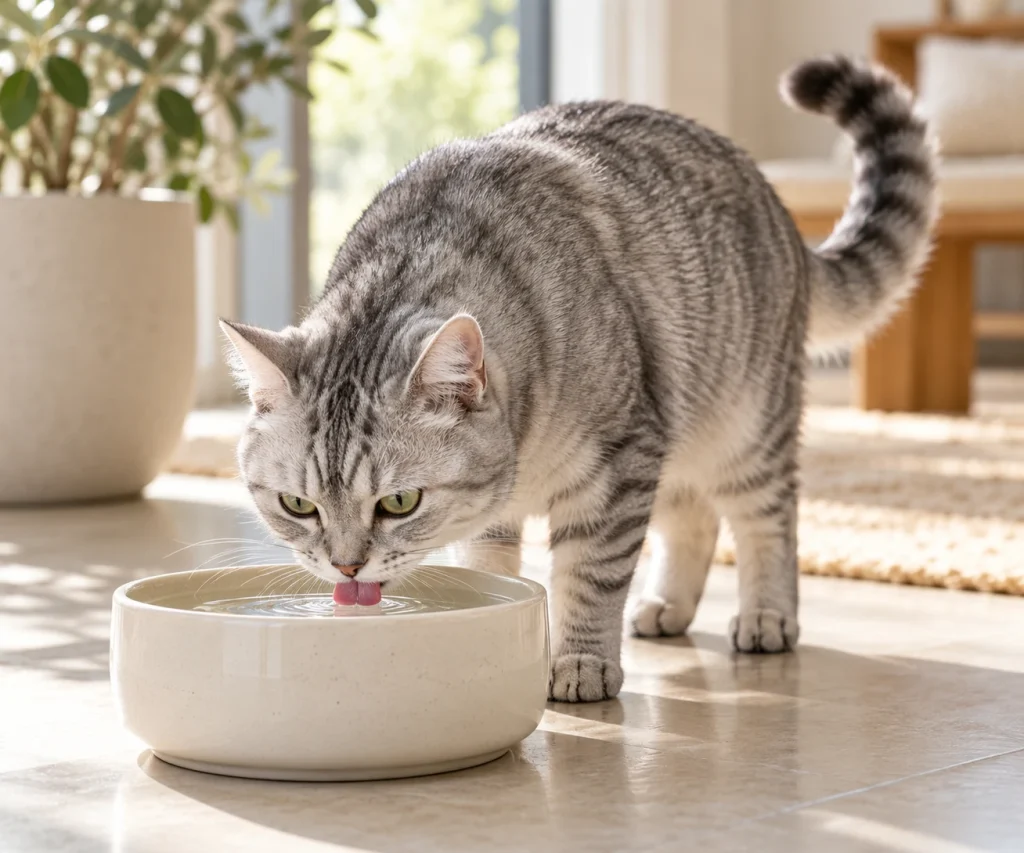
- Drinking more water than usual
- Urinating more, with larger or more frequent litter box clumps
- Increased hunger
- Weight loss, even though your cat is eating well
- Weakness in the back legs, or walking with the hocks low to the ground
- Recurrent infections, which Merck mentions
The change in how a cat walks is caused by nerve damage in the hind legs. Cornell describes this as a “plantigrade” stance, where the cat stands and walks on the backs of its hind feet rather than up on its toes.
Increased thirst and urination have several possible causes in older cats, including kidney disease and hyperthyroidism, so testing is needed to tell them apart. MyyCat’s guide on how to tell if your cat is sick covers other changes worth reporting.
Emergencies: Ketoacidosis and Low Blood Sugar
Two complications need immediate veterinary care.
Diabetic Ketoacidosis (DKA)
Merck describes diabetic ketoacidosis as a serious, life-threatening complication. Signs can include increased thirst and urination, lethargy, weakness, reduced appetite, vomiting, diarrhea and trouble breathing, according to Merck and International Cat Care. Cornell notes that cats with ketoacidosis need hospital treatment. If your cat has diabetes, or might have it, and stops eating, vomits or becomes lethargic, contact a vet straight away. MyyCat’s guide to a cat not eating explains why appetite loss is always worth acting on quickly.
Low Blood Sugar (Hypoglycemia)
Low blood sugar is a risk for cats on insulin. AAHA notes that cats can go into remission fairly suddenly, which is one reason it can happen. Cornell, Merck and International Cat Care list signs such as weakness, lethargy, trembling or shaking, wobbly or “drunken” walking, vomiting, seizures, collapse and coma. Merck describes hypoglycemia as a medical emergency.
Cornell advises offering your cat its regular food right away. If your cat won’t eat, Cornell says to give oral glucose such as honey, corn syrup or a dextrose gel, and International Cat Care gives similar advice. Then contact your vet immediately. If your cat is having a seizure, has collapsed or is unconscious, go straight to the nearest emergency vet. Ask your vet to explain this plan when your cat starts treatment, so you know exactly what to do.
How Vets Diagnose Diabetes in Cats
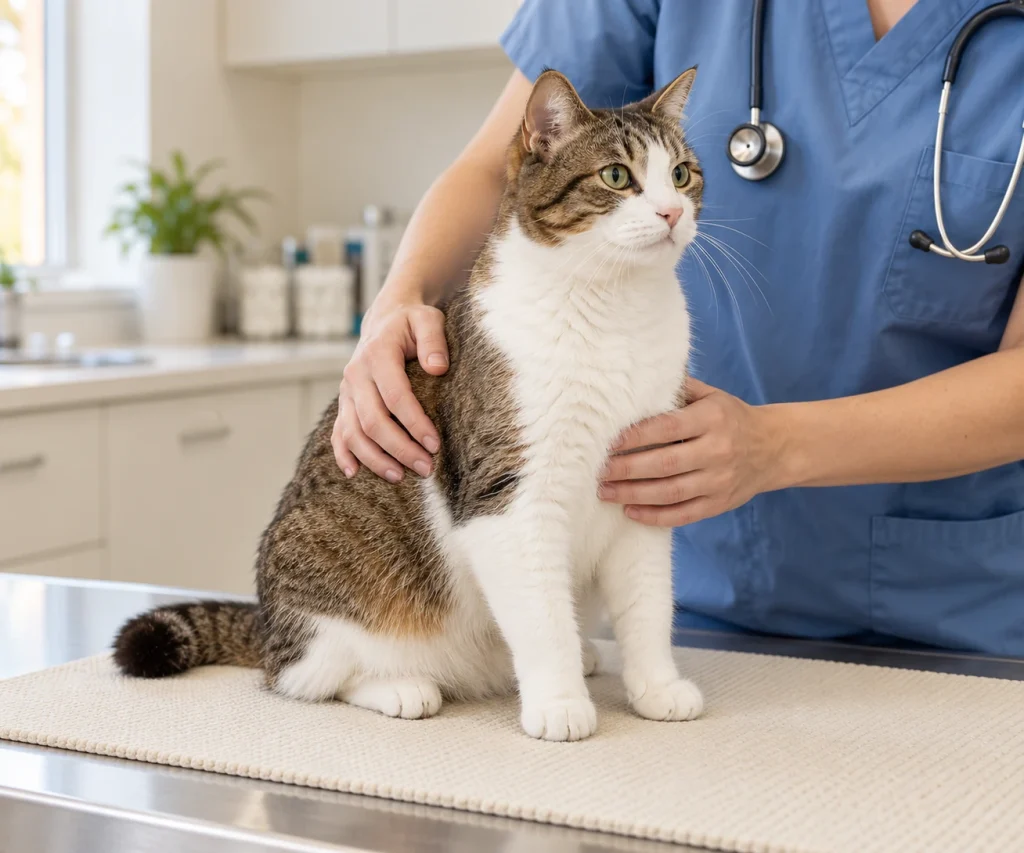
According to Cornell, your veterinarian will diagnose diabetes by showing that glucose levels are persistently high in both the blood and the urine. This matters in cats because, as Merck notes, stress can raise blood sugar, so a single high reading at the clinic isn’t enough. Cornell explains that a blood test called fructosamine can help rule out stress-related high blood sugar. Your vet may also run other tests to look for infections or other illnesses.
Treatment for Diabetes in Cats
Merck describes treatment as a combination of weight loss, diet, insulin injections and possibly oral medication. Your vet will choose the right approach for your cat.
Insulin Injections
Cornell calls injectable insulin a mainstay of treatment. International Cat Care explains that most types of insulin are given twice a day, under the skin, about 12 hours apart. AAHA notes that owners give these injections at home after training from the veterinary team, and International Cat Care suggests giving them at feeding time or pairing them with a treat, stroking or brushing, depending on what your cat prefers.
A few practical points from Merck, the American Animal Hospital Association (AAHA) and International Cat Care:
- Use only the insulin and syringe or pen type your vet prescribes. Insulins come in different concentrations, and Merck notes that the syringe must match.
- Store insulin as directed; AAHA notes that teams explain details such as keeping insulin in the refrigerator.
- Never change the dose yourself. Your vet adjusts it based on monitoring.
- Ask your vet ahead of time what to do if your cat won’t eat or you miss a dose.
If your cat takes several medications, MyyCat’s Cat Medication Schedule Generator can help you keep track of prescribed doses at home.
Newer Oral Medications (SGLT2 Inhibitors)
Two oral medications are now approved in the United States for some diabetic cats. The U.S. Food and Drug Administration (FDA) approved bexagliflozin (Bexacat), a once-daily tablet, in December 2022, and the University of Illinois College of Veterinary Medicine reports that velagliflozin (Senvelgo), a once-daily liquid, was approved in 2023. Both work by increasing the amount of glucose removed in the urine.
These medications are not suitable for every cat. The FDA states that bexagliflozin is for otherwise healthy cats that have not previously been treated with insulin, and that it should not be started in cats that are not eating well, are dehydrated or are lethargic. It also carries a warning about diabetic ketoacidosis, including a form that occurs with normal blood sugar (euglycemic DKA), which can be fatal. International Cat Care similarly describes these drugs as suitable only for diabetic cats who are otherwise healthy. If your cat is prescribed one, the FDA advises watching closely for appetite loss, lethargy, dehydration or weight loss and contacting your vet immediately if they appear.
Diet and Weight Management
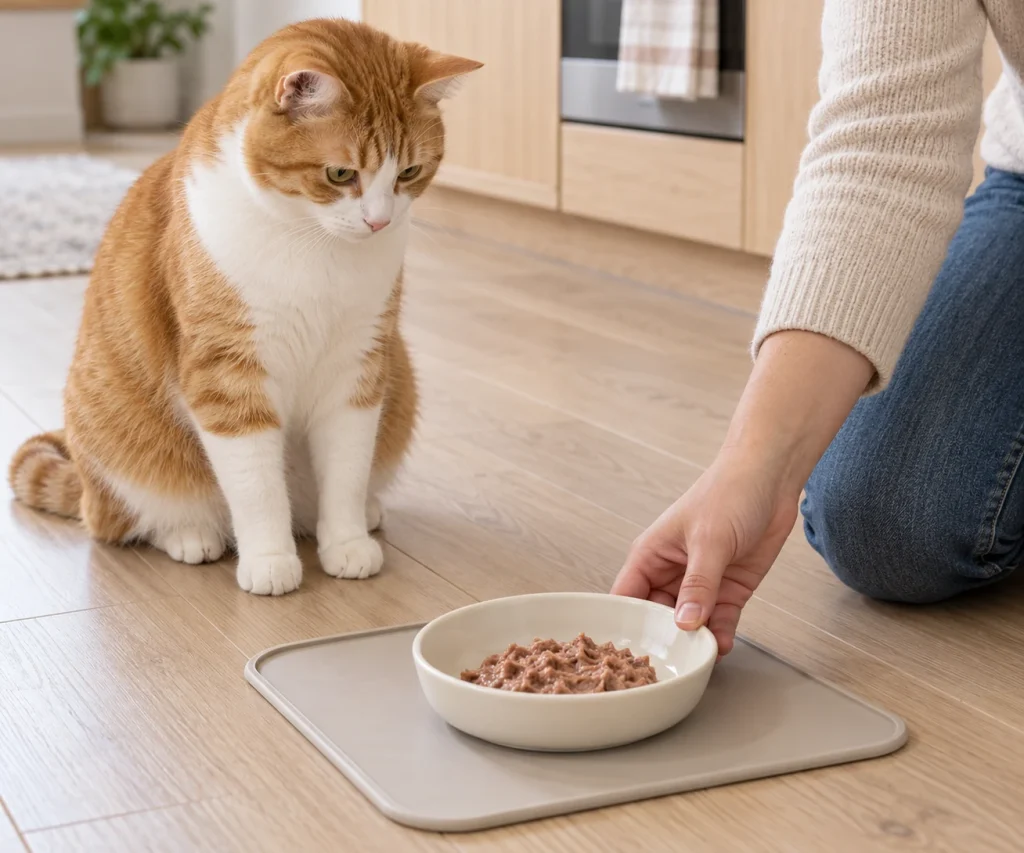
Diet is a core part of treatment. Cornell notes that a diet low in carbohydrates has been shown to improve blood sugar regulation in diabetic cats, and VCA Animal Hospitals recommends canned diets because they are generally lower in carbohydrates than dry food. MyyCat’s guide to wet food for cats covers options to discuss with your vet.
Timing matters, though. International Cat Care warns that a sudden diet change when treatment starts can lead some cats to refuse the new food or develop diarrhea, and recommends making dietary changes once your cat is stable and on your vet’s advice. Any change should be gradual, as described in MyyCat’s guide on how to change cat food safely. Because diet affects insulin needs, always tell your vet before switching foods.
For overweight cats, AAHA and VCA describe a gradual weight loss target of about 1 to 2% of body weight per week to help insulin work more effectively. Your vet will set the right target for your cat. MyyCat’s guide on helping your cat lose weight safely explains how to do this without crash dieting.
Monitoring a Diabetic Cat at Home
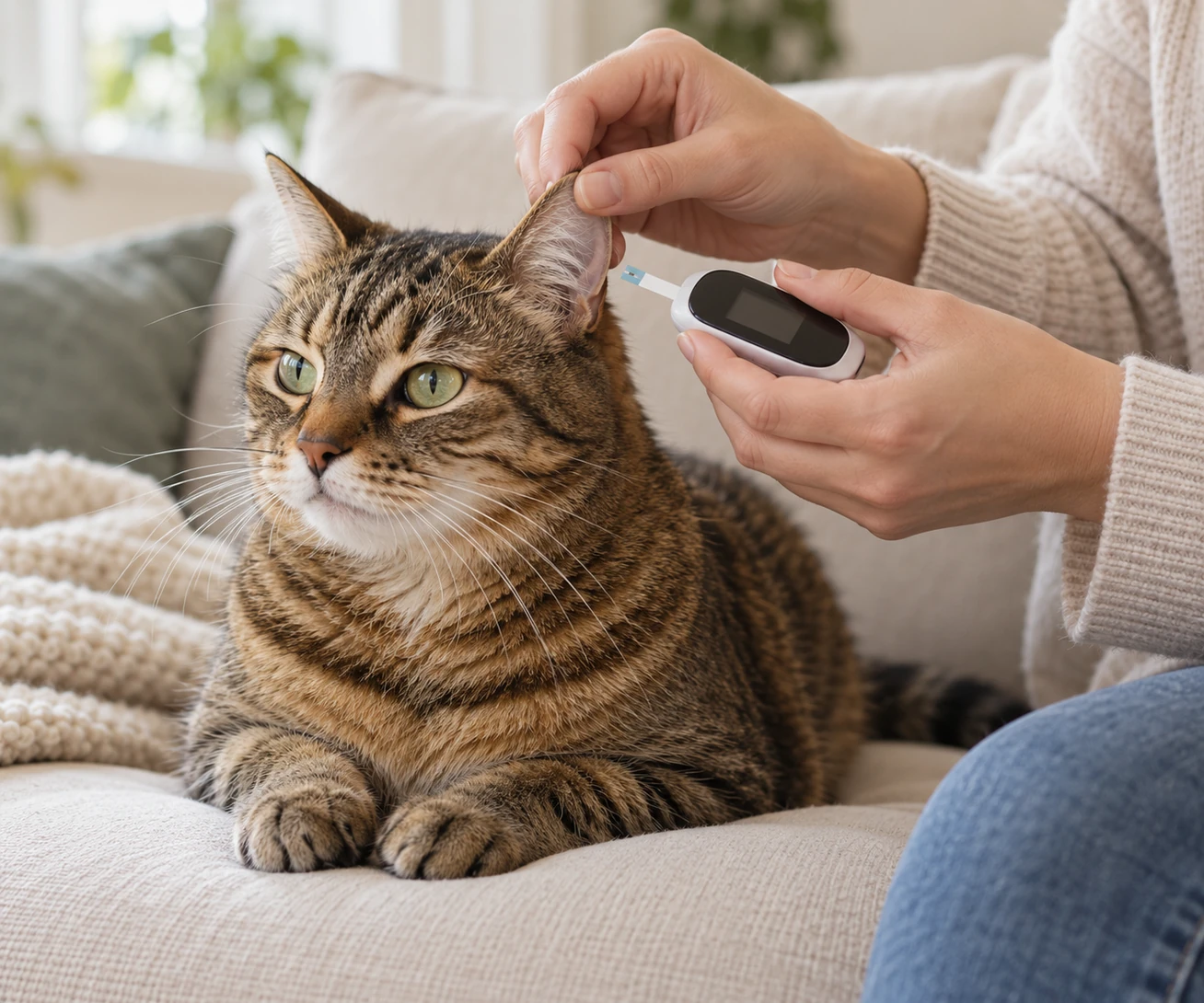
AAHA describes home blood glucose monitoring as key to preventing hypoglycemia. International Cat Care explains that blood glucose can be measured at home with a glucometer using a tiny drop of blood from the edge of the ear, and that urine dipsticks and continuous glucose monitoring sensors are other options. Your vet will advise which method suits your cat and how often to check.
Alongside any testing your vet recommends, keep a simple daily log:
- Insulin or medication given, with times and doses
- How much your cat eats at each meal
- Water intake and the size of litter box clumps
- Body weight, checked regularly
- Energy level, walking and any signs of weakness or wobbliness
- Any vomiting, diarrhea or refusal of food
Bring this record to rechecks. It helps your vet adjust treatment safely.

Can Diabetes in Cats Go Into Remission?
Yes, in some cats. VCA defines diabetic remission as a cat maintaining normal glucose levels for more than four weeks without insulin or oral glucose-lowering medication. AAHA describes remission as a reasonable goal in cats, and Merck notes that when it happens in newly diagnosed cats, it usually occurs within three to four months.
According to VCA and International Cat Care, remission is more likely when:
- Treatment starts soon after diagnosis, since remission is more likely in cats that haven’t been diabetic for long
- Blood glucose is brought under control quickly with close monitoring
- The cat eats a low-carbohydrate diet
- Overweight cats lose weight gradually
Remission can happen suddenly, which is one reason AAHA stresses home monitoring: a cat that no longer needs as much insulin is at risk of low blood sugar. VCA notes that relapse requiring a return to insulin is not uncommon, so cats in remission still need regular veterinary checks.
Life Expectancy and Quality of Life
The outlook is generally positive. Cornell says the prognosis for a good quality of life is good with adequate management at home, and International Cat Care notes that most diabetic cats can live a normal, good-quality life. How long an individual cat lives depends on its age, other health conditions and how well diabetes is controlled, so your vet is the best person to discuss your cat’s outlook.
Managing diabetes takes commitment, especially in the first weeks while the insulin dose is being adjusted. AAHA notes that many owners find caring for a diabetic pet worthwhile and rewarding once a routine is in place.
Can You Prevent Diabetes in Cats?
Not every case can be prevented, but two of the risk factors Cornell lists, obesity and physical inactivity, are ones you can influence. Keeping your cat at a healthy weight and encouraging regular play are sensible steps. Regular checkups also help your vet spot changes such as weight loss or increased thirst early.
Frequently Asked Questions
What are the first signs of diabetes in cats?
Cornell says the most common signs owners notice are increased thirst and urination, and weight loss despite a good appetite.
Can a diabetic cat live a normal life?
Yes, most can. International Cat Care notes that most diabetic cats can live a normal, good-quality life with treatment, and some go into remission.
What happens if diabetes in a cat isn’t treated?
Untreated diabetes can lead to ongoing weight loss, nerve damage and weakness in the back legs, and diabetic ketoacidosis, which Merck describes as a serious, life-threatening complication. Early treatment also gives the best chance of remission.
Can cats take diabetes pills instead of insulin?
Some can. FDA-approved SGLT2 inhibitors are an option only for selected cats that are otherwise healthy and have not previously received insulin, and they carry a risk of ketoacidosis. Your vet will decide whether your cat is a suitable candidate.
What should a diabetic cat eat?
Cornell notes that low-carbohydrate diets improve blood sugar control, and VCA recommends canned food over dry. Ask your vet to recommend a specific diet, and change foods gradually, only with their guidance.
Key Takeaways
- Diabetes in cats commonly causes increased thirst, increased urination and weight loss despite a good appetite.
- Obesity, age, inactivity, being male and steroid use are the main risk factors.
- Treatment usually involves insulin, a low-carbohydrate diet and weight control; newer oral drugs suit only selected cats.
- Ketoacidosis and low blood sugar are emergencies. Know the signs and your vet’s emergency plan.
- Some cats go into remission, especially when treated early with good glucose control.
More From MyyCat
The body condition and medication tools mentioned in this guide are collected with MyyCat’s other free resources on the MyyCat cat care tools page. For more reading on everyday cat health and care, you can also browse MyyCat’s books.
This article is for informational and educational purposes only and is not a substitute for professional veterinary diagnosis, treatment, or advice. Please read our veterinary disclaimer.
Sources & References
- Cornell Feline Health Center — Feline Diabetes
- Merck Veterinary Manual (Cat Owners) — Disorders of the Pancreas in Cats
- International Cat Care — Managing the Diabetic Cat: A Guide for Caregivers (PDF)
- American Animal Hospital Association — Diabetes Management for Pets
- VCA Animal Hospitals — Diabetic Remission in Cats
- U.S. Food and Drug Administration — FDA Approves First Oral Treatment for Cats with Diabetes Mellitus
- University of Illinois College of Veterinary Medicine — FDA Approves New Liquid Oral Feline Diabetes Medication