
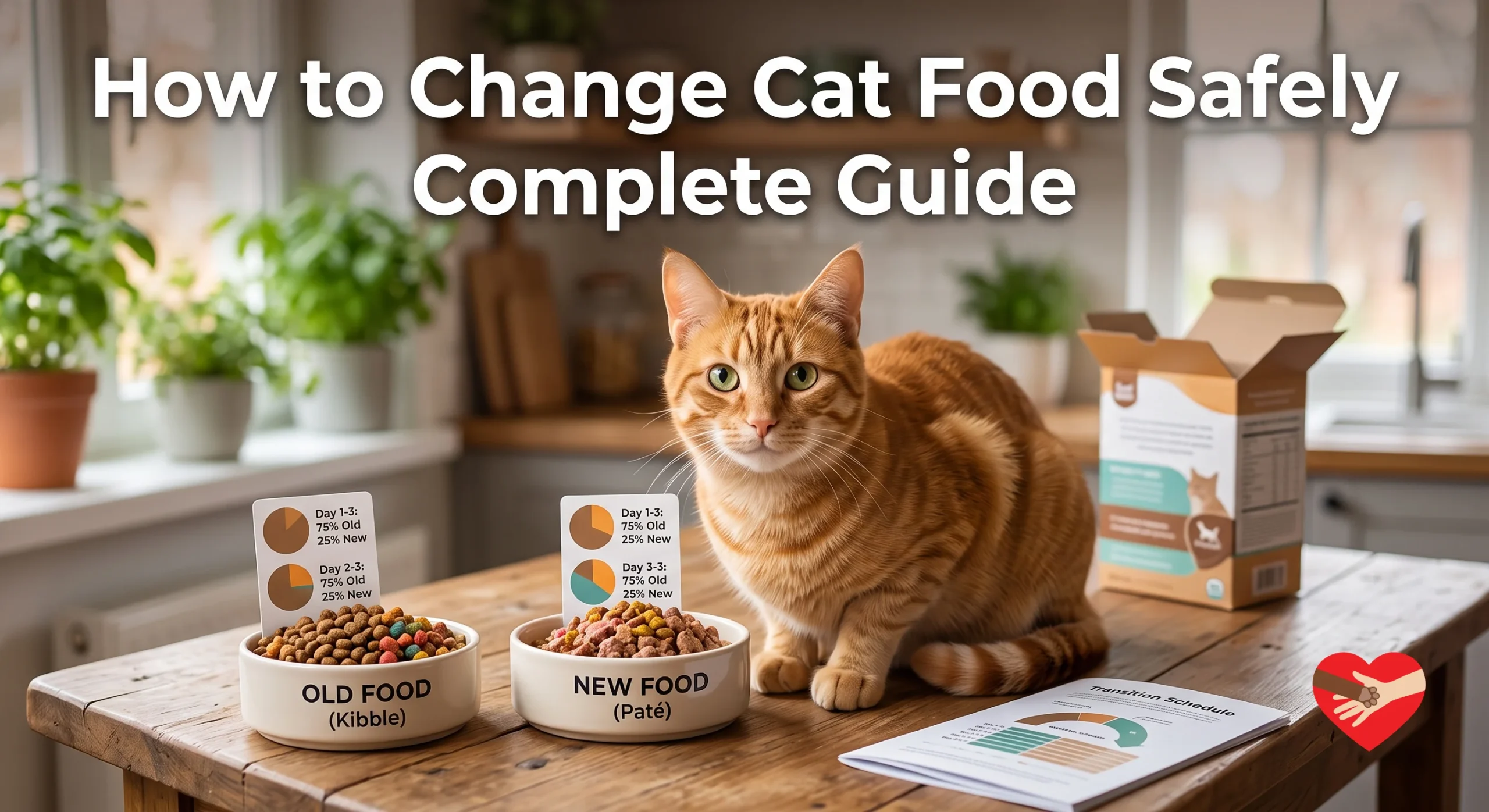

The safest way to change cat food is gradually, by mixing increasing amounts of the new food into the old food over about 7 to 10 days, or longer for sensitive cats. A sudden switch can cause vomiting, diarrhea or a cat that simply refuses to eat, and a cat that stops eating is at real risk of health problems.
This guide gives a simple day-by-day transition schedule, explains how to adjust it for sensitive, senior and fussy cats, what to do if your cat refuses the new food, how to handle prescription diets and health conditions, and the warning signs that mean you should slow down or call your vet.
Table of Contents
Why Sudden Food Changes Can Cause Problems
Different foods vary in their ingredients, fat, fiber and protein levels, and a sudden change can upset some cats’ digestion, causing vomiting, diarrhea or soft stools. Changing gradually gives the digestive system time to adjust and lets you spot any problems early. VCA Animal Hospitals recommends making food changes gradually for this reason.
Cats can also be wary of unfamiliar food. Many will sniff a new food and walk away at first. That does not necessarily mean they dislike it, only that they need time to get used to its smell, texture and taste. Cats also tend to have strong texture preferences, often shaped by what they ate when young, so switching from pâté to chunks, or from dry to wet, can take extra patience.
The biggest risk of a rushed change is a cat that stops eating. Cats that go without food for several days can develop hepatic lipidosis (fatty liver disease), a serious condition that is more likely in overweight cats. VCA notes that many affected cats have eaten little or nothing for several days, but there is no safe waiting period. If your cat has not eaten for about 24 hours, contact your vet, and sooner for kittens or cats that are unwell. Our guide on what to do if your cat is not eating has more detail.
A Standard 7-Day Transition Schedule

This schedule suits most healthy adult cats moving from one complete commercial food to another. Mix the foods together thoroughly in the same bowl, so your cat cannot just pick out the familiar food, and keep the total amount the same as your cat’s usual daily portion.
| Days | Old food | New food |
|---|---|---|
| 1–2 | 75% | 25% |
| 3–4 | 50% | 50% |
| 5–6 | 25% | 75% |
| 7 | 0% | 100% |
Days 1 and 2
Mix about one-quarter new food with three-quarters old food. If your cat seems hesitant, start with an even smaller amount, such as a teaspoon of new food, and build up more slowly.
Days 3 and 4
Move to half new food and half old food. Watch your cat’s appetite, stools and behavior. If your cat develops soft stools, vomits or eats less, go back to the previous ratio for a few days before trying again.
Days 5 and 6
Increase to about three-quarters new food. Most cats that have coped well so far handle this step without problems.
Day 7
Feed only the new food. Keep an eye on your cat for the next few days to make sure everything stays settled.
Slower Transitions for Sensitive and Senior Cats
Some cats do better with a slower change of two weeks or more, spending three or four days at each step instead of two. This includes cats with a history of digestive upsets, inflammatory bowel disease or other chronic conditions, older cats, and cats that are very fussy about food. There is no harm in going slowly; the aim is a cat that keeps eating well with normal stools.
Kittens should also be transitioned gradually, for example when moving to a new kitten food or later to adult food. Our guide on what to feed a kitten covers kitten diets in more detail.
What to Do When Your Cat Refuses the New Food
📚 Recommended Cat Guides
🐱 The Trainable Cat Book
Learn proven methods to train your cat and stop unwanted behaviors.
View Book →❤️ Complete Cat Care Manual
Your complete guide to cat nutrition, health, grooming, behavior, and daily care.
Get the Manual →If your cat will not eat the new food:
- Go back to a smaller proportion of new food and increase it more slowly.
- Warm wet food slightly to bring out its smell. If you use a microwave, stir well and check the temperature so there are no hot spots.
- Try offering the new food in a separate bowl next to the usual food, so your cat can investigate it without their normal meal being changed.
- If you are switching from dry to wet food, try a texture closer to what your cat already knows, or sprinkle a few familiar kibbles on top at first.
- Feed at regular mealtimes rather than leaving food out all day, which can help some cats show more interest at meals.
Never try to “starve out” a cat until they accept a new food. If your cat eats much less than usual or nothing for about 24 hours, go back to the old food and speak to your vet before trying again.
Common Mistakes
- Switching too fast. Changing over in a day or two is the most common cause of problems.
- Alternating meals instead of mixing. Giving new food at one meal and old food at the next is not the same as a gradual blend.
- Layering instead of mixing. Cats may eat around new food placed on top of their usual food.
- Increasing the total amount. Adding new food on top of the full usual portion can lead to overeating and weight gain.
- Not watching the litter box. Checking stools daily helps you notice problems early.
- Changing food at a stressful time. Moves, boarding, travel and new pets can all affect appetite, so it is best to change food during a calm period if you can.
Transitioning for Specific Health Conditions
Always follow your vet’s advice when changing food for a medical reason.
- Kidney disease. Therapeutic kidney diets are typically restricted in phosphorus, protein and sodium, according to the Cornell Feline Health Center, and some cats find them less tasty than their usual food. Vets often advise introducing a new diet gradually once the cat is feeling well, rather than while they are nauseous, in the hospital or not eating, because cats can develop an aversion to food they associate with feeling ill. See our guide to kidney disease in cats.
- Diabetes. Changing to a lower-carbohydrate diet can reduce a cat’s insulin needs. Never change a diabetic cat’s food without talking to your vet first, because the insulin dose may need adjusting to avoid dangerously low blood sugar. See our guide to diabetes in cats.
- Food allergies. A normal gradual switch is different from a diagnostic elimination diet trial. To diagnose a food allergy, the cat eats only one carefully chosen diet, with no other foods or treats, usually for at least eight weeks under veterinary guidance, sometimes followed by a food challenge to confirm the diagnosis.
Monitoring Your Cat During the Transition
Check these every day during a food change:
- Appetite: is your cat eating their usual amount?
- Stools: are they still well formed? Mild softening can happen, but persistent diarrhea is a reason to slow down or call your vet.
- Vomiting: occasional vomiting is a sign to slow down; repeated vomiting needs a vet.
- Energy and behavior: lethargy or hiding may mean your cat feels unwell.
- Water intake: cats moving from wet to dry food will need to drink more, so make sure fresh water is always available.
If you see mild problems, go back a step and stay there for a few more days. Contact your vet if your cat stops eating, vomits repeatedly, has diarrhea for more than a day or two, or seems unwell.
Key Takeaways
- Change food gradually. About 7 to 10 days suits most cats; sensitive cats may need two weeks or more.
- Mix foods together thoroughly. Blend old and new in the same bowl and keep the total portion the same.
- Go at your cat’s pace. If problems appear, step back to the previous ratio for a few days.
- Never let your cat go without food. If they have not eaten for about 24 hours, call your vet.
- Check with your vet for medical diets. Kidney, diabetic and allergy diets need veterinary guidance.
- Choose a calm time. Avoid changing food during moves, travel or other upheavals if possible.
FAQ
How long does it take to transition a cat to new food?
Most cats can be switched over about 7 to 10 days. Cats with sensitive stomachs, older cats and very fussy eaters may need two weeks or longer. Let your cat’s appetite and stools guide the pace.
Can I switch cat food cold turkey?
It is best avoided, because sudden changes can cause digestive upset or food refusal. Sometimes it cannot be avoided, for example if a food is recalled, unavailable or your vet advises an immediate change. In that case, offer the new food in small, frequent meals, watch your cat closely and call your vet if they do not eat or develop vomiting or diarrhea.
What if my cat refuses the new food?
Slow down and use a smaller proportion of new food, warm wet food slightly, and try a texture closer to what your cat is used to. Never force or starve a cat into eating. If your cat has not eaten for about 24 hours, go back to the old food and contact your vet.
Is it normal for my cat to have loose stools during the transition?
Slightly softer stools can happen, especially around the halfway point. Go back to the previous ratio for a few days. If diarrhea is watery, lasts more than a day or two, or your cat seems unwell, contact your vet.
Can I switch between wet and dry food?
Yes, using the same gradual approach. Many cats need extra time to accept a new texture. Remember that wet and dry foods have very different calorie contents per gram, so check the feeding guide to keep the daily amount right. If you move a cat onto dry food, make sure they have plenty of fresh water. Our guide to the best wet food for cats may help you choose.
How do I switch to a prescription diet?
Follow your vet’s instructions. Most prescription diets are introduced gradually like any other food, ideally once your cat is eating well rather than while they are nauseous or in the hospital. If your cat will not eat the prescription food, tell your vet, as there are often other options.
Can I transition during stressful times like a move?
It is better to avoid it if you can, because stress alone can reduce appetite. Keep your cat on their familiar food during the move and change food once they have settled.
Can kittens transition faster than adult cats?
Kittens should still be switched gradually. Because kittens have small energy reserves and need to eat regularly to grow, contact your vet promptly if a kitten eats poorly, vomits or has diarrhea during a food change.
This article is for general information and is not a substitute for advice from your veterinarian. If your cat has a health condition, ask your vet before changing their food.
Sources & References
- VCA Animal Hospitals — Switching Your Kitten to Adult Food
- VCA Animal Hospitals — Hepatic Lipidosis in Cats (Fatty Liver Syndrome)
- Cornell Feline Health Center — Chronic Kidney Disease
[…] used to can do the same. This is why diets should be changed gradually; MyyCat’s guide on how to change cat food safely walks through a step-by-step transition. Some cats react to particular ingredients long term; […]
[…] our step-by-step guide to changing cat food safely. If your cat develops persistent vomiting, diarrhea, itching, or other signs that raise concern […]