


Seizures in cats are sudden bursts of abnormal electrical activity in the brain. They can look dramatic, with a cat collapsing, paddling its legs and drooling, or they can be subtle, such as twitching of the face or a few seconds of staring and lip smacking. Most single seizures stop on their own within a few minutes, but every seizure needs a veterinary check, and a seizure lasting longer than five minutes, or seizures that follow one another without recovery, are an emergency.
Unlike in dogs, seizures in cats are more often caused by an underlying problem such as a brain disease, a metabolic illness or a poison than by inherited epilepsy. This guide explains what seizures in cats look like, what to do during and after one, the possible causes, how vets investigate and treat them, and what life with an epileptic cat involves. It is based on veterinary sources including the Merck Veterinary Manual, the Cornell Feline Health Center and peer-reviewed feline neurology reviews listed at the end.
Table of Contents
Seizures in cats at a glance
- How common: the Merck Veterinary Manual reports seizures in cats at an incidence of around 2 percent.
- Two broad types: generalized seizures affect the whole body and usually consciousness; focal seizures affect one part of the body or behavior, such as facial twitching or drooling.
- Causes: structural brain disease and reactive causes such as poisons, low blood sugar or liver and kidney disease are common in cats. Idiopathic epilepsy, with no identifiable cause, accounts for only part of cases.
- During a seizure: keep your cat safe, keep your hands away from its mouth, and time the episode. Do not try to restrain it.
- Emergency: a seizure lasting more than five minutes, repeated seizures without full recovery, or a seizure after possible poisoning or injury.
- Treatment: depends on the cause. Cats with recurrent seizures may need daily anti-seizure medication prescribed and monitored by a vet.
When a seizure is an emergency
Go to your vet or the nearest emergency clinic immediately if:
- a seizure lasts longer than five minutes, or one seizure follows another without your cat recovering in between. Feline neurologists describe this as status epilepticus, a true emergency (Bailey and Dewey, Journal of Feline Medicine and Surgery).
- your cat has more than one seizure in 24 hours (cluster seizures). PDSA advises calling your vet straight away in this situation, and the Cornell Feline Health Center advises seeking veterinary help without delay if seizures occur less than 10 to 15 minutes apart.
- the seizure followed possible poisoning, for example exposure to a dog flea treatment, a household chemical or medication.
- your cat has had a fall, road accident or head injury.
- your cat is a diabetic cat on insulin, a very young kitten, or is already unwell.
- your cat does not return to normal within a few hours, has difficulty breathing, or seems very weak afterward.
For a single short seizure in a cat that recovers fully, call your vet once the seizure has ended to arrange an examination. PDSA advises calling straight away if a seizure lasts longer than two minutes. Do not move your cat to the car while it is actively seizing unless your vet tells you to.

What a seizure looks like in a cat
Generalized seizures
A generalized seizure involves the whole body. According to the Merck Veterinary Manual, typical signs include loss of consciousness, involuntary movements of the limbs, loss of bladder or bowel control, dilated pupils, vocalizing, and signs such as drooling. Many cats fall onto their side, stiffen, then make jerking or paddling movements. Bailey and Dewey note that this phase usually lasts about one to three minutes.
Focal seizures
Focal (partial) seizures start in one part of the brain and affect only part of the body or behavior. They are easy to miss or mistake for odd behavior. Cats are more likely than dogs to have focal seizures, according to a feline epilepsy review by Moore. Possible signs include:
- twitching of the face, lips, eyelids or ears, often on one side
- drooling, lip smacking, chewing motions or repeated swallowing
- dilated pupils or pupils that change size
- sudden staring into space or a frozen, unresponsive moment
- growling, vocalizing, or sudden frantic running or skittish behavior
- abnormal movements of one leg or of the head and neck
A focal seizure can spread to become a generalized one. Moore describes groups of cats with orofacial seizures, involving drooling, facial twitching, lip smacking and swallowing, often with a fixed stare, in which brain imaging showed changes in a deep part of the brain called the hippocampus. These cats need investigation by a vet, ideally with access to a veterinary neurologist.
Before and after a seizure
Some cats seem restless, clingy, anxious or withdrawn for minutes to hours before a seizure. Afterward there is often a recovery (postictal) period. Merck describes signs such as disorientation, pacing and hyperactivity, and cats may also seem wobbly or want to hide. This recovery phase can last minutes to hours and is sometimes mistaken for part of the seizure itself.
Episodes that can look like seizures
Not every collapse or twitch is a seizure. Fainting caused by heart disease, severe weakness, muscle tremors from poisoning, balance problems and normal twitching during sleep can all look similar. A cat that twitches in its sleep but wakes normally when called is usually just dreaming. Because the distinction matters, Bailey and Dewey highlight video recordings as a valuable way for vets to confirm whether an episode really is a seizure.
What to do if your cat is having a seizure
Seizures are frightening to watch, but most stop on their own within a few minutes. During a generalized seizure your cat is usually not conscious, so your job is to keep it safe and gather information for your vet. Based on guidance from PDSA:
- Stay calm and start timing. Note when the seizure starts and stops. Seizures often feel much longer than they are.
- Make the area safe. Move furniture or objects your cat could hit. If your cat is on a bed, sofa or high surface, carefully move it to the floor or block the edge, using a thick towel or blanket to protect your hands.
- Keep your hands away from its mouth. Do not try to hold the tongue or put anything in the mouth. You are very likely to be bitten.
- Do not restrain, shake or shout at your cat. This will not stop the seizure and may make things worse.
- Reduce stimulation. Dim the lights, keep the room quiet and keep other pets and children away.
- Keep your cat cool. Seizures can raise body temperature, so do not wrap your cat tightly in blankets.
- Film it if you can. A short video, taken once your cat is safe, can be extremely helpful to your vet.
After the seizure
- Let your cat recover in a quiet, dimly lit place where it cannot fall from a height.
- Speak softly and give it space. Some cats are disoriented or defensive and may bite or scratch while confused.
- Do not offer food or water until your cat is fully alert and able to swallow normally, then offer small amounts.
- Keep doors and windows closed; a confused cat may bolt. Our guide to door-dashing has practical tips for keeping exits secure.
- Call your vet to report the seizure and arrange an examination, even if your cat now seems normal.
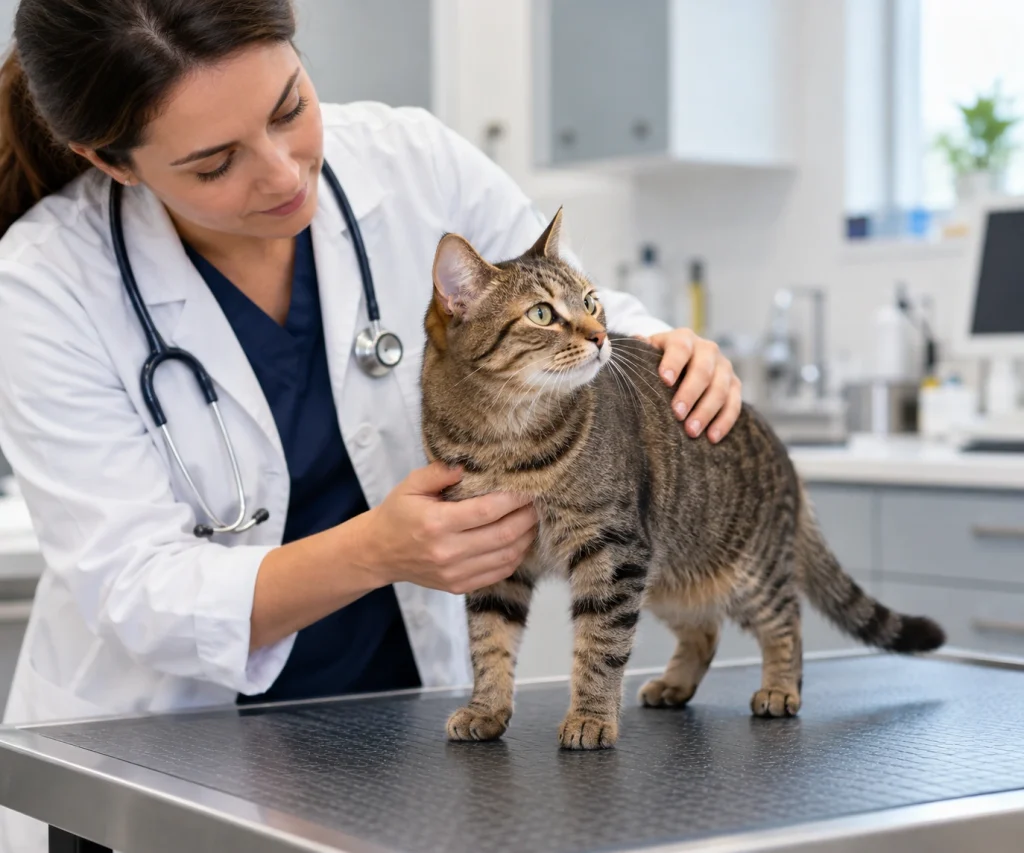
What causes seizures in cats
Vets usually group the causes of seizures into three categories. Working out which one applies is the main goal of the veterinary investigation, because it decides the treatment.
| Category | What it means | Examples in cats |
|---|---|---|
| Reactive seizures | The brain is normal, but something elsewhere in the body or a poison disrupts it | Poisons such as permethrin; low blood sugar, including insulin overdose; liver disease; kidney failure; severe high blood pressure; severe hyperthyroidism; electrolyte imbalances |
| Structural epilepsy | A disease or injury inside the brain itself | Brain tumors such as meningioma or lymphoma; inflammation and infections such as FIP or toxoplasmosis; head trauma; strokes |
| Idiopathic epilepsy | Recurrent seizures with no identifiable cause, possibly genetic | Usually younger adult cats that are otherwise normal between seizures |
How common each cause is
Cats differ from dogs here. In dogs, idiopathic epilepsy is the most common diagnosis, but in cats underlying disease is more often found. In one study summarized by Bailey and Dewey, 25 percent of cats with seizures were classed as idiopathic, 22 percent as reactive and 50 percent as having structural brain disease, and the authors note that estimates of idiopathic epilepsy range from 21 to 59 percent across studies. Moore similarly reports that only about one in four cats with seizures meets the criteria for primary epilepsy. Figures differ because studies draw on different populations, such as referral hospitals that see more complex cases, and use different levels of testing.
Age gives some clues. Bailey and Dewey report an average age of about 3.5 years for cats with idiopathic epilepsy and about 8 years for cats with seizures caused by other disease. Moore notes that primary epilepsy typically begins between 1 and 7 years of age. A first seizure in an older cat is therefore more likely to have an underlying cause, although any cat needs a full assessment.
Poisons
Poisoning is one of the most important causes to rule out quickly. A leading example is permethrin, an insecticide found in some dog flea products. The American Association of Feline Practitioners explains that dog spot-on products can contain 45 to 60 percent permethrin, that cats can be poisoned by having a dog product applied or by grooming a recently treated dog, and that signs range from drooling and restlessness to muscle tremors, seizures and death. Never use a dog flea product on a cat; our guide to fleas on cats explains safe options.
Other poisons that can cause tremors or seizures include some rodenticides and chocolate, according to the Cornell Feline Health Center, as well as some human medications. If you suspect poisoning, contact your vet or an animal poison control service immediately, take the packaging with you, and do not try to make your cat vomit unless a vet tells you to.
Metabolic and body-wide illness
Several common feline illnesses can trigger seizures when they become severe:
- Low blood sugar, most often from an insulin overdose in a diabetic cat. This is an emergency.
- High blood pressure. Cornell reports neurological changes, which can include seizures, in 15 to 40 percent of cats with hypertension, especially when blood pressure rises quickly. Hypertension is most often linked to kidney disease and hyperthyroidism.
- Liver disease, which can allow toxins to affect the brain (hepatic encephalopathy). Fatty liver disease can develop in a cat that stops eating.
- Kidney failure and severe electrolyte imbalances.
- Nutritional deficiency: the Merck Veterinary Manual notes that thiamine (vitamin B1) deficiency can cause seizures in cats.
Diseases inside the brain
Moore lists meningioma and lymphoma as the most common brain tumors behind seizures in cats, along with infections and inflammation such as feline infectious peritonitis (FIP) and toxoplasmosis, and strokes. Head injuries from falls or road accidents can cause seizures immediately or later. Cats with FIV can occasionally develop neurological signs, including seizures, as their immunity declines. Our guide to cancer in cats covers tumors more broadly.
How vets diagnose the cause
Your vet will start with a detailed history and a full physical and neurological examination. Bring your seizure notes and any video. Typical steps include:
- Blood and urine tests to look for reactive causes such as low blood sugar, liver or kidney disease, and electrolyte problems. Merck lists a blood count, biochemistry profile and urinalysis as the minimum workup.
- Blood pressure measurement and, depending on age and signs, a thyroid test.
- Tests for infectious diseases, such as FeLV, FIV or toxoplasmosis, where relevant.
- Chest X-rays or abdominal ultrasound if a tumor or other body-wide disease is suspected.
- An MRI brain scan and spinal fluid analysis, usually at a referral center, to look for structural disease once other causes are less likely.
Idiopathic epilepsy is a diagnosis of exclusion: it is made only when testing has not found another cause. Not every owner can pursue advanced imaging, so discuss with your vet what each test could show and how it would change treatment.

How seizures in cats are treated
Treating the underlying cause
If a cause is found, treating it comes first: correcting low blood sugar, managing blood pressure, treating poisoning, liver or kidney disease, or addressing a brain tumor or infection. Reactive seizures often stop once the cause is controlled, although some cats still need anti-seizure medication for a time.
Anti-seizure medication
Not every cat that has a single seizure needs daily medication. Bailey and Dewey suggest considering long-term treatment when a cat has more than one seizure within six months, a cluster of seizures, or status epilepticus, and Merck describes a similar approach. The decision weighs seizure frequency and severity against the commitment of lifelong medication and monitoring.
- Phenobarbital is described by Merck and by feline reviews as a first-line drug for cats. Blood levels are checked periodically to guide the dose and monitor side effects.
- Levetiracetam and zonisamide are other options, used alone or alongside phenobarbital. Merck notes that zonisamide is increasingly used as a first-choice drug in cats.
- Potassium bromide, often used in dogs, is not recommended in cats because it can cause serious lung reactions, according to Merck and Moore.
- Oral diazepam is not recommended for long-term use in cats because of a rare but potentially fatal liver reaction, Moore explains, although injectable forms are used by vets in emergencies.
Doses are individual and must be set by your vet. Never give your cat medication prescribed for a dog or a person, and never stop or reduce anti-seizure medication suddenly, because withdrawal can trigger seizures. Bailey and Dewey note that tapering may be considered only after at least six seizure-free months, gradually and under veterinary supervision.
Emergency treatment
A cat in status epilepticus or having clusters needs hospital treatment. Vets use injectable medications to stop the seizures, then look for the cause and support the cat’s breathing, temperature and blood sugar. If your vet prescribes any emergency medication for use at home, use it only exactly as you have been shown.
Living with a cat that has epilepsy
For many cats, the realistic goal of treatment is fewer, shorter and milder seizures rather than none at all. PDSA notes that many cats with epilepsy lead normal, happy lives on medication, and Cornell describes epilepsy as usually manageable with daily medicine. Practical steps that help:
- Keep a seizure diary. Record the date, time, length, what the seizure looked like, how long recovery took, and any possible triggers. Bailey and Dewey describe this log as an important tool for judging whether treatment is working.
- Give medication on schedule. Many anti-seizure drugs are given once or twice daily, and missed doses can lead to breakthrough seizures. MyyCat’s free Cat Medication Schedule Generator can help you plan doses and refills.
- Keep up with recheck visits and blood tests so your vet can adjust treatment and check for side effects. Making the cat carrier a familiar, relaxed place reduces stress before each visit.
- Make the home safer, for example by limiting access to high shelves or balconies and keeping your cat indoors, especially while seizures are being brought under control.
- Watch for side effects such as sleepiness, wobbliness, increased appetite or weight gain, and report them rather than adjusting the dose yourself.
- Tell everyone who cares for your cat, such as pet sitters, what to do during a seizure and how to reach your vet.
Epilepsy is not contagious. PDSA notes that it cannot spread between cats or to people or other pets.
When to see a vet
Every first seizure needs a veterinary assessment, even if your cat recovers quickly. Contact your vet promptly if your cat:
- has had its first seizure, or a seizure that looked different from previous ones
- is having seizures more often, for longer, or in clusters despite treatment
- has episodes of twitching, staring, drooling or strange behavior that might be focal seizures
- seems sleepy, wobbly, unsteady or unwell on anti-seizure medication
- has other signs of illness such as weight loss, increased thirst or a change in appetite; our guide on how to tell if your cat is sick covers these
Seek emergency care immediately for a seizure lasting more than five minutes, repeated seizures without recovery, suspected poisoning, a head injury or breathing difficulty. This article is general information and not a substitute for advice from your veterinarian; see our veterinary disclaimer.
Frequently asked questions
Can a cat die from a seizure?
A single short seizure is rarely fatal, but prolonged seizures (status epilepticus) and repeated clusters are life-threatening and can cause brain damage, overheating and other complications. Some underlying causes, such as poisoning, are dangerous in their own right. This is why long or repeated seizures need emergency care.
Is my cat aware during a seizure?
During a generalized seizure, cats usually lose consciousness, as the Merck Veterinary Manual describes. Focal seizures are different: a cat may stay partly aware. Afterward many cats are confused, tired or unsteady for a while, so give them a quiet, safe place to recover.
What should I record in a seizure diary?
Note the date and time, how long the seizure lasted, what it looked like, whether it affected the whole body or one part, how long recovery took, and anything unusual beforehand, such as missed medication, illness or a change in routine. Bailey and Dewey recommend recording seizure frequency, duration, type and recovery, and a short video adds a great deal.
Should I take my cat to the vet after one seizure?
Yes. A single seizure can be the first sign of a treatable problem such as low blood sugar, high blood pressure, poisoning or liver disease. Call your vet once the seizure has ended, and go immediately if it lasted more than five minutes or another seizure follows.
Do cats with epilepsy need medication for life?
Many do, but not all. Some cats with reactive seizures stop needing medication once the cause is treated, and some cats with long seizure-free periods may be able to reduce medication gradually under veterinary supervision. Never stop medication on your own.
Is my cat twitching in its sleep having a seizure?
Usually not. Twitching of the paws, whiskers or face during sleep is common and normal, and the cat wakes normally when called or touched. A seizure typically does not stop when you call your cat, and it may be followed by confusion. If you are unsure, film the episode and show your vet.
Sources
- Charalambous M. Epilepsy in small animals. Merck Veterinary Manual, professional version.
- Schubert T. Nervous system disorders and effects of injuries in cats. Merck Veterinary Manual, pet owner version.
- Bailey KS, Dewey CW. The seizuring cat: diagnostic work-up and therapy. Journal of Feline Medicine and Surgery. 2009;11(5):385-394. Free full text.
- Moore SA. Seizures and epilepsy in cats. Veterinary Medicine: Research and Reports. 2014;5:41-47.
- Cornell Feline Health Center. Neurological disorders.
- Cornell Feline Health Center. Hypertension.
- Cornell Feline Health Center. Poisons.
- American Association of Feline Practitioners. Permethrin poisoning and cats.
- PDSA. What to do if your pet has a seizure.
- PDSA. Vet Q&As: what to know about epilepsy in cats. May 2024.