
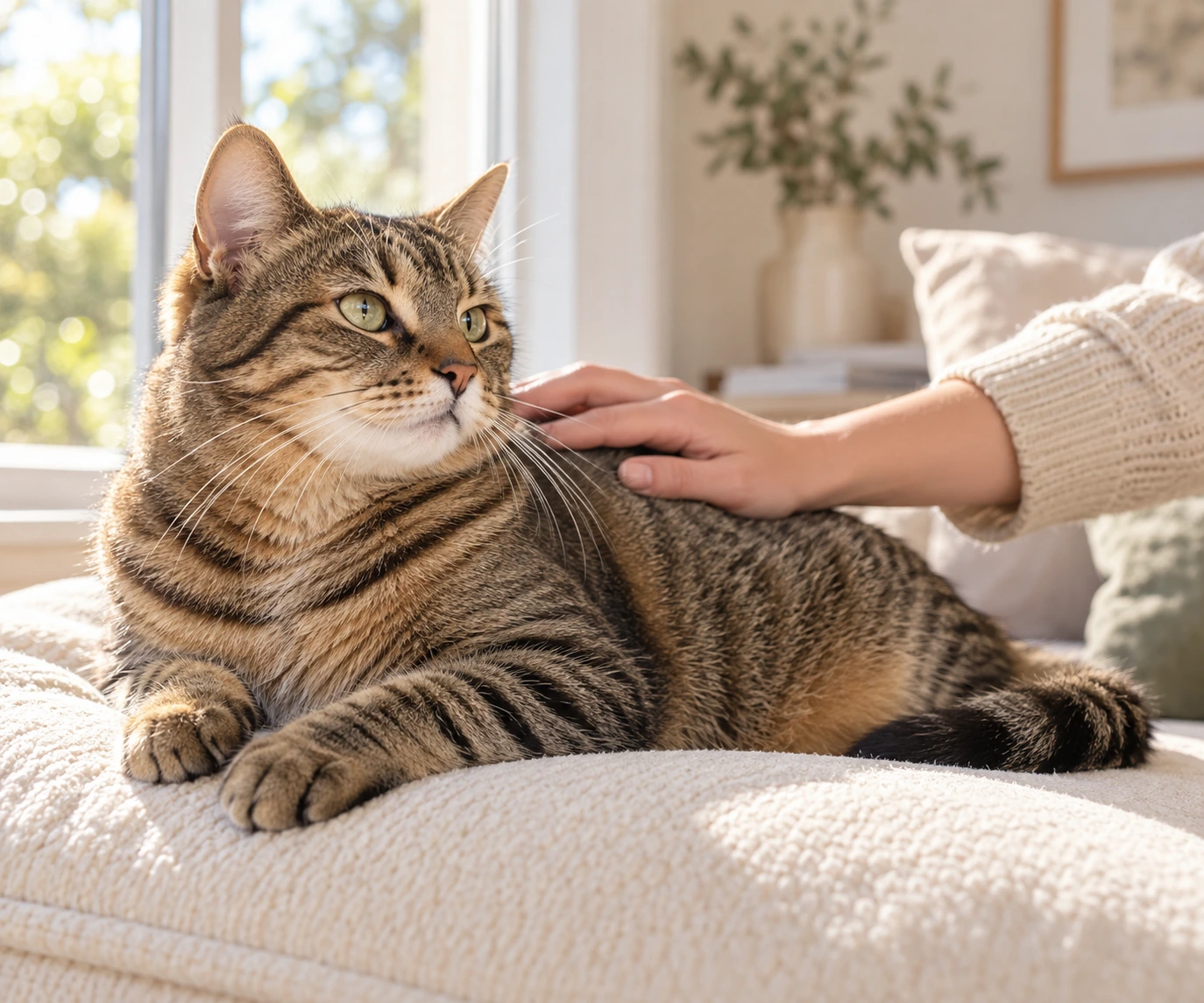

FIV in cats is caused by feline immunodeficiency virus, a lifelong infection that slowly weakens the immune system. It spreads mainly through deep bite wounds from infected cats, it cannot infect people, and a positive test is not the death sentence many owners fear. Many FIV-positive cats live for years, some as long as uninfected cats, with good preventive care and an indoor life.
This guide explains how FIV spreads, which cats are most at risk, the stages and symptoms, how to read a test result (including in kittens), what the evidence says about life expectancy, and how to care for an FIV-positive cat at home and alongside other cats. It is based mainly on the 2020 AAFP Feline Retrovirus Testing and Management Guidelines, the Cornell Feline Health Center and the other sources listed at the end.
Table of Contents
FIV in cats at a glance
- What it is: a retrovirus related to HIV that affects only cats. Once infected, a cat almost always stays infected for life.
- How it spreads: mainly through bite wounds, which is why unneutered male cats that roam and fight are at highest risk.
- How common: the Cornell Feline Health Center reports that about 2.5 to 5 percent of healthy cats in North America are infected, rising to 15 percent or more among sick or high-risk cats.
- Symptoms: often none for years. Problems usually come from secondary infections, mouth inflammation, weight loss or cancer as immunity declines.
- Testing: a blood test detects antibodies. Positive results in low-risk cats and in kittens under six months need careful interpretation and confirmation.
- Outlook: many FIV-positive cats live good-quality lives for years. A positive test alone should not be a reason for euthanasia.
- People and dogs: FIV does not infect humans or other species.
What FIV is
Feline immunodeficiency virus is a lentivirus, the same family of viruses as HIV, and it causes a similar slow decline in immune function. That is why it is sometimes called feline AIDS. The comparison stops there: according to Cornell, FIV is species-specific and there is no evidence that it infects or causes disease in people.
The virus itself rarely makes a cat ill directly. Instead, over months to years it can weaken the immune system so that infections a healthy cat would shrug off become persistent or recurrent. Some infected cats never progress to that stage at all.
How FIV spreads
Bite wounds
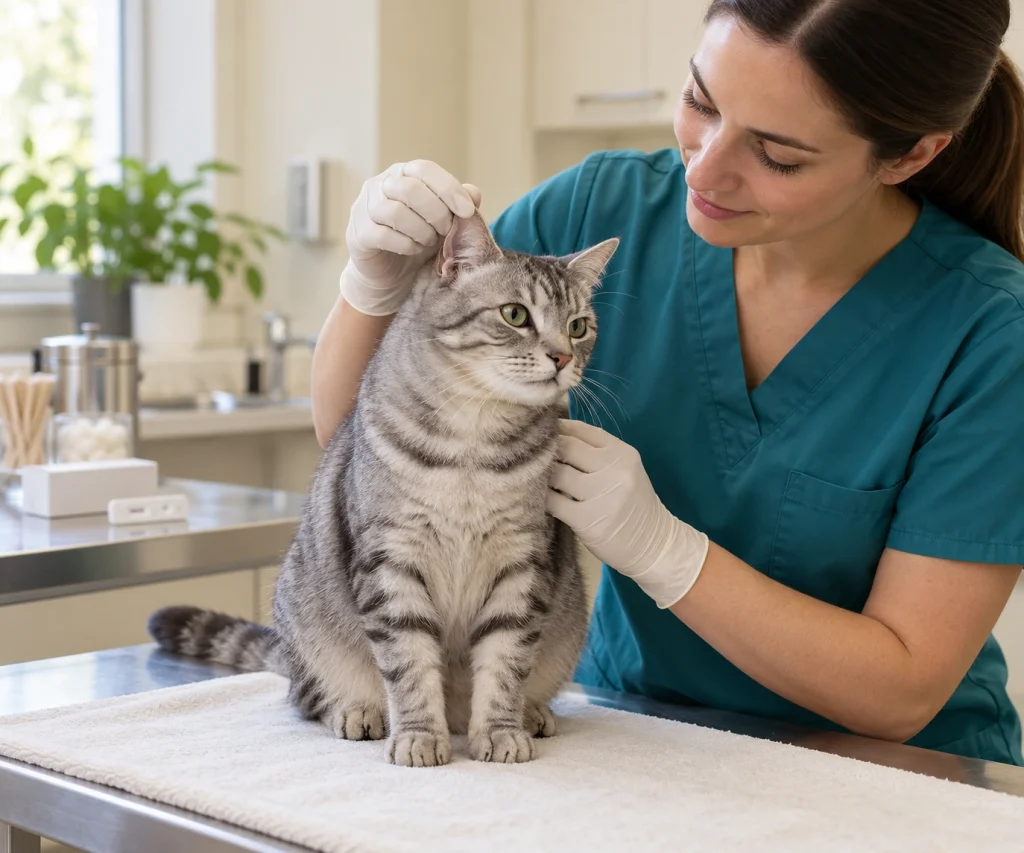
The 2020 AAFP Feline Retrovirus Testing and Management Guidelines identify bite wounds as the major route of FIV transmission: the virus is carried in saliva and introduced deep into the tissues when an infected cat bites. This is why fighting matters so much more than casual contact. Cornell notes that sharing water bowls or grooming each other does not appear to spread FIV efficiently, and sexual contact is not a significant route.
Spread between cats that live together
In a stable household where cats do not fight, the risk of one cat infecting another appears to be low. The AAFP guidelines describe the risk for such housemates as negligible and cite a sanctuary where eight FIV-infected cats lived with 130 uninfected cats without any documented transmission. They also describe a household of 26 cats where FIV spread to six more cats over ten years, a home that also had cats co-infected with feline leukemia virus. The difference comes down to fighting, crowding and stress, which is why introductions and social harmony matter so much.
From mother to kittens
Transmission from a queen to her kittens is rare in natural settings, according to the AAFP guidelines, although Cornell notes the risk is higher if the mother became infected during pregnancy. Kittens born to an FIV-positive mother often test positive for a different reason, explained in the testing section below.
Can people or dogs catch FIV?
No. FIV only infects cats. International Cat Care states that it cannot pass to humans or other animals, and the Merck Veterinary Manual likewise notes that it does not affect people. Normal hygiene is still sensible around any cat, especially for anyone with a weakened immune system, but FIV itself is not a human health risk.
Which cats are most at risk
Any unvaccinated cat that is bitten by an infected cat can become infected, but some groups are much more likely to be:
- Unneutered male cats with outdoor access, especially those that fight. Cornell identifies this as the highest-risk group.
- Older cats and cats that roam, which the Merck Veterinary Manual lists as more likely to be infected, reflecting years of possible exposure.
- Cats that are already sick or have a history of bite wounds or abscesses.
- Stray, feral and newly adopted cats whose history is unknown.
Cats that live indoors with a stable group of tested, non-fighting housemates are at very low risk. Our guide to telling whether cats are playing or fighting can help you judge whether interactions at home are a concern.
Symptoms of FIV in cats
FIV infection typically moves through three broad stages, but there is no single symptom that identifies it. Most of the illness associated with FIV comes from other infections and conditions that take hold as immunity weakens.
The early acute stage
In the first one to three months after infection, Cornell explains that cats may develop enlarged lymph nodes, often with fever, dullness and a poor appetite. This stage can be mild and pass unnoticed, and the signs resolve on their own.
The long symptom-free stage
Most cats then enter a stage without obvious signs that can last months to many years. Blood tests may show changes such as low white blood cell counts, but the cat looks and acts healthy. Some cats never move beyond this stage. International Cat Care notes that when FIV-related disease does appear, it often does so roughly two to five years after infection.
Later illness as immunity declines
When the immune system becomes compromised, cats are more prone to recurrent or persistent problems. Signs listed by Cornell, Merck and International Cat Care include:
- inflamed, sore gums and mouth (gingivitis and stomatitis), which are common in FIV-positive cats; our guide to dental disease in cats explains these conditions
- weight loss and poor appetite
- recurrent fever and lethargy
- enlarged lymph nodes
- recurring infections of the skin, eyes, urinary tract or upper respiratory tract, or chronic diarrhea
- neurological or behavior changes, including seizures in some cats
- an increased risk of certain cancers, particularly blood cancers such as lymphoma; see our guide to cancer in cats
None of these signs is specific to FIV. Each has many other possible causes, and only testing can tell you whether FIV is involved. Our guide on how to tell if your cat is sick covers the subtler early warning signs.
How FIV testing works
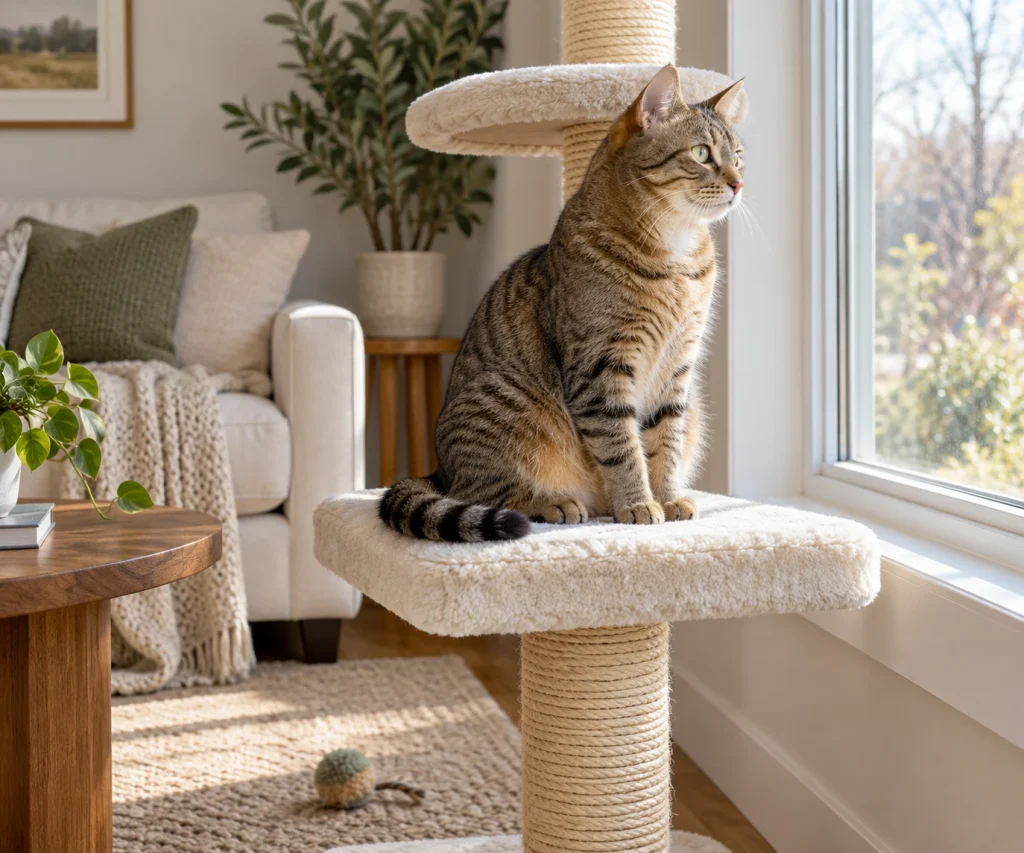
Most clinics screen for FIV with a quick in-house blood test that detects antibodies to the virus, often combined with a test for feline leukemia virus (FeLV). The AAFP guidelines recommend testing every cat when it is acquired, before vaccination, after possible exposure such as a bite wound or fight, and whenever it is unwell. Cats with ongoing exposure, such as cats that go outdoors or live with an infected cat, may be retested yearly.
Screening and confirming a positive result
A positive screening result is usually reliable in a cat with obvious risk factors, but false positives are more likely in low-risk cats. For this reason, the AAFP guidelines recommend confirming a positive result in a low-risk cat with a different test, such as a laboratory PCR test, a Western blot or a test from a different manufacturer. Because a positive result has serious implications for how a cat is managed, it is worth asking your vet whether confirmation is appropriate before making any major decisions.
Testing kittens
Kittens born to an FIV-positive mother absorb her antibodies through her milk, so they can test antibody-positive for up to about six months without being infected. Cornell notes that few such kittens are actually infected. The guidelines recommend retesting these kittens, and state that kittens that are still antibody-positive after six months of age are likely to be truly infected. A positive test in a young kitten is a reason to retest, not to give up on the kitten.
When a negative test needs repeating
It takes time for antibodies to appear after infection. Cornell notes they can take two to six months to develop, and the AAFP guidelines advise repeating a negative test no earlier than 60 days after the last possible exposure. A cat tested the day after a fight could therefore test negative and still be infected.
Cats vaccinated against FIV
Cats vaccinated against FIV produce antibodies that standard screening tests detect, so a vaccinated cat can test positive without being infected. The AAFP guidelines note that certain in-clinic tests can help tell vaccination apart from infection. If your cat may have been vaccinated, for example after being imported from a country where the vaccine is used, tell your vet before testing.
How long do cats with FIV live?
Search results for FIV life expectancy are full of contradictory numbers, from a few years to more than fifteen, usually without any source. The reliable picture is more reassuring than many owners expect, and also more nuanced.
- Cornell states that studies suggest infected cats commonly live average lifespans, unless they are also infected with feline leukemia virus.
- The AAFP guidelines cite a large study in which FIV-positive cats lived a median of 4.9 years after their first test, compared with 6.0 years for uninfected comparison cats, and note that many infected cats live for years with good quality of life, some as long as uninfected cats.
- International Cat Care describes the outlook as guarded but dependent on the stage of disease, noting that early diagnosis may mean a long period without FIV-related problems and that not all infected cats develop an immunodeficiency syndrome.
The outlook becomes less favorable once a cat has had serious illnesses, persistent fever or weight loss. Cornell notes that once cats have several severe infections or cancers, survival is usually no more than a few months. Factors you can influence, such as keeping your cat indoors, preventing fights, regular checkups and prompt treatment of illness, are the practical ways to protect your cat’s health and comfort.
Importantly, the AAFP guidelines state that a retrovirus diagnosis should not be the sole reason for euthanasia. A healthy FIV-positive cat deserves the same consideration as any other healthy cat.
Treatment and veterinary care
There is no cure for FIV, and no treatment reliably removes the virus. Veterinary care focuses on keeping the cat healthy for as long as possible and treating problems early.
- Regular wellness visits. The AAFP guidelines recommend checkups at least every six months, with particular attention to the mouth, lymph nodes, eyes and skin, plus yearly blood counts, blood chemistry and urinalysis. Unexplained weight loss can be an early warning sign, so weight and body condition are tracked at each visit.
- Prompt treatment of other illnesses. Infections in FIV-positive cats may need earlier diagnosis and sometimes longer treatment courses. Cornell notes that antibiotics may be given around dental work or surgery.
- Dental care. Inflammatory mouth disease is more common in retrovirus-infected cats. The AAFP guidelines note that cats with severe gingivostomatitis are most likely to benefit long term from extraction of the teeth.
- Antiviral drugs borrowed from human HIV treatment are occasionally used. Cornell notes that zidovudine (AZT) may help some cats with severe stomatitis or neurological disease but has not been shown to prolong survival and can cause serious side effects. This is a decision for your vet; never give a cat human medicines.
- Neutering reduces roaming, fighting and stress. The guidelines also advise that infected cats should not be bred.
Caring for an FIV-positive cat at home
Keep your cat indoors, safely and happily
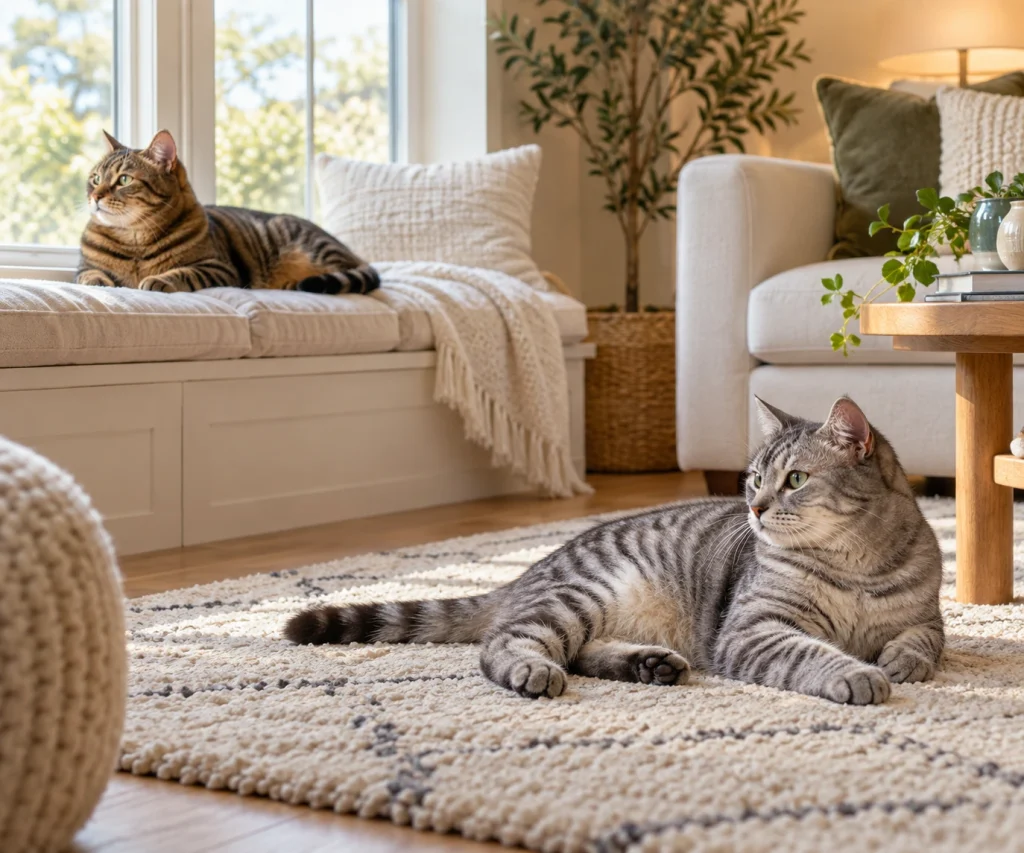
Cornell, Merck and International Cat Care all advise keeping FIV-positive cats indoors. This protects your cat from injuries and infections and protects other cats in the neighborhood from bites. An indoor life works best when it is rich and interesting: our guide to spotting and preventing boredom has practical ideas, and if your cat is used to going out, our door-dashing training plan can help with the transition.
If you want to offer fresh air, International Cat Care and the AAFP guidelines suggest a secure outdoor enclosure or catio that prevents contact with other cats. Supervised harness walks can also work for some cats, as long as you avoid areas with roaming cats.
Food, raw diets and parasites
Feed a complete and balanced commercial diet. The AAFP guidelines advise avoiding raw meat and unpasteurized dairy for retrovirus-infected cats because of the higher risk of foodborne infection, and Cornell and International Cat Care add raw eggs to that list. Our guide to the risks of raw food diets explains the concerns in more detail. Keep up with routine flea control and worming as your vet advises; International Cat Care notes it is not clear whether fleas can spread FIV, so regular flea control is sensible anyway.
Watch for early signs of illness
Because problems are easier to treat when they are caught early, it helps to know what is normal for your cat. Weigh your cat regularly or check its body condition at home with MyyCat’s Cat Body Condition Score Calculator, look in the mouth when you can, and note changes in appetite, energy, breathing, litter box habits or grooming. Contact your vet sooner than you might for an FIV-negative cat, rather than waiting to see whether a problem passes.
Living with other cats
Finding out that one cat in a multi-cat household is FIV-positive does not automatically mean the cats must be separated. Cornell advises testing all the cats in the home, and the AAFP guidelines note that FIV-infected cats can live with compatible FIV-negative cats with little risk in some circumstances. The key word is compatible.
- Stable, friendly groups that do not fight are at low risk. Discuss with your vet whether separate food bowls and regular cleaning make sense for your household.
- Do not add new cats where fighting is likely. The guidelines advise against introducing new cats into a household where fighting may occur. If you do bring in a new cat, a slow, careful introduction reduces the chance of conflict.
- Separate cats that fight. Serious fights with bites are the main risk to the uninfected cat.
- Clean shared items. Cornell notes the virus survives only a few hours in most environments and is easily killed by routine disinfection. Clean bowls, litter trays and bedding regularly.
Is there an FIV vaccine?
Not in North America. The AAFP guidelines note that the only commercial FIV vaccine was discontinued in the United States and Canada in 2015. A vaccine has been licensed in some other countries, including Australia and New Zealand, but supply has been interrupted at times, as a January 2024 manufacturer update shared by the Australian Veterinary Association shows. It also does not protect every cat: the guidelines cite an Australian field study that found a protective rate of 56 percent, and International Cat Care notes that complete protection is not expected because several strains of the virus exist. Where it is available, it is considered a non-core vaccine for cats at high risk, and it interferes with standard antibody tests.
The vaccine for feline leukemia virus is a different vaccine for a different virus. Our cat vaccination schedule guide explains which vaccines your cat may need.
How to prevent FIV
- Keep cats indoors or give safe, enclosed outdoor access. Cornell describes preventing exposure as the only sure protection.
- Neuter your cats to reduce roaming and fighting.
- Know the FIV status of every cat before bringing a new cat into the home, and test the household if an infected cat is found.
- Have bite wounds and abscesses checked by your vet, and ask whether retesting is needed at least 60 days later.
Adopting an FIV-positive cat
Shelters and rescues often have FIV-positive cats waiting longer for homes. With the evidence above in mind, a healthy FIV-positive cat can be a very good companion, particularly as an only cat or in a calm home with friendly, non-fighting cats. Before adopting, ask the shelter how the result was confirmed, whether the cat has had any illnesses, and how it gets along with other cats. Then plan for an indoor life, twice-yearly checkups and quick action when something seems wrong. Practising with the cat carrier early makes those regular vet visits much easier.
When to see a vet
Ask your vet about FIV testing if your cat has never been tested, has just joined your household, has had a bite wound or abscess, or has recurring infections, mouth inflammation or unexplained weight loss. If your cat is FIV-positive, contact your vet promptly if it:
- stops eating or eats much less; see our guide to a cat not eating
- has a fever, seems lethargic or hides more than usual
- is losing weight
- has a sore mouth, drooling or bad breath
- has breathing difficulty, eye or nose discharge, or diarrhea that does not settle quickly
- shows neurological or behavior changes, such as a seizure
- has a wound, swelling or abscess
Seek emergency care immediately for breathing difficulty, a seizure or collapse. This article is general information and not a substitute for advice from your veterinarian; see our veterinary disclaimer.
Frequently asked questions
Is FIV in cats a death sentence?
No. FIV is a lifelong infection without a cure, but many infected cats stay healthy for years and some live as long as uninfected cats. The AAFP guidelines state that a positive test alone should not be the reason for euthanasia.
Can an FIV-positive cat live with an FIV-negative cat?
Often, yes. Because FIV spreads mainly through deep bites, the risk between friendly cats that do not fight appears to be low. Your vet can help you judge the risk for your particular cats, and cats that fight should be kept apart.
Can humans catch FIV from cats?
No. FIV only infects cats. Cornell reports no evidence that it infects or causes disease in people, and it does not affect dogs or other pets either.
What is the difference between FIV and FeLV?
Both are retroviruses and are often tested for together, but they behave differently. FIV spreads mainly through bites, while Cornell explains that feline leukemia virus (FeLV) can spread through closer everyday contact such as grooming and shared bowls or litter trays. A vaccine against FeLV is widely available and recommended for kittens and at-risk cats. Cats infected with both viruses tend to have a poorer outlook.
Can a kitten that tests positive turn out not to have FIV?
Yes. Kittens can carry their mother’s antibodies for up to about six months, so a positive result in a young kitten may not mean infection. Your vet will usually recommend retesting, and a kitten that is still positive after six months of age is likely to be truly infected.
Should an FIV-positive cat still have dental work or surgery?
Usually, if it is needed. Untreated mouth pain and infection are a real problem for FIV-positive cats, and the AAFP guidelines note that cats with severe stomatitis are most likely to benefit long term from dental extractions. Your vet will assess your cat’s overall health before anesthesia and may give antibiotics around the procedure.
Sources
- Little S, Levy J, Hartmann K, et al. 2020 AAFP Feline Retrovirus Testing and Management Guidelines. Journal of Feline Medicine and Surgery. 2020;22(1):5-30. See also the AAFP guideline summary page.
- Cornell Feline Health Center. Feline immunodeficiency virus (FIV).
- Cornell Feline Health Center. Feline leukemia virus.
- Tizard IR. Feline immunodeficiency virus (FIV). Merck Veterinary Manual, pet owner version.
- International Cat Care. Feline immunodeficiency virus (FIV).
- Boehringer Ingelheim, via the Australian Veterinary Association. Vaccine supply update, January 2024.