
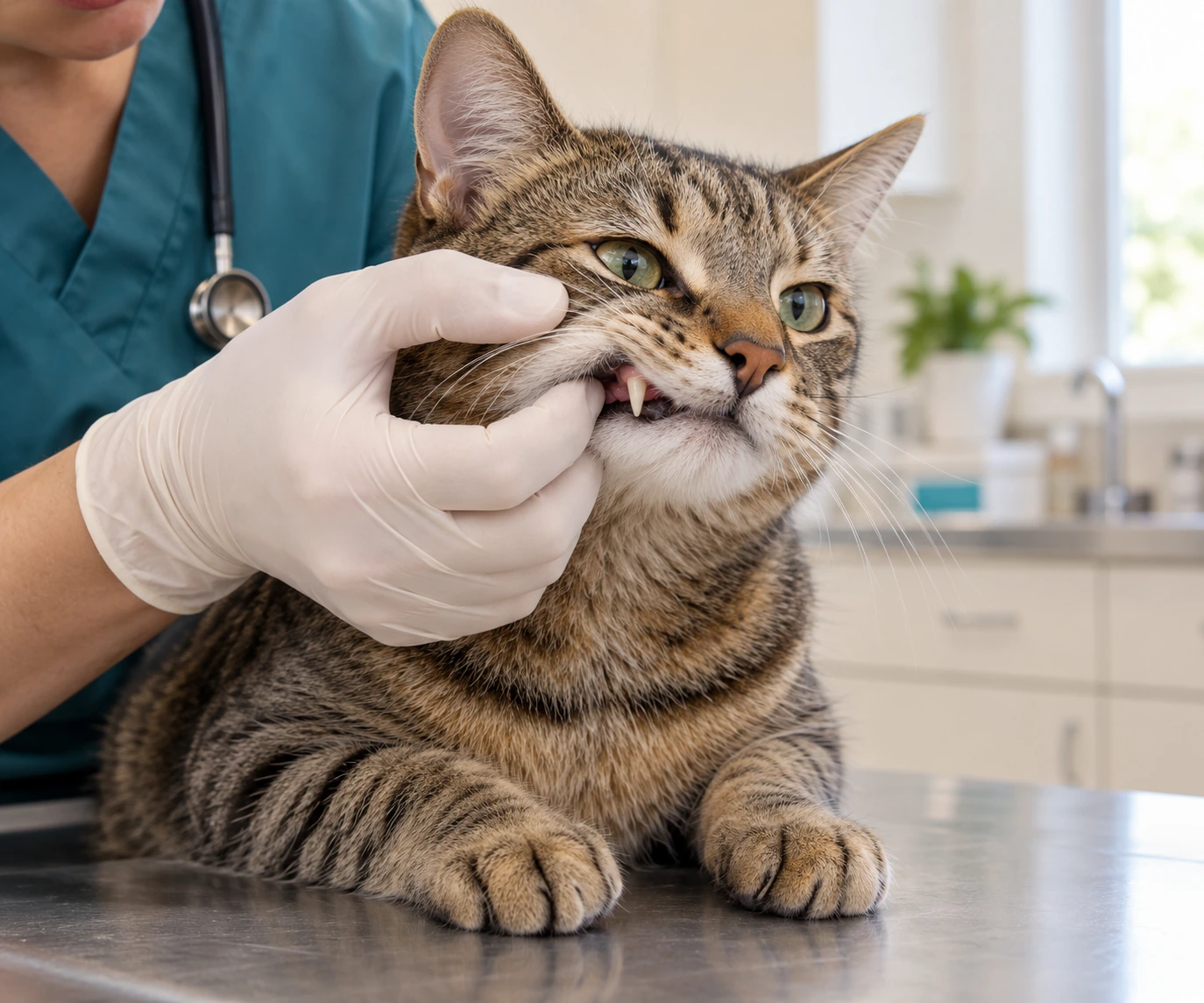

Dental disease in cats is one of the most common health problems vets see, and one of the easiest to miss at home. Cats rarely cry out or stop eating because of a sore tooth. More often they quietly chew on one side, drop food, swallow kibble whole or start preferring soft food, while the real damage sits below the gum line where only a veterinary examination and dental X-rays can find it.
This guide explains the main types of dental disease in cats, the subtle signs that point to mouth pain, how vets diagnose and treat it, why anesthesia-free cleaning is not a substitute for proper dental care, and what you can realistically do at home to protect your cat’s teeth. It draws on the Cornell Feline Health Center, the Merck Veterinary Manual, the 2019 AAHA Dental Care Guidelines, the 2025 FelineVMA Feline Oral Health and Dental Care Guidelines and other sources listed at the end.
Table of Contents
Dental disease in cats at a glance
- Very common: the Cornell Feline Health Center reports that studies find some form of dental disease in 50 to 90 percent of cats older than four.
- Main types: gingivitis, periodontitis and tooth resorption, plus a less common but very painful inflammatory condition called chronic gingivostomatitis.
- Often hidden: many cats keep eating despite significant mouth pain, and much of the disease lies below the gum line.
- Diagnosis: a full assessment needs general anesthesia, tooth-by-tooth probing and full-mouth dental X-rays.
- Treatment: professional cleaning under anesthesia, and extraction of teeth that cannot be saved. Cats generally cope very well with fewer teeth.
- Prevention: daily toothbrushing with a cat toothpaste is the most effective home care, backed up by regular veterinary dental checks.
Why dental pain in cats is so easy to miss
Cats are good at masking discomfort, and dental disease usually develops slowly enough that changes creep in unnoticed. Cornell’s dentistry specialists describe cats with painful tooth resorption whose appetite looks completely normal: the clues are in how they eat, such as tilting the head, chewing on one side or letting food fall from the mouth. A cat usually stops eating only when the problem has become severe.
There is a second reason it is missed. According to the Merck Veterinary Manual, periodontitis is driven by bacteria and inflammation below the gum line. Visible tartar on the outside of the teeth tells you little about what is happening around the roots, and a cat with fairly clean-looking teeth can still have painful disease underneath.
Behavior changes can be the first sign. Pain anywhere in the body can make a cat hide more, groom less or react defensively when touched, and a cat that suddenly swats when its face is handled may be sore rather than aggressive.
The main types of dental disease in cats
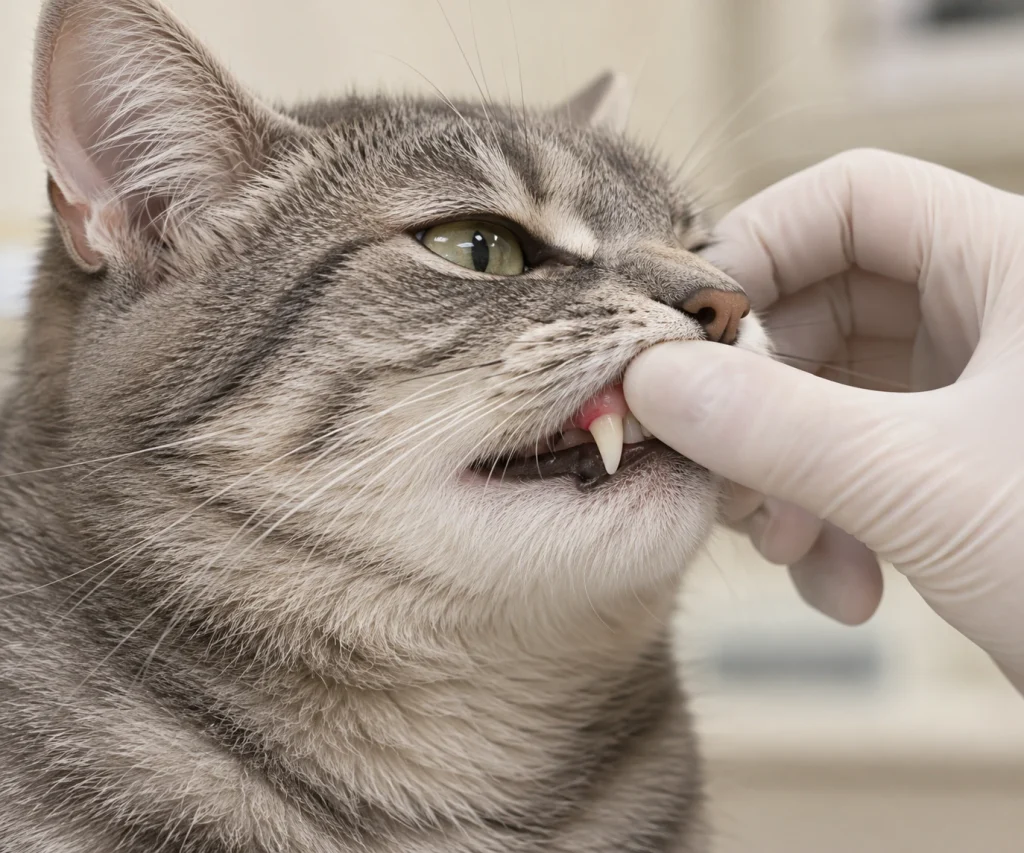
The Cornell Feline Health Center identifies gingivitis, periodontitis and tooth resorption as the three most common dental diseases in cats. They often occur together, and they are treated differently.
Gingivitis
Gingivitis is inflammation of the gums where they meet the teeth. It starts with plaque, a sticky film of bacteria that forms on teeth every day. If plaque is not removed, it spreads below the gum line, where the cat’s immune response produces red, swollen, sometimes bleeding gums. Plaque that stays on the teeth for a few days hardens into tartar (calculus), which can only be removed professionally.
The good news is that gingivitis is usually reversible with plaque control. Cornell notes that it can also be triggered or worsened by other illnesses, including feline leukemia virus (FeLV), feline immunodeficiency virus (FIV), feline calicivirus, severe kidney disease, diabetes and autoimmune disease, so a vet will look for these when gum inflammation seems out of proportion to the amount of plaque. The Merck Veterinary Manual also describes a juvenile-onset form of gingivitis in some cats at around six to eight months of age.
Periodontitis
If gingivitis is not controlled, it can progress to periodontitis, in which the ligament and bone that hold each tooth in place are destroyed. Gums recede, roots become exposed and teeth loosen. Unlike gingivitis, the bone loss of periodontitis cannot simply be reversed. Treatment aims to stop it getting worse and to remove teeth that can no longer be saved. Merck notes that in some cats periodontitis can be seen as early as one year of age.
Tooth resorption
Tooth resorption, formerly called feline odontoclastic resorptive lesions (FORL) or neck lesions, is a process in which the tooth’s own structure is broken down by cells called odontoclasts. It often begins below the gum line and may first appear as a small pink defect where the tooth meets the gum. By the time that defect is visible, the tooth is already significantly damaged. The cause is unknown, and Merck notes that most resorptive lesions cannot be prevented.
Once the sensitive inner layer of the tooth is exposed, resorption can be very painful. VCA Animal Hospitals explains that vets classify resorption into types based on how the roots look on dental X-rays, and that this decides the treatment: some affected teeth need full extraction, while in others a technique called crown amputation with intentional root retention is appropriate.
Chronic gingivostomatitis
Feline chronic gingivostomatitis is a severe, painful inflammation that extends beyond the gums to the lining of the mouth, often including the tissues at the back of the mouth. Cornell describes it as an exaggerated immune reaction to plaque, most often diagnosed in cats with viral infections, especially FIV, although a direct cause has not been proven. Affected cats may drool, paw at the mouth, have bad breath, bleed from the gums and lose weight because eating hurts.
It is far less common than gingivitis or tooth resorption. Cornell’s former chief of dentistry and oral surgery estimated that somewhere between three and five percent of cats show signs of it.
Broken teeth and other mouth problems
Fractured teeth, injuries to the jaw and oral tumors can cause similar signs. Merck notes that a tooth turning reddish-brown, purple or gray can indicate disease inside the tooth, and that a cat with a fractured jaw may hold its mouth open or be unable to eat. Oral tumors can also cause bad breath, bleeding and reduced appetite, which is one more reason a sore mouth should be examined rather than assumed to be ordinary tartar. Our guide to cancer in cats covers lumps and other warning signs.
How common is dental disease in cats?
Very common, although you will find wildly different percentages online. The most widely cited figure comes from Cornell: studies report that 50 to 90 percent of cats older than four have some form of dental disease. The width of that range is itself informative.
Tooth resorption shows the same pattern. Cornell’s main dental page says 30 to 70 percent of cats show some sign of it, while Cornell’s tooth resorption page gives an estimate of 20 to 60 percent of all cats and close to three-quarters of cats aged five and older. Estimates differ because studies look at different populations and ages, define disease differently, and detect far more when they use dental X-rays rather than a visual check alone.
The practical message does not depend on the exact number: most adult cats will need dental care at some point, and the absence of obvious signs does not mean a healthy mouth.
Signs of dental disease in cats
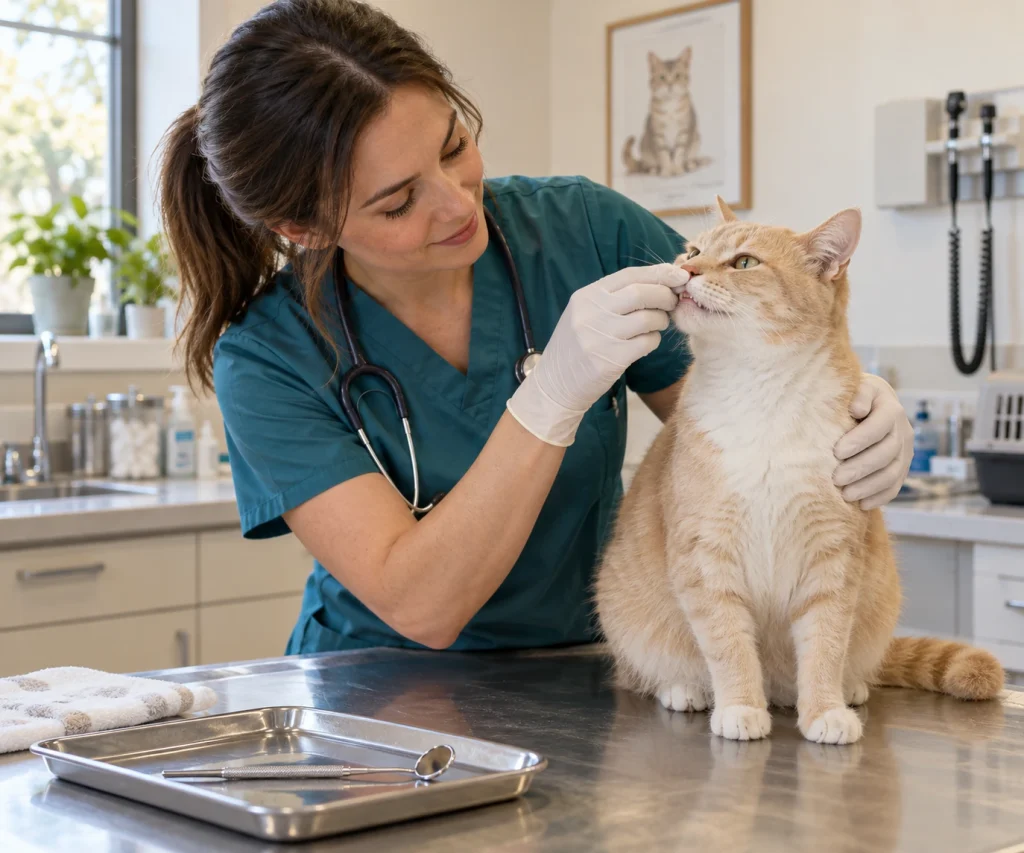
Signs vary with the type and severity of the problem, and early disease may produce none at all. These are the changes most worth noticing.
Changes at the food bowl
- chewing on one side of the mouth or tilting the head while eating
- dropping food, or food falling out of the mouth
- swallowing kibble without chewing
- a new preference for soft or wet food
- approaching the bowl eagerly, then hesitating, walking away or eating less
- eating more slowly, or stopping eating altogether in severe cases
What you might see or smell
- persistent bad breath
- red, swollen or bleeding gums, especially along the gum line
- brown tartar on the teeth, or receding gums and exposed roots
- drooling, sometimes with blood-tinged saliva
- pawing at the mouth, or flinching when the face is touched
- a discolored, broken, loose or missing tooth
- weight loss, an unkempt coat from grooming less, or irritability
The table below shows how these signs relate to possible problems and how quickly they need attention. It is a guide for deciding when to call your vet, not a way to diagnose your cat at home.
| What you notice | Possible dental causes | How soon to see a vet |
|---|---|---|
| Bad breath with mild redness along the gums | Plaque buildup, gingivitis | Book a routine check |
| Chewing on one side, dropping food, preferring soft food | Tooth resorption, periodontitis, a broken tooth | Book an appointment within days |
| Drooling, pawing at the mouth, bleeding gums | Painful resorption, stomatitis, an injury or a mass | Contact your vet promptly |
| Not eating, mouth held open, swelling of the face or jaw | Severe pain, an abscess, a jaw injury | Same day, or an emergency clinic |
Bad breath is not always dental. Kidney disease, diabetes and other illnesses can also change how a cat’s breath smells, so a vet should look at the whole cat, not just the teeth. Our guide on how to tell if your cat is sick covers other early warning signs.
What raises the risk
Any cat can develop dental disease, but several factors make it more likely or more severe:
- Age. The risk of periodontal disease and tooth resorption rises as cats get older, which is why dental checks are an important part of senior cat care.
- Viral infections. Cornell links FeLV, FIV and calicivirus with gingivitis and stomatitis. Calicivirus is one of the viruses behind cat flu and is covered by core vaccination.
- Other illnesses. Diabetes, severe kidney disease and autoimmune conditions can contribute to gum inflammation.
- Tooth crowding or a misaligned bite, which traps plaque.
- Body weight. The Merck Veterinary Manual notes a correlation between increased body weight and periodontitis in cats, one more reason to keep your cat at a healthy weight.
- Breed and genetics. A veterinary dental specialist quoted by Cornell named Abyssinians, Siamese, Maine Coons, Persians and Somalis among the breeds that tend to be at greater risk. Individual cats within any breed vary widely.
- No home dental care. Plaque that is never removed is the starting point for gingivitis and periodontitis.
How vets diagnose dental disease
The awake examination
Your vet will look at your cat’s teeth, gums, bite and face during a normal consultation. This can reveal tartar, inflamed gums, broken teeth, swellings and obvious resorptive lesions. Merck cautions that findings from an awake exam should be interpreted carefully, because only the outer surfaces of the teeth can be seen and the result depends on how cooperative the cat is. Getting your cat used to its carrier and to gentle handling of its face makes these checks far less stressful.
Examination and X-rays under anesthesia
A complete dental assessment requires general anesthesia. The vet probes around every tooth to measure pocket depth and attachment loss, checks for mobile teeth and resorptive defects, and examines the tongue, palate and throat for masses or inflammation.
Dental X-rays are a central part of this, not an optional extra. The 2019 AAHA Dental Care Guidelines strongly recommend full-mouth intraoral X-rays for all dental patients, because a great deal of clinically important disease can only be seen on X-rays. The 2025 FelineVMA guidelines likewise call for full-mouth radiographs and a thorough examination under anesthesia, with all findings documented. Before anesthesia, your vet will usually take a history, examine your cat and recommend screening tests to assess anesthetic risk.
How dental disease in cats is treated
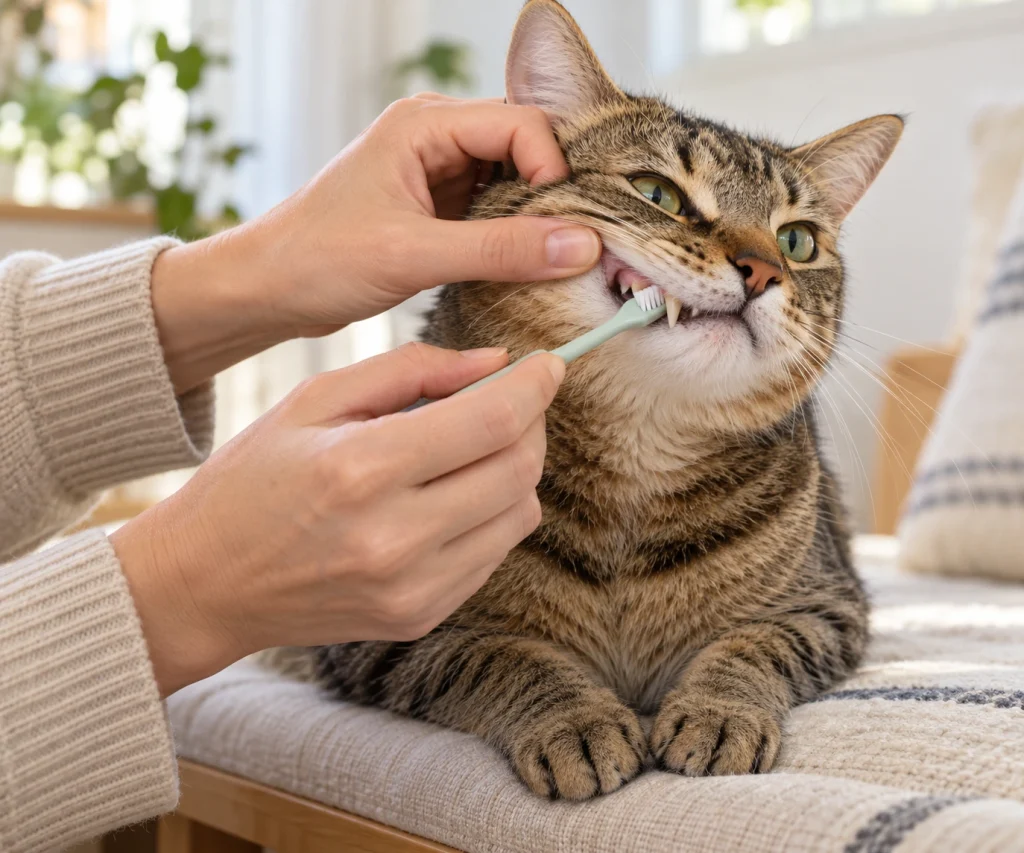
Treatment is decided by your vet after the examination and X-rays, and is tailored to what is found. In practice, the treatment plan is often finalized while the cat is under anesthesia, so ask your vet beforehand how they will contact you if they find more than expected.
Professional cleaning under anesthesia
A professional dental cleaning removes plaque and tartar above and below the gum line, followed by polishing. The cleaning below the gum line is what matters most for periodontal health, and it cannot be done properly in an awake cat. For cats with gingivitis, thorough cleaning followed by good home care can return the gums to health. Teeth with deeper periodontal pockets may need additional periodontal treatment.
Extractions
Teeth with advanced periodontitis, painful tooth resorption or other irreparable damage are usually extracted. Owners are often worried by this, but Merck notes that cats do surprisingly well without teeth, and that removing diseased teeth allows the tissue to heal. Many owners find their cat more comfortable and active once painful teeth are gone. Extractions are surgical procedures, so they should be planned with X-rays and done with proper pain control.
Treating chronic gingivostomatitis
Stomatitis is managed with extraction of most or all of the teeth, sometimes combined with medication to control inflammation. Removing the teeth removes the plaque-retaining surfaces that drive the reaction. According to Cornell, its former chief of dentistry estimated that about 60 percent of cats need no further medical management after full-mouth extraction, while others need ongoing treatment. Cats with stomatitis should not have their teeth brushed, because it is extremely painful for them.
Pain relief and antibiotics
Dental disease is painful, and so is dental surgery. The FelineVMA guidelines, as summarized by Today’s Veterinary Business, recommend pain relief after all surgical dental procedures, with multimodal pain relief for three to seven days being sufficient for most cats, and continued monitoring of pain using a validated tool such as the Feline Grimace Scale.
Antibiotics are not a treatment for dental disease on their own. Cornell notes there is little or no evidence that treating gingivitis with antibiotics alone is effective; the plaque and diseased tissue need to be dealt with. Your vet will decide whether antibiotics are needed in a particular case.
Anesthesia-free dental cleaning: why vets advise against it
Some groomers and businesses offer to scrape tartar off cats’ teeth without anesthesia. It can make the teeth look cleaner, which is exactly the problem. The Merck Veterinary Manual explains that cleaning an awake animal’s teeth improves their cosmetic appearance but does not improve periodontal health, and can lead owners to believe the disease has been treated while it continues below the gum line.
Veterinary dental organizations are consistent on this point:
- The American Veterinary Dental College states that anesthesia-free tooth scraping is not a replacement for dental procedures performed under anesthesia, and is not an effective form of prevention of dental disease.
- The 2025 FelineVMA guidelines oppose anesthesia-free dental procedures.
- Without anesthesia there is no tooth-by-tooth probing, no full-mouth X-rays and no proper cleaning beneath the gums, so problems such as tooth resorption are easily missed.
If anesthesia worries you, discuss it openly with your vet: ask about pre-anesthetic tests, monitoring and pain control, rather than choosing a procedure that cannot treat the disease.
Caring for your cat after dental treatment
Your vet will give discharge instructions specific to the procedure. General principles that apply to most cats:
- Give pain relief exactly as prescribed, for the full course. Never give human painkillers; some, such as paracetamol (acetaminophen), are highly toxic to cats.
- Offer the food your vet recommends. Soft or wet food is often advised while the mouth heals, and Merck notes that most cats can eat moist food even after extensive extractions. Our guide to choosing wet food can help.
- Watch that your cat is eating. A cat that will not eat after dental surgery should be reported to your vet promptly, as not eating can quickly become a problem in its own right.
- Report warning signs, such as ongoing bleeding, swelling of the face, heavy drooling, pawing at the mouth or lethargy.
- Keep follow-up appointments, especially after extractions or stomatitis treatment.
If your cat goes home with several medications, MyyCat’s free Cat Medication Schedule Generator can help you organize the times and doses your vet prescribes.
Preventing dental disease in cats at home
Home care cannot remove tartar that has already formed or treat disease below the gums, but it can slow plaque buildup and help keep a healthy or freshly treated mouth healthy. Merck’s own summary is that gum disease rarely develops around clean teeth.
Toothbrushing
Brushing is the most effective home dental care. The Veterinary Oral Health Council calls brushing the gold standard, and Merck advises brushing daily, noting that daily or at least every-other-day brushing appears to be the most effective way to improve and maintain periodontal health. Some practical points:
- Use a toothpaste made for cats. Cornell warns that human toothpaste can be toxic to cats.
- Brush the outer surfaces only. The cat’s tongue keeps the inner surfaces cleaner, so you only need to reach the outsides of the teeth, angling the brush toward the gum line.
- Introduce it gradually. Cornell suggests a four-week plan: first let your cat sniff and lick the toothpaste, then dab it on a canine tooth, then let your cat lick it from the brush, and only then begin gentle brushing. Reward every step.
- Keep sessions short and positive, and stop before your cat becomes upset. The same patient approach used in nail trimming training works well for handling the mouth.
- Do not brush a sore mouth. If your cat has red, bleeding gums or seems painful, see your vet first. Cornell notes that brushing a cat with severe gingivitis can be quite painful.
If you use food rewards, count them in your cat’s daily calories; our guide to cat treats and the Cat Treat Calculator can help. To build tooth checks into a regular routine alongside brushing and nail care, try the Cat Grooming Schedule Generator.
If your cat will not accept a toothbrush
Some cats never tolerate brushing, and forcing it can damage your relationship and make vet visits harder. Alternatives are less effective but better than nothing:
- Wiping the teeth with gauze. Merck suggests wiping the teeth with a gauze pad at least every two to three days if your cat will not allow brushing, because plaque left for more than about three days begins to harden into tartar.
- Products with the VOHC Seal. The VOHC does not test products itself; it reviews manufacturers’ study data and awards its Seal of Acceptance to products that meet its standards for plaque or tartar control. The VOHC accepted products list includes cat diets, treats and other products.
- Ask your vet which dental diets, chews, gels or water additives suit your cat, especially if it has other health conditions.
Does dry food clean cats’ teeth?
Not reliably. The Merck Veterinary Manual states that the common belief that dry kibble reduces plaque and tartar by mechanical cleaning does not necessarily hold true. Specific dental diets are formulated with kibble shape, texture or ingredients designed to reduce plaque or tartar, which is different from ordinary dry food. Choose your cat’s main diet for its overall nutrition, and rely on brushing and veterinary care for the teeth.
Regular dental checks
Every routine health check should include a look at the mouth, and Cornell’s dentistry specialist recommends that a vet examine a cat’s teeth at least once a year. Recommendations for the first full examination under anesthesia vary: the 2019 AAHA guidelines recommend that all cats have their first anesthetized dental evaluation with X-rays by one year of age, according to AAHA, while the 2025 FelineVMA guidelines recommend that anesthetized oral exams begin at two years of age for most cats. Your vet will advise on timing for your cat, and cats that have already been treated for periodontitis often need more frequent professional care; Merck mentions preventive cleanings every three months to one year for these cats.
Does dental disease affect the rest of the body?
Many websites state as fact that dental disease causes kidney or heart failure in cats. The evidence is more cautious than that. The Merck Veterinary Manual notes that periodontal disease has been associated with an increased risk of chronic kidney disease, citing a large study of cats seen at primary care veterinary hospitals. An association shows that the two conditions travel together, not that one directly causes the other, and Cornell notes the relationship can also run the other way, with severe kidney disease contributing to gum inflammation.
What is clear is the direct effect on the cat: dental disease is painful, it can make eating difficult, and Cornell notes that in many cases it causes cats to stop eating, which leads to further health problems. Treating it is worthwhile for comfort and quality of life alone.
When to see a vet
Book a dental check if your cat has persistent bad breath, red gums, visible tartar or any change in how it eats. Contact your vet promptly, or an emergency clinic out of hours, if your cat:
- has stopped eating, or is eating very little
- has swelling of the face, jaw or under the eye
- is drooling heavily, pawing at the mouth or bleeding from the mouth
- holds its mouth open or cannot close it properly
- has injured its mouth, broken a tooth or had a fall or accident
- has a lump, ulcer or growth in the mouth
- is lethargic or unwell after dental treatment
This article is general information and not a substitute for an examination by your veterinarian; see our veterinary disclaimer.

Frequently asked questions
Can dental disease in cats be reversed?
It depends on the type. Gingivitis is usually reversible with professional cleaning and good plaque control at home. The bone loss of periodontitis cannot simply be reversed, and tooth resorption cannot be repaired, but both can be treated to remove pain and stop further damage.
Can cats eat normally after teeth are removed?
Most can. Merck notes that cats do surprisingly well without teeth, and that most cats can eat moist food, and eventually even solid food, after their teeth have been extracted. Cats swallow much of their food with little chewing, and a mouth free of painful teeth often makes eating easier.
How often should a cat have a dental cleaning?
There is no single schedule. Your vet will recommend timing based on your cat’s age, dental history and home care. Cats with a history of periodontitis often need professional care more often, while some cats with good home care need it less often.
Is anesthesia safe for an older cat with dental disease?
No anesthetic is completely risk-free, and older cats need careful assessment. The 2023 AAHA Senior Care Guidelines state that anesthesia is necessary to provide adequate oral and dental care, that senior pets need special attention during anesthesia, and that resolving oral problems can greatly improve their quality of life, making the risks worth the benefits. Ask your vet about pre-anesthetic tests and monitoring for your cat.
Can I use human toothpaste on my cat?
No. Use only toothpaste or tooth gel made for cats. Cornell warns that human products can be toxic to cats, and cats swallow toothpaste rather than spitting it out.
Do cats get cavities?
Almost never in the way people do. Merck notes that cavities almost never occur in cats. The holes owners sometimes see in cats’ teeth are usually tooth resorption, a different and often painful process that needs a vet’s assessment.
Sources
- Cornell Feline Health Center. Feline dental disease.
- Cornell Feline Health Center. Tooth resorption.
- Cornell Feline Health Center. Gingivostomatitis.
- Mulherin BL. Periodontal disease in small animals. Merck Veterinary Manual, professional version.
- Reiter AM. Dental disorders of cats. Merck Veterinary Manual, pet owner version.
- American Animal Hospital Association. 2019 AAHA Dental Care Guidelines for Dogs and Cats.
- American Animal Hospital Association. From the guidelines: elevating everyday dentistry.
- American Animal Hospital Association. 2023 AAHA Senior Care Guidelines for Dogs and Cats: dentistry.
- Feline Veterinary Medical Association. 2025 FelineVMA Feline Oral Health and Dental Care Guidelines. Journal of Feline Medicine and Surgery.
- Today’s Veterinary Business. New guidelines urge team approach to feline dental health. December 2025.
- American Veterinary Dental College. About AVDC and position statements.
- Veterinary Oral Health Council. VOHC home and accepted products.
- VCA Animal Hospitals. Tooth resorption in cats.
- Trevejo RT, et al. Survival analysis to evaluate associations between periodontal disease and the risk of development of chronic azotemic kidney disease in cats evaluated at primary care veterinary hospitals. J Am Vet Med Assoc. 2018;252(6):710-720.